We get a lot of questions about what we eat, given that we have been on this raw food focused plant-based path for decades each, which is one of the many reasons why we share some of our raw creations here on our blog, on Instagram, in our free recipe eBooks, and elsewhere.
In fact, this week is my 30 year raw-anniversary, so in celebration I made one of my favorite recipes: raw tacos with salsa. Interestingly enough, we rarely create complicated recipes since after 30 years on this path each, we tend to enjoy simpler combinations of whole natural plant foods.
But finding some heirloom tomatoes in late January, which for us is a rare find at this time of year, inspired us to create heirloom tomato salsa.
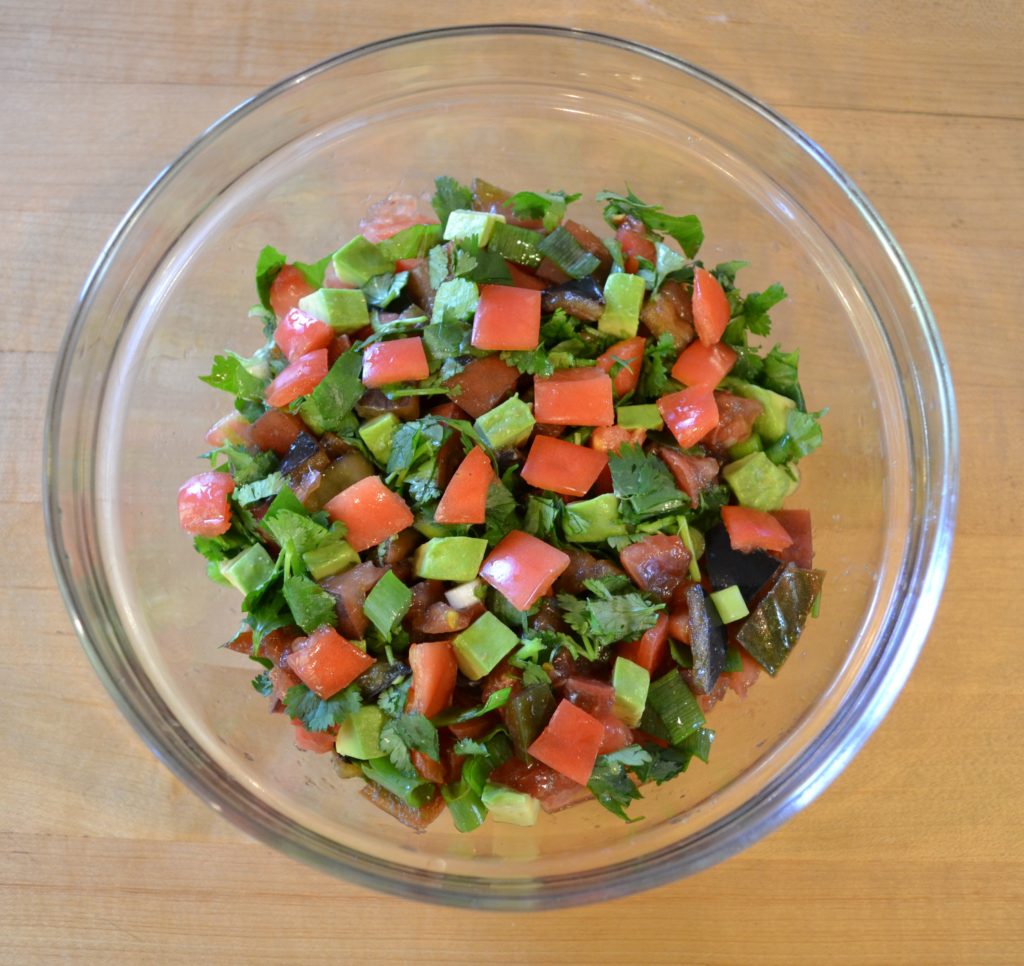
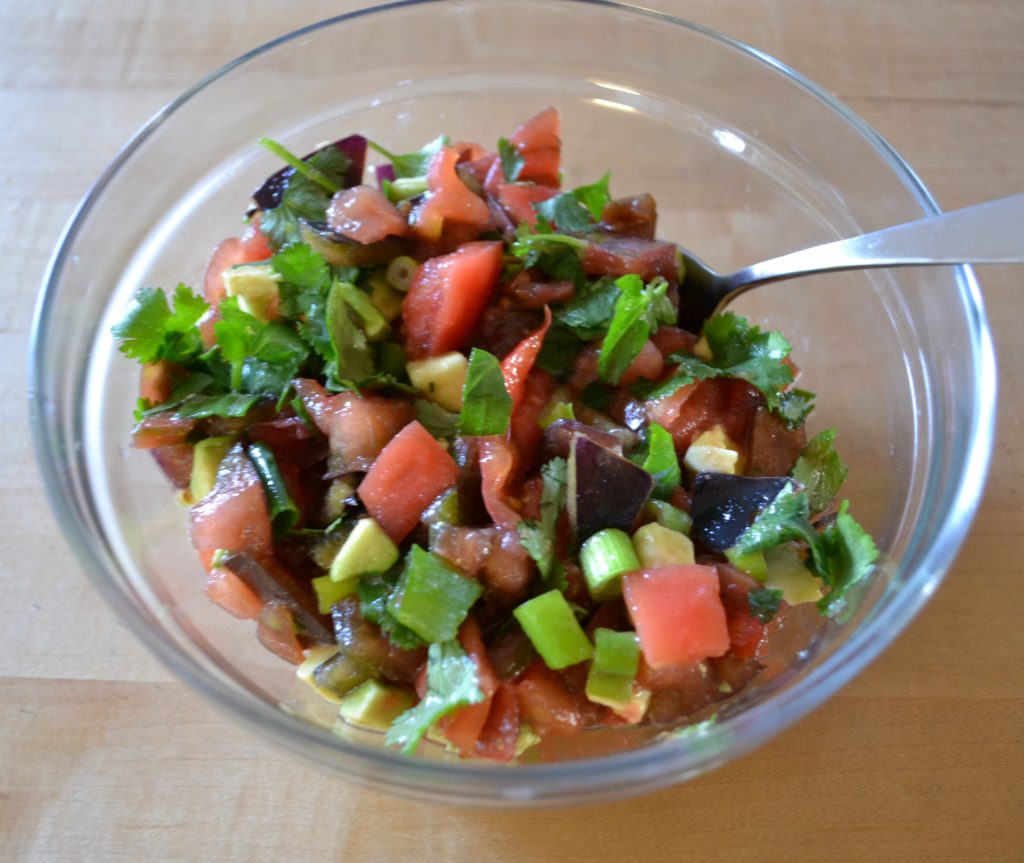
Here are the ingredients in our Heirloom Tomato Salsa recipe:
Equal amounts of Cherokee purple and a non-specified variety of red heirloom tomatoes (about 2 of each)
Several chopped sprigs of cilantro (amount added to taste)
1 – 2 chopped green onions (optional)
Fresh squeezed lime juice added to taste
Avocado chunks added to taste
Our raw tacos are made with lettuce for the wraps, zucchini, sun dried tomatoes, walnuts, medjool dates, and paprika to taste. Sometimes we add some chickpea miso to taste as well.
Given how busy we are, it’s easy to make salads, dressings, smoothies, soups, etc. But once in a while, it’s fun to make more celebratory recipes like these tacos. If you sign up for our email list, you can receive our free Holiday (and everyday) Raw Recipe eBook for more recipe inspiration from us.
We love this time of year for so many reasons! The air is
cool and crisp, the leaves on trees are starting to change to beautiful golden
yellow and orange hues, the autumn light casts longer shadows as the days grow
shorter, and our garden is in full harvest mode.
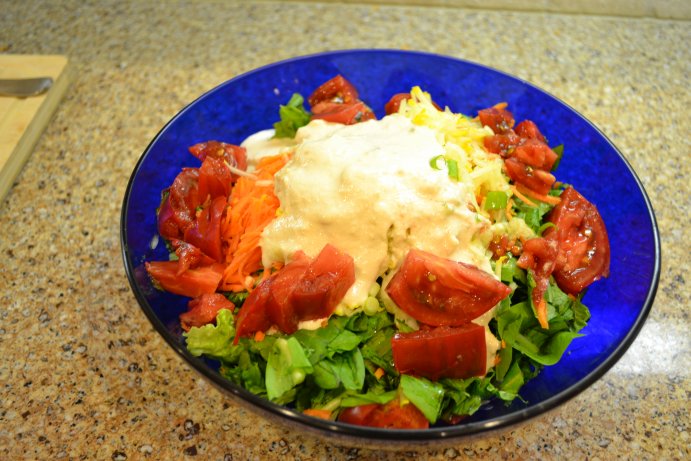
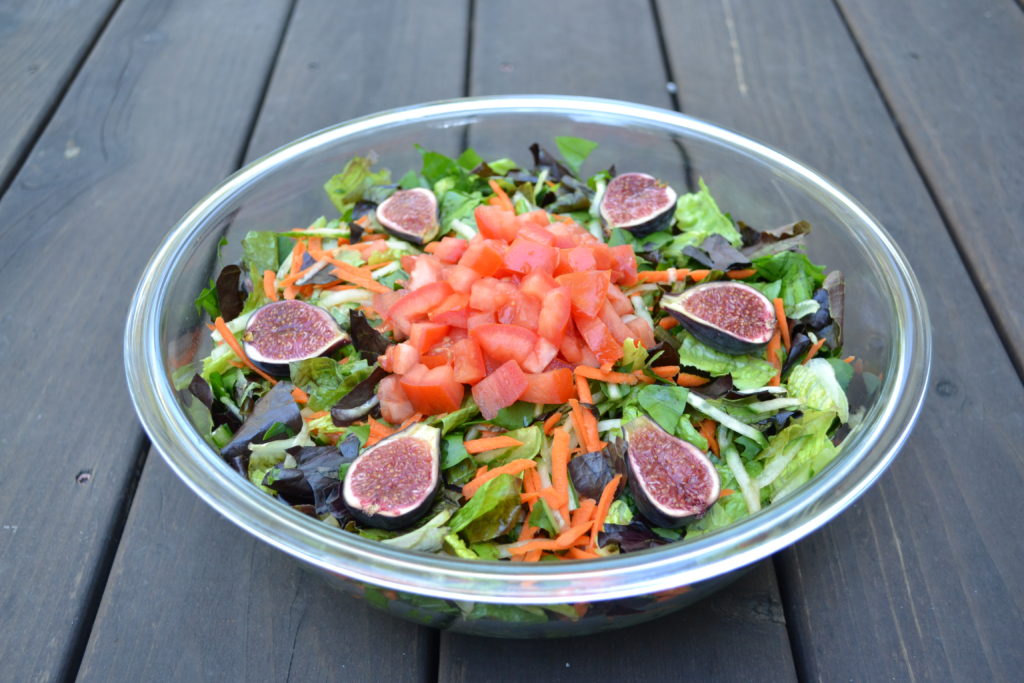
In celebration of autumn, here is a fall harvest salad for
you!
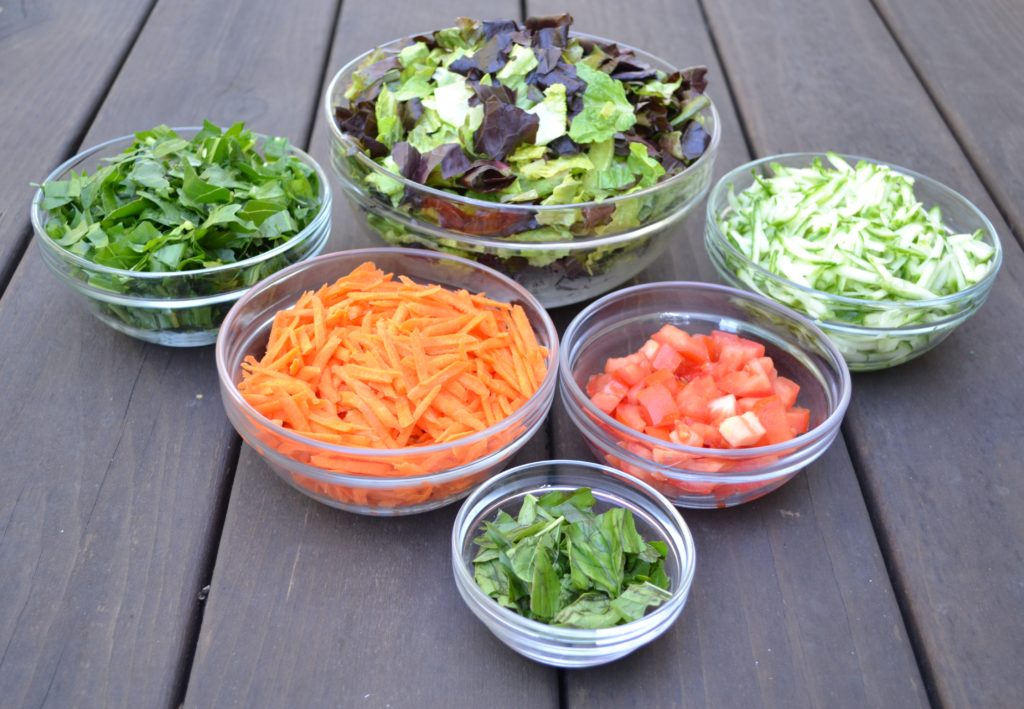
This one has:
3 cups of dandelion greens grown in our backyard
¼ cup of basil grown in our garden (so aromatic!)
3 cups of heirloom tomatoes also grown in our garden
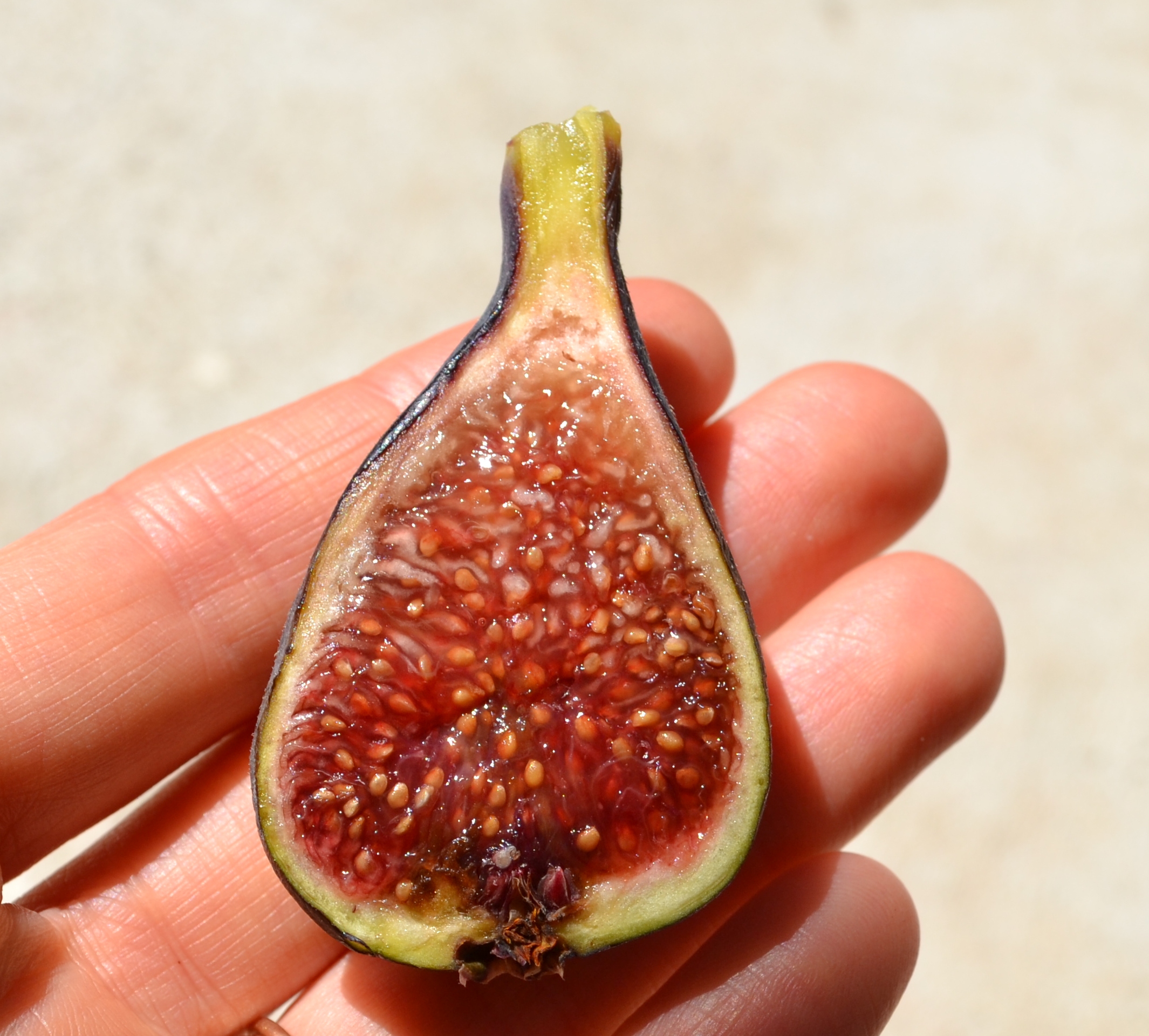
3 figs grown in our yard
2 cups of carrots
3 cups of cucumber
8 cups of Romaine lettuce.
Enjoy with the whole food raw plant-based dressing of your
choice!
And for those of you who love to know the nutrient breakdown (like I do!):
Salad
Adult DRIs
B1
0.72
1.1 – 1.2 mg
B2
0.73
1.1 – 1.3 mg
B3
5.26
14 – 16 mg
B5
2.40
5 mg
B6
1.10
1.3 – 1.7 mg
Folate
492
400 mcg
B12
0
2.4 mcg
C
137
75 – 90 mg
D
0
5 – 15 mcg
E
5.50
15 mg
K1
1041
90 – 120 mcg
Beta-carotene (mcg)
36,603
Vitamin A - RAE
3363
700 mcg
Lutein and zeaxanthin (mcg)
18,564
Not established
Calcium
439
1,000 – 1,200 mg
Iron
7.9
8 – 18 mg
Magnesium
180
310 – 420 mg
Potassium
2816
4,700 mg
Zinc
2.6
8 – 11 mg
One might say that this salad is nutrient dense, given its nutrient content per calorie. Vitamins B1, B2, B5, B6, folate, C, E, and K1 are very plentiful, as is beta carotene, and lutein + zeaxanthin. This salad provides 43% of the DRI for calcium, almost 100% of the iron DRI for men and postmenopausal women, 44% of the iron DRI for premenopausal women, 58% of the magnesium DRI for women and 42% for men, 60% of the potassium DRI, and 32% of the zinc DRI for women and 24% for men.
Impressive numbers considering that this salad contains only 351 calories! For those of you who are curious, without the figs, this salad contains 240 calories.
It’s no secret that fruits and vegetables can play an instrumental role in the proliferation of beneficial bacterial species living in our intestinal microbiome. Our microbiome is the community of bacteria and other microbes living within our bodies.
A large percentage of the bacteria living in our gut microbiome are from
two major classifications known as Bacteroidetes and Firmicutes
(Jandhyala et al., Henning et al.).
Does diet have an effect on the
balance of these two types of bacteria?
The general
trend in the scientific literature shows that Firmicutes prevalence in our
microbiome is associated with a standard western diet (Henning et al.,
Glick-Bauer et al.), while Bacteroidetes has been linked to a more whole food-focused
diet.
So, what about plant-based or vegan
diets?
A member of
the Bacteroidetes classification known as Prevotella was found to be linked to
a whole plant food-containing diet (Losasso et al., Hollister et al.) such as a
whole food vegan diet (Franco-de-Morales et al.). An increase in beneficial
bacterial species in the microbiomes of plant-based diet enthusiasts has been
observed (Kumar et al.) and high fiber diets tend to increase the abundance of
Bacteroidetes and decrease the abundance of Firmicutes.
To
summarize, one can expect to find a prevalence of Firmicutes in the microbiomes
of standard western diet eaters, while one tends to find a prevalence of
Bacteroidetes in the microbiomes of people who eat more whole foods, including those
who eat plant-based or vegan diets.
How does the prevalence of certain bacterial
types in our microbiome relate to our health?
Prevalence
of Bacteroides and Prevotella are “associated with human health” and “may serve
as key indicators of GI microbiome wellness” (Hollister et al.).
But what about fruit and vegetable juices?
Since whole plant
foods and the fiber they contain tend to be associated with an increase in
Bacteroidetes, specifically Prevotella, and a decrease in Firmicutes, then what
would happen to the bacterial composition of one’s microbiome if they drank
fruit or vegetable juice? And what
would the bacterial species in their microbiome look like after a few days on
juice?
A group of
researchers (Henning et al.) enrolled 20 adults to consume fresh vegetable and
fruit juices only for 4 days. On day 4 of the juicing plan, the abundance of
Firmicutes was significantly decreased, while Bacteroidetes was significantly
increased in comparison to baseline. Bacteroides, a type of bacteria that is a
member of the Bacteroidetes classification, is known to degrade plant fibers
from fruits and vegetables. In this study, 8 Bacteroides species were
significantly increased after 4 days on the juice-only diet.
It would be
very interesting to have a side by side comparison between the effects of consuming
juice only versus a whole food plant-based diet on our microbiome. But as we
can see here, even a short-term fruit and vegetable juicing program, despite
being lower in fiber than whole food, can have a beneficial effect on the
bacterial composition of our microbiome!
People often
think of fruit and vegetable juices as being completely devoid of fiber, but
anyone who has made their own fresh juice knows that some of the fiber from the
ingredients makes it into the juice. After a little while of sitting, you can
easily see that the fiber has separated from the liquid. The fiber that we can
see is known as insoluble fiber. Another type of fiber that can be found in
fruit and vegetable juices is known as soluble fiber.
Of course,
there are other nutrient considerations with juicing versus eating whole foods.
Nonetheless it was really interesting to see the beneficial shift in microbiome
composition from fruit and vegetable juices in such a short period of time!
Franco-de-Moraes AC, de Almeida-Pititto
B, da Rocha Fernandes G, Gomes EP, da Costa Pereira A, Ferreira SRG. Worse
inflammatory profile in omnivores than in vegetarians associates with the gut
microbiota composition. Diabetol Metab Syndr. 2017;9:62.
Glick-Bauer M, Yeh M. The health
advantage of a vegan diet: exploring the gut microbiota connection. Nutrients.
2014 Oct 31;6(11):4822-38.
Henning
SM, Yang J, Shao P, et al. Health benefit of vegetable/fruit juice-based diet:
Role of microbiome. Sci Rep. 2017;7(1):2167.
Hollister EB, Gao
C, Versalovic J. Compositional and functional features of the gastrointestinal
microbiome and their effects on human health. Gastroenterology. 2014 May;
146(6):1449-58.
Jandhyala
SM, Talukdar R, Subramanyam C, Vuyyuru H, Sasikala M, Nageshwar Reddy D. Role
of the normal gut microbiota. World J Gastroenterol. 2015 Aug
7;21(29):8787-803.
Kumar M, Babaei P, Ji B, Nielsen J. Human gut microbiota and healthy
aging: Recent developments and future prospective. Nutr Healthy Aging. 2016 Oct
27;4(1):3-16.
Losasso C, Eckert EM, Mastrorilli E, et al. Assessing the
Influence of Vegan, Vegetarian and Omnivore Oriented Westernized Dietary Styles
on Human Gut Microbiota: A Cross Sectional Study. Front Microbiol.
2018;9:317.
Disclaimer: This article is for informational and
educational purposes only. It is not
intended to be used as medical advice and should not be used to diagnose or
treat any medical condition or as a substitute for individual health care. This
information is given with the understanding that the presenters and authors are
not liable for misconception, misuse, or adverse effects resulting from its
use. Any type of dietary change, juicing program, or nutritional therapy should
always be undertaken with the supervision of a qualified health care
practitioner.
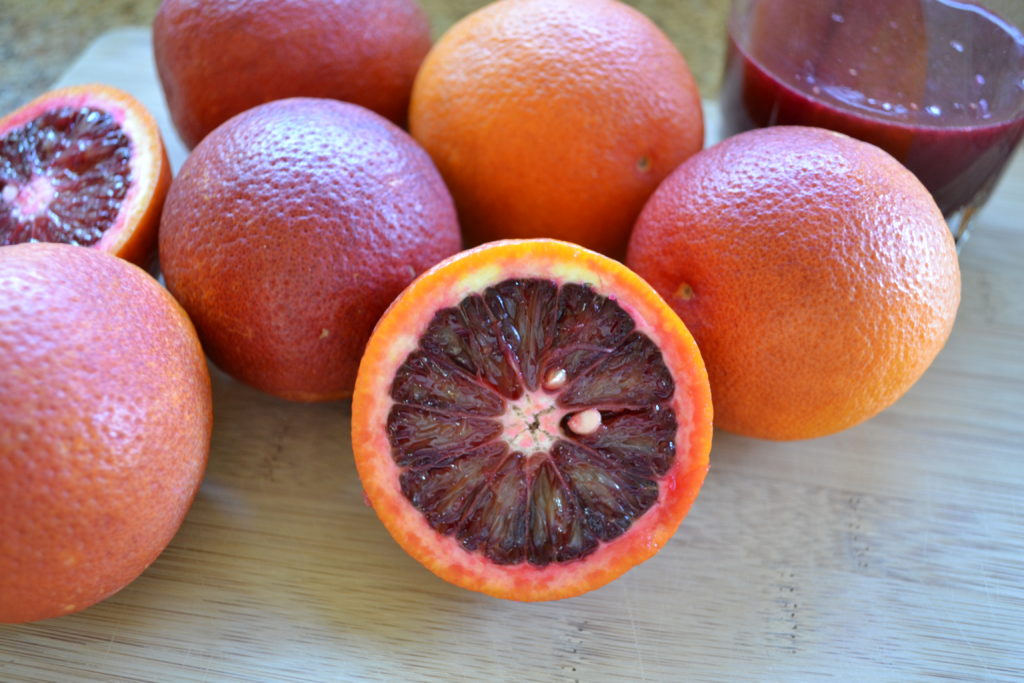
Spring is around the corner and citrus season is in full swing here in northern California! Our lemons are out in full force along with the many other varieties of citrus grown by neighbors throughout our neighborhood. Last night Rick brought home some blood oranges, which if you have not had the opportunity to experience yet, have a red to orange outer rind and pink to red flesh on the inside.
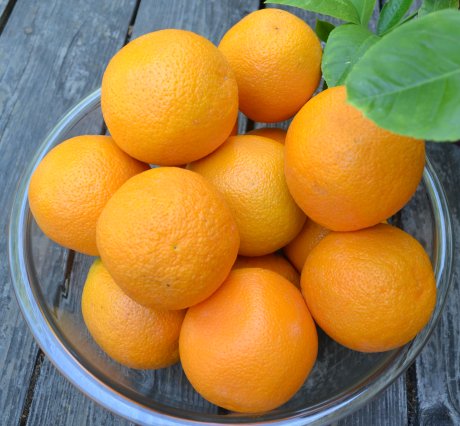
Their flavor is much different than your standard Valencia or
navel orange. Blood oranges to me taste like a cross between pink grapefruit
and raspberries – both of which I love! Even though I enjoy eating sweet-tasting
fruits, I have a special place in my heart for savory/astringent/tart/bitter
flavors, so as of last night, these blood oranges have become one of my
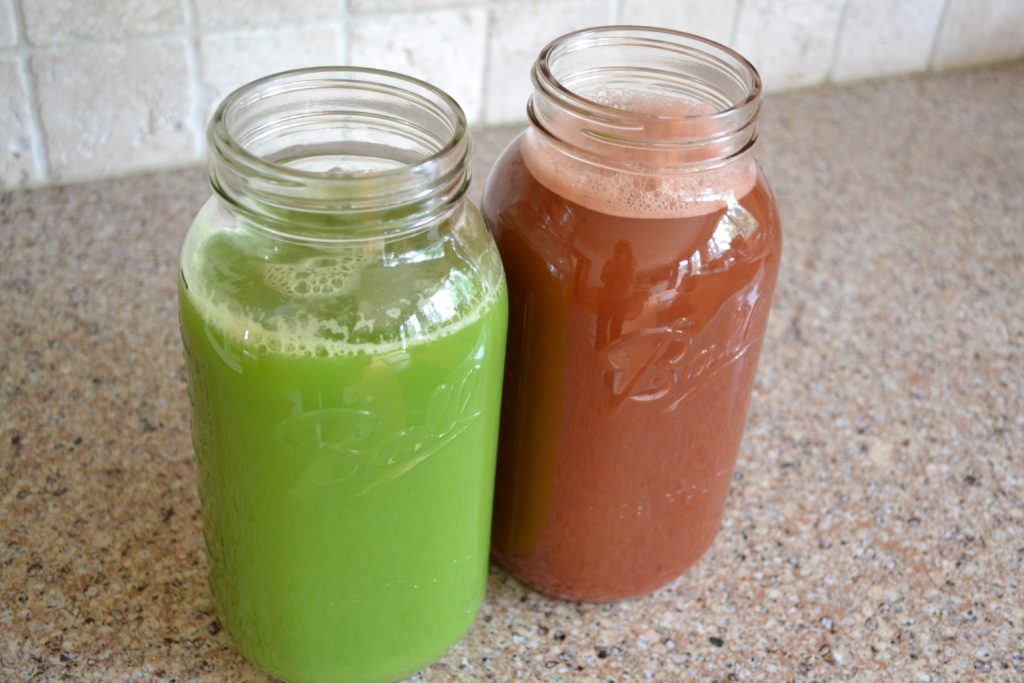
favorite fruits next to pomegranates. Speaking of which, the juice I made with these
blood oranges had a very similar deep red color to my homemade pomegranate
juice.
That deep red coloring of blood oranges gives us a clue as
to what important nutrient we can find in them. Generally, when fruit has a
blue, purple, or deep red coloring, the antioxidant anthocyanin is present.
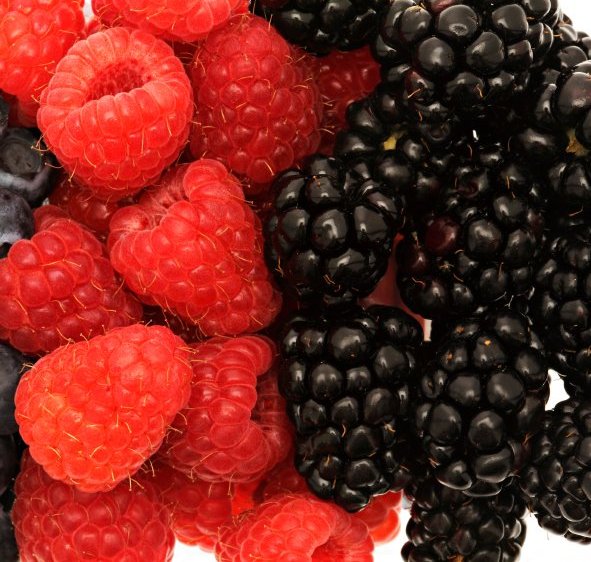
This is the case with blood oranges along with blueberries, blackberries,
raspberries, and other fruits of similar color.
Not surprisingly, blood oranges have important nutrients
that one finds in other citrus fruits like vitamin C and calcium. What is
surprising is the similarity in carbohydrate content between blood oranges and
their more popular counterpart, navel oranges.
Here’s a comparison of carbohydrates and other nutrients per
100 g of blood and navel oranges:
Blood oranges
Navel oranges
Calories
50
49
Total carbohydrate
11.4 g
12.5 g
Sugars (non-specified)
8.6 g
8.5 g
Vitamin C
51 mg
59 mg
Calcium
43 mg
43 mg
So, even though blood oranges have a flavor that is more on
the tart than sweet side, the carbohydrate content is similar to the sweeter navel
orange. I would be interested to see how the simple carbohydrate content of each
compares, such as the amount of fructose, glucose, and sucrose in each variety
and look forward to a time when this information is available.
On another note, I found a recent interesting study done on the effect of orange juice consumption on gut microbiota. This study was not done using blood oranges, but with more common sweeter varieties. It was a small study with 10 women, who consumed orange juice for 2 months. The researchers found after those two months that consumption of the orange juice was associated with an increase in the population of Bifidobacterium species and Lactobacillus species, both probiotics, in their respective microbiomes, along with a reduction in ammonia production by gut flora and an increase in gut flora production of short chain fatty acids. All of these changes are positive indicators of microbiome health improvement. The study also found positive changes in blood biochemical parameters including increased insulin sensitivity!
You can read more about this study by searching for the study information shown below. It’s important to note that this study was done using pasteurized orange juice, so naturally I would love to see what the results would look like using fresh squeezed unpasteurized orange juice! Nonetheless, I thought you might find this information to be interesting as I did. I’ve seen many studies that show improvement in microbiome health with the addition of fruits and vegetables, so the outcome of this study is not surprising. It’s just another testament to the many health benefits of whole natural plant foods!
Lima ACD, Cecatti C, Fidélix MP, Adorno MAT, Sakamoto IK,
Cesar TB, Sivieri K. Effect of Daily Consumption of Orange Juice on the Levels
of Blood Glucose, Lipids, and Gut Microbiota Metabolites: Controlled Clinical
Trials. J Med Food. 2019 Feb;22(2):202-210.
Nutrition information on navel and blood oranges: nutritiondata.self.com
The first two articles in this series on blood sugar regulation were regarding a lab measurement in the human body known as A1c and a food measurement known as the glycemic index, respectively. In this third article we discuss insulin sensitivity vs. insulin resistance. In order to get the most from this article please read the first two articles in previous blog posts below, which we will refer back to here.
Influences over Blood Sugar
There are many components of human physiology that affect our blood sugar level. This includes several interrelated hormones, the state of our autonomic nervous system, our emotions, our physical activity level, the amount of body fat and lean (muscle) tissue, amount of dietary fat consumed, type of dietary fat consumed, dietary fiber consumption, the physical structure of our cell membranes, certain nutrients, etc.
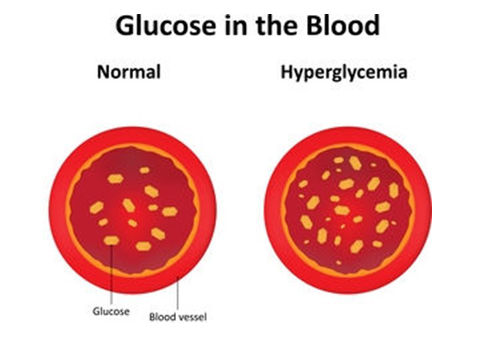
One of the key hormones involved in regulating blood sugar is known as insulin. One of the main jobs of insulin is to escort glucose, aka blood sugar, out of the blood and into the cells, where glucose can then be used to fuel cellular processes. When our cells are responsive, or sensitive to insulin, this process works properly, and glucose remains at appropriate levels in the bloodstream because it is being efficiently escorted into the cells to use for energy.
When our cells are not responsive, or resistant to insulin, the process of escorting glucose from the blood into the cells does not work as well. As a result, the glucose level in the blood remains higher than is desirable as it cannot get out of the blood and into the cells as readily. In our first article in this series on A1c we discussed some of the significant consequences of elevated blood sugar levels.
Insulin Sensitivity vs. Insulin Resistance
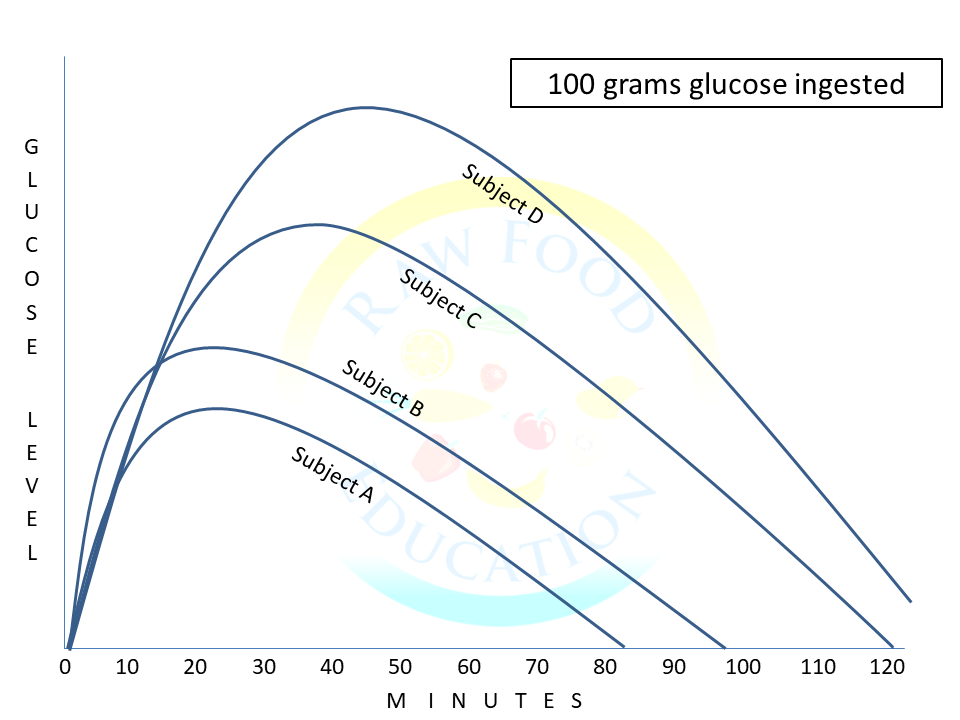
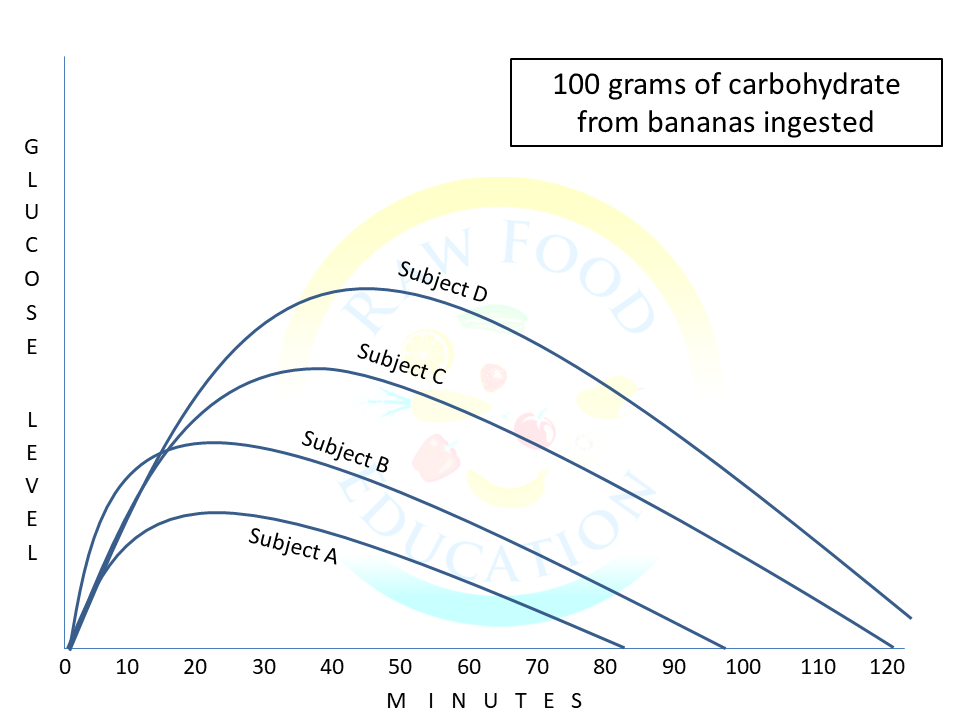
In our second article in this series on the glycemic index, we saw different blood sugar response curves for 4 sample people consuming straight glucose, then the same quantity of carbohydrate from bananas. We noted that the response curves varied quite a bit between individuals. How could there be such a variation in the glucose response curves when each subject was given the same quantity of food with the same glycemic index?
The answer is that some people’s cells are sensitive to insulin, while other people’s cells are resistant to insulin. Those experiencing insulin resistance have higher glucose response curves than those experiencing insulin sensitivity, no matter what they eat, even low glycemic foods! In our glucose vs. banana comparison to determine the glycemic index of bananas as described in the previous article, you may have noted that subject A had the lowest glucose curve for both glucose and banana consumption, while subject D had the highest glucose curve for both glucose and banana consumption. Subject A’s cells are sensitive to insulin, while subject D’s cells are resistant to insulin. Subjects B and C are in between on the insulin resistance vs. insulin sensitivity spectrum.
The glycemic index is a rating of the blood sugar response curve in a sample of humans RELATIVE TO THEIR GLUCOSE RESPONSE CURVE. It is not a rating of what will happen when that food is consumed by a particular individual. The state of insulin sensitivity vs. insulin resistance exerts a much greater influence. In insulin resistant individuals, every food consumed will cause a greater increase in blood sugar levels compared to someone else eating the same food who is insulin sensitive.
IF YOU HAVEN’T ALREADY, THIS WOULD BE A GREAT TIME TO REVIEW THOSE GLUCOSE RESPONSE CURVE CHARTS IN THE GLYCEMIC INDEX ARTICLE BELOW.
Insulin resistance is the hallmark of type II diabetes, pre-diabetes, and slightly elevated blood sugar. People with type II diabetes make plenty of insulin, in fact often times extra insulin, but their cells are resistant to it. That is why people with diabetes have higher glucose levels than people without diabetes, even when they eat the exact same food. This is because when insulin attempts to escort glucose out of the blood and into the cells, the cells are resistant to that process occurring as efficiently as it does under optimal conditions of insulin sensitivity.
Conventional Advice
It’s very important to note that carbohydrates are not the cause of insulin resistance. The body not being able to regulate carbohydrates well is the effect of insulin resistance. However, the usual advice when this occurs is to limit the quantity of carbohydrates in the diet. Unfortunately, this process does very little, if anything, to correct insulin resistance, the underlying cause of the problem in the first place.
In fact, many low carbohydrate, low glycemic foods actually promote insulin resistance! Most doctors however advocate the consumption of these foods to their diabetic patients. No wonder these same doctors tell these patients that there is no cure, and that they will be on medication for the rest of their lives!
A Better Solution
In order to recover from type II diabetes, pre-diabetes, or slightly elevated blood sugar, the root causes of insulin resistance need to be addressed. When you stop causing insulin resistance, your cells become more sensitive to insulin, and blood sugar levels start to come down as a result.
In the next article in this series we will look at the major causes of insulin resistance and how to reverse the process and therefore allow elevated blood sugar levels to come back down to a more healthful range.
When one thinks of good raw plant sources of minerals such as calcium and iron, certain leafy greens, nuts, and seeds generally come to mind. It’s rare that one would think of fruit as being a good source of minerals. In fact, often in conversations, people ask questions like “but isn’t fruit deficient in minerals?” or “isn’t fruit high in carbs but not much else besides antioxidants?” After repeatedly hearing questions like this, I put together some tables with the calcium and iron content of a variety of fruits along with a video and a talk I presented at the Woodstock Fruit Festival a few years ago.
Seeing the actual numbers can help us make more informed food choices and increase confidence in our dietary approach:
Food
Amount
Calcium content
Figs
5 fresh
100 mg
Valencia Oranges
2 medium
97 mg
Deglet noor dates
1 cup
57 mg
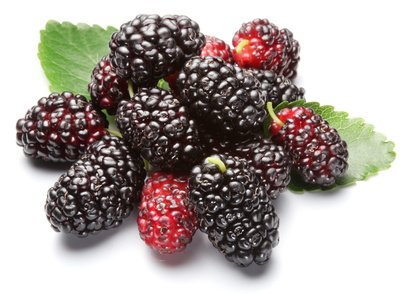
Mulberries
1 cup fresh
55 mg
Kiwifruit
2 peeled
52 mg
Blackberries
1 cup fresh
42 mg
Mamey sapote
1 cup
32 mg
Raspberries
1 cup
31 mg
Medjool dates
2 pitted
31 mg
Papaya
1 cup pieces
29 mg
Strawberries
1 cup sliced
27 mg
Apricots
1 cup fresh
21 mg
As we can see, some fruits can actually be considered good sources of calcium, especially figs.
For comparison, the adult daily values for calcium are 1000 mg up to 50 years and 1200 mg for 51+ years.
Regarding iron, certain types of berries are quite rich in this important mineral, especially when compared to the adult RDAs for iron of 8 mg for men and post-menopausal women and 18 mg for premenopausal women:
Food
Amount
Iron content
Mulberries
1 cup
2.59 mg
Dates, deglet noor
1 cup
1.50 mg
Durian
1 cup, diced
1.04 mg
Blackberries
1 cup
0.89 mg
Raspberries
1 cup
0.85 mg
Persimmons
1 fruit
0.62 mg
Strawberries
1 cup halves
0.62 mg
Apricots
1 cup halves
0.60 mg
Bananas
1 cup, sliced
0.58 mg
Grapes
1 cup
0.54 mg
Now, I know that not everyone is going to eat these amounts of fruit, however some raw food enthusiasts will eat even more fruit than this, so one would need to adjust the iron content based on the serving size they choose to estimate how much of each mineral is in their food. These numbers are helpful to know, however, it’s important to consider that certain leafy greens are much better sources of these minerals. So, for comparison, let’s take a look at the calcium and iron content of certain leafy greens:
Leafy Green
Calcium content
Iron content
Romaine lettuce, one head (626 g)
207 mg
6.0 mg
Dandelion greens, 4 cups (220 g)
411 mg
7.0 mg
Kale, 4 cups (268 g)
362 mg
4.6 mg
Arugula, 4 cups (80 g)
128 mg
1.2 mg
Frisée greens, 4 cups (200 g)
104 mg
1.7 mg
Escarole, 4 cups (200 g)
104 mg
1.7 mg
‘Spring mix’ (200 g)
190 mg
1.2 mg
There are lots of other leafy greens that are also good sources of these important minerals. But it’s also important to know that certain leafy greens are not good sources of these minerals because they contain significant amounts of oxalic acid (oxalate content). Those would include: spinach, Swiss chard, beet greens, parsley, purslane, and others. Oxalate binds to iron and calcium in these foods making these minerals less usable by the human body. These foods are not ‘bad’ foods, they are just not great sources of these minerals, especially when they are raw. If you would like to learn more about oxalate, we encourage you to watch our recent webinar: https://www.youtube.com/watch?v=pUGt9_Xx4rU
In our last newsletter we posted an article about a very useful blood sugar measurement called A1c. In this issue we look at another measurement that is often referred to when considering how to keep our blood sugar in an optimum range, known as the glycemic index. We have all heard about the glycemic index, but how is it determined, and how much relevance does it really have to the big picture of blood sugar regulation?
What is Blood Sugar?
“Blood sugar” is the concentration of a simple carbohydrate known as glucose in our blood. Glucose is the primary source of fuel for most cells in our body, so it is found in the bloodstream as it is being transported and distributed to those cells. The same characteristics that make glucose a good source of fuel also cause it to react with other molecules it comes in contact with. These “glycation” reactions lead to stiffness, inflammation, wrinkles, and a host of other problems. When this continues over time, circulation and nerve function becomes impaired, leading to numbness, tingling, amputations, vision problems, kidney problems, hypertension, heart disease, strokes, etc. It is therefore highly desirable to keep our blood sugar aka glucose levels in a healthfully low range.
The Glycemic Index
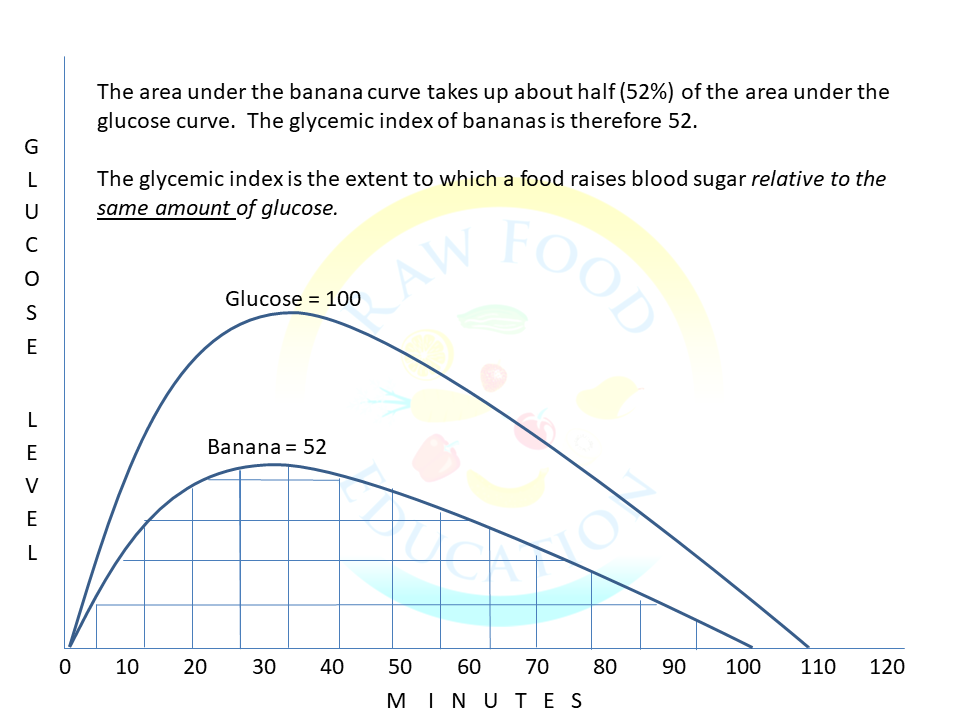
The glycemic index of a food is the degree to which that food raises blood sugar after being consumed. How though, is the glycemic index of a particular food determined? It starts by taking at least 8-10 people, feeding them a specified quantity of glucose, usually 50, 75, or 100 grams, and then measuring the blood sugar level of each participant at periodic intervals over the next two hours. In the figures below, only 4 sample subjects are shown for simplicity purposes.
Figure 1: Glucose response curves in 4 sample study subjects
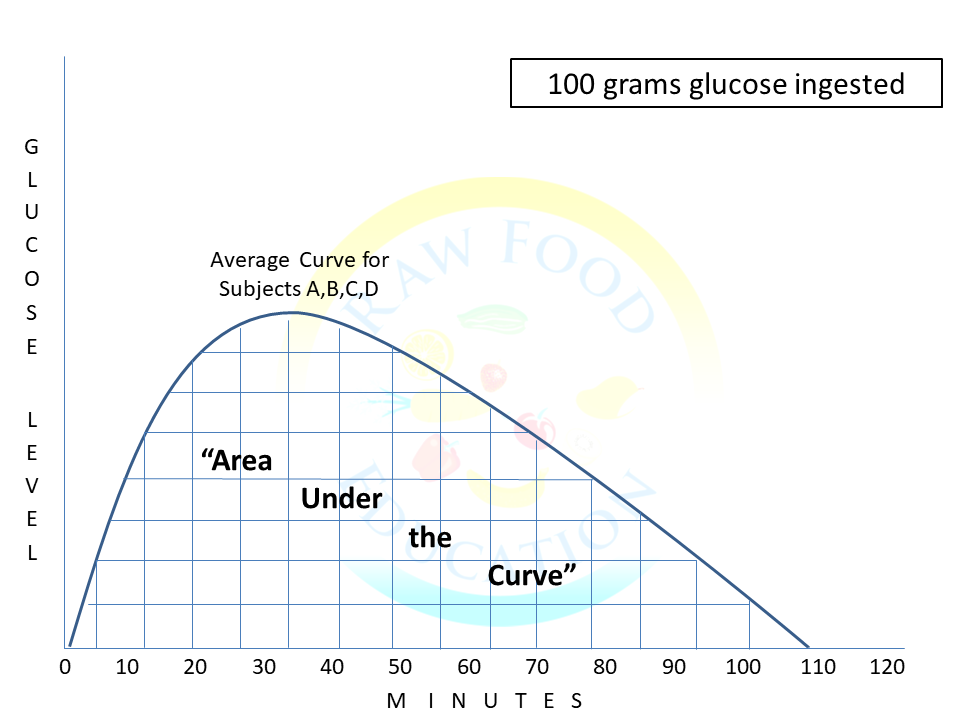
As you can see, the resulting glucose response curve can vary widely depending upon the individual. Because of this, an average is taken of all of the study subjects. The “area under the curve” of the average curve is assigned a value of 100, to be used a reference point for the comparison food.
Figure 2: Average glucose response curve of study subjects
Then, under the same conditions as when given the glucose, the same study subjects consume the test food in a quantity that equals the same amount of carbohydrate as the glucose that was consumed initially. If the subjects consumed 100 grams of glucose for example, they will subsequently consume 100 grams of carbohydrate from the test food, in whole food form. Then just like with glucose, periodic blood sugar measurements are taken over the next two hours to determine the glucose response curves of the subjects for the test food, in this case bananas.
Figure 3: Bananas response curves in (the same) 4 sample study subjects
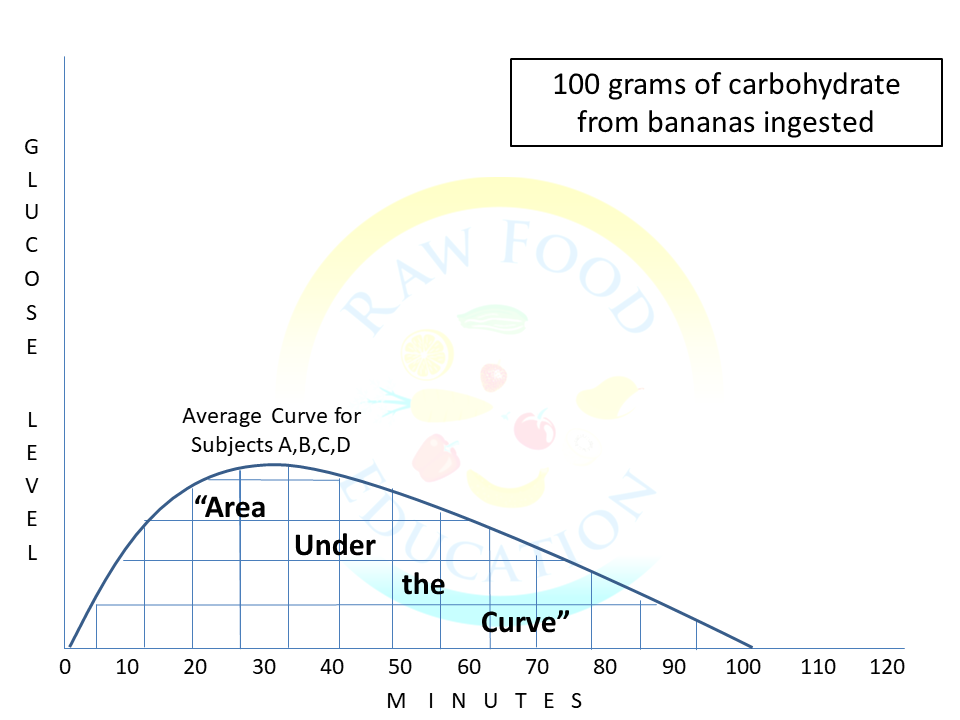
As we saw with glucose, the response curves vary among individuals. The curves are once again averaged out and an average banana response curve is obtained.
Figure 4: Average banana response curve of study subjects
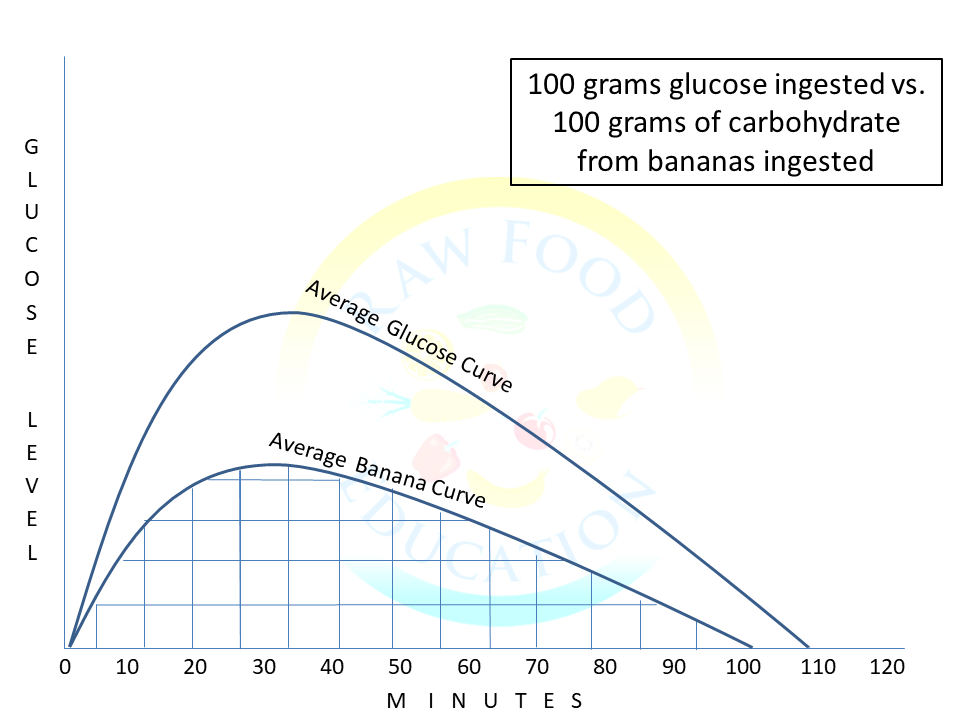
Then the area under the average banana curve is compared to the area under the average glucose curve.
Figure 5: Average glucose curve vs. average banana curve
The area under the average banana curve is 52% of the area under the average glucose curve for the same individuals under the same set of circumstances. This means bananas raise blood sugar 52% as much as the same quantity of glucose consumed directly. As the average glucose response curve was assigned a glycemic index reference value of 100, bananas are assigned a glycemic index value of 52.
Figure 6: Average glucose curve vs. average banana curve determines the glycemic index of bananas.
Foods that have a glycemic index below 55 are considered low glycemic foods. From 56-69 is considered medium glycemic, while foods that rate at 70 or above are considered high glycemic foods.
Conclusion
Now is where the plot thickens. Brace yourself. As it turns out, the glycemic index is one of the least important factors in blood sugar regulation!!! In fact, it leads to a great deal of confusion and often leads people into a false sense of confidence while they continue to sow the seeds of unhealthy blood sugar regulation.
Stay tuned for upcoming newsletter articles to continue this discussion and find out what is most important in blood sugar regulation.
Copyright 2018 Drs. Rick and Karin Dina, D.C. All Rights Reserved
One of the best ways to keep in touch with us is to join our email list. You’ll receive a free copy of Our Top 12 Strategies for Long Term Success on A Raw Plant-Based Diet eBook along with regular information about raw food and plant-based diets and periodic promotions for our classes, events, and other offerings!
The primary measurement doctors use for testing blood sugar regulation is known as fasting glucose. Fasting in this case means the patient has not consumed any food or drink for the past 12 hours so we have a baseline, in between meals reading. Glucose, the simple carbohydrate that is the preferred source of fuel for nearly all cells in our body, is transported through the bloodstream in order to be distributed to all of those cells. A concentration of glucose between 65 and 99 mg per deciliter of blood is generally considered good and healthy, although I personally don’t like to see it rise above 90.
What if your glucose level is always within the normal range, but one time you were really stressed or scared while your blood was being drawn? Given that our glucose level tends to increase when we are stressed, your blood sugar would very likely be higher than normal. Maybe it would even be in the diabetic range, in other words 125 mg/dl or greater. Does that mean you should start medical treatment for diabetes? Probably not. But how can you know for sure if your glucose was just high at the time your blood was drawn, or if there really is a problem overall? This is one situation where a test known as A1c comes in handy.
(Hemoglobin) A1c is a measurement of the average blood sugar level over the past few months. While being stressed at the time of a blood draw can exert a major influence over your immediate glucose level, those 10 or 20 minutes of elevated glucose will not affect the average measurement over the past few months. If A1c was measured in the same blood draw and was in the appropriately low range, that would confirm that your unusually high glucose reading was indeed unusual, and therefore nothing to worry about. Without the A1c measurement, you are still left wondering.
I have seen this type of benefit by measuring A1c in my clinical practice. I have also seen it occur the other way around, where a patient had an appropriately low glucose reading, but elevated A1c. In that case we knew there was a problem, even though the glucose measurement did not indicate it. From there we began a discussion about which dietary changes are most favorable for blood sugar to be regulated most effectively in the body. That discussion centers around insulin resistance vs. insulin sensitivity, and how the fats we do and don’t consume affect that, in addition to exercise, sleep, stress, etc. It does NOT center around avoiding carbohydrates, although making the distinction between healthy sources of carbohydrates and unhealthy ones does come into play. One of my favorite parts of going over lab results with patients is looking at the usually excellent blood sugar numbers such as glucose and A1c in high fruit eaters, but that is another story…
The bottom line for this article is that A1c can often be a very useful test when analyzed by a clinician who knows how to utilize it appropriately. Fasting glucose is very useful as well, and in certain circumstances can take the lead over A1c. In our Mastering Raw Food Nutrition curriculum, we go into a great deal of depth about the ins and outs of glucose, A1c and how it can tell the average blood sugar level, insulin, insulin resistance vs. insulin sensitivity, insulin receptor function in the cell membrane, how the fats we eat affect this and which ones to include more of in your diet and which ones to include less of, fruit, vegetables, fiber, etc. Even though it is less important than many other factors, we even discuss the glycemic index within the appropriate perspective of plant based and raw food diets and all the other variables listed above.
We hope you have enjoyed this tidbit about the usefulness of the hemoglobin A1c test!
One of the best ways to keep in touch with us is to join our email list. You’ll receive a free copy of Our Top 12 Strategies for Long Term Success on A Raw Plant-Based Diet eBook along with regular information about raw food and plant-based diets and periodic promotions for our classes, events, and other offerings!
When I first became interested in health 25 years ago, in addition to choosing a healthful diet, I learned the importance of taking care of our beautiful planet, its precious resources, and its inhabitants. Back then, I asked myself how I as an individual, could make a difference in making the world a greener place. I realized then that collective action from a number of people can absolutely make a difference, and that people do take action when they begin to realize the changes each person can make to add to the whole.
Since my health journey began, I‘ve seen many changes in the “green habits” people have adopted. Recycling is a great example. Growing up in the 1970s, my hometown did not have curbside recycling and I had not heard of any municipality that did. Today, I can’t think of a community that doesn’t offer recycling. This exemplifies the influence that groups of conscientious people can have on public policy. Fuel efficient cars are another great example. Over the last several years, wherever I travel in the U.S. I’ve seen growing numbers of hybrid and alternative fuel cars. The city where I live even gives financial incentives to people who replace their lawns with native plants, encouraging water conservation.
Here are several examples of simple things that Rick and I do regularly to make a positive contribution:
• Grow our own food
• Use vinegar as a weed eliminator
• Use gray water to water our lawn
• Use green cleaners and personal care products
• Wash and reuse produce bags
Rick and I have always grown our own food in the places we’ve lived, no matter how small. When we lived in apartments, we sprouted and did our best to grow food in containers on our apartment patio, when possible. When we moved into our house, we built raised bed gardens and bought some wine barrel planters. Since we live in northern California, our garden is productive all year, and we grow popular summer staple foods like tomatoes, lettuce, bell peppers, several types of greens, squash, and many other vegetables and fruits. Our winter garden is mostly composed of hardy greens like kale.
We’ve found that vinegar makes a great weed eliminator in the areas of our yard that do not have food producing plants like the front yard. One huge caveat would be to NOT use vinegar on lawn weeds, since it kills grass! We found this out the hard way. Fortunately, the lawn in these areas is growing back now— since we’ve watered it (and rest of our lawn) with gray water.
When we shower, we collect the gray water in buckets and use the water on our lawn, trees, and shrubs. This can be a little cumbersome at first, since we have to carry the buckets from our shower out to the front yard. When we started doing this, we were astounded at how much water we used for showering, but carrying the water has taught us to use much less, which is especially important now that California is experiencing a drought.
I’ve used natural and biodegradable household cleaners, soaps, shampoos, and conditioners for 25+ years, and am gratified to find many more quality eco-friendly products available today.
For many years, I’ve washed and reused plastic produce bags. This takes a little time, but I absolutely think it is time well spent and I’m happy to help keep plastic out of the landfill. Many communities now forbid plastic bags for purchases—another great sign of progress for going greener. Green bags and reusable mesh bags are now available for produce as well.
Another green strategy includes buying locally produced food to cut down on fossil fuel expenditure during transportation, opting out of receiving junk mail to save paper, using rechargeable batteries to run remote controls and other gadgets, and eating mostly organic food. A couple of years ago we replaced the single-paned windows in our house with double-paned windows to save on heat loss. Our best strategy of all is to eat a high raw, whole food plant-based diet, which provides numerous benefits both for our health and the planet.
This is just a sampling of our “go greener” strategy. We know that every positive change each of us makes contributes to a greener, healthier planet for all!
One of the best ways to keep in touch with us is to join our email list. You’ll receive a free copy of Our Top 12 Strategies for Long Term Success on A Raw Plant-Based Diet eBook along with regular information about raw food and plant-based diets and periodic promotions for our classes, events, and other offerings!
Where does one get vitamin A on a plant-based vegan diet?
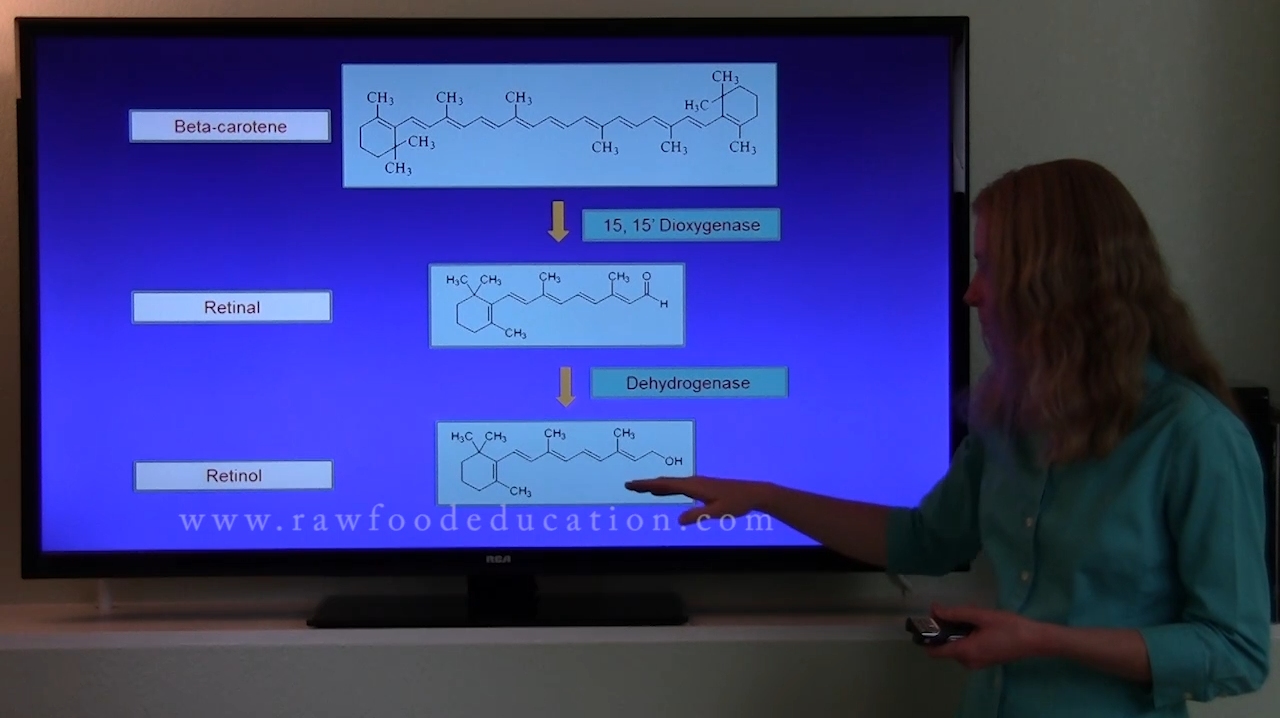
Vitamin A is essential for proper cell growth and reproduction and is probably best known for its importance in vision. It also plays an important role in immune system function and skin health. Vitamin A (also known as retinol) is found exclusively in animal foods and various vitamin supplements. Vitamin A is an essential nutrient for humans, so if one is eating a vegan diet, where is this vitamin A obtained? Fortunately, the human body converts beta-carotene and certain other carotenoids to vitamin A when necessary. Beta-carotene is a well-known carotenoid famous for providing carrots with their orange coloring and is found in many other plant foods, especially green, yellow, and orange-colored fruits and vegetables.
Beta-carotene conversion to vitamin A
How does this conversion of beta-carotene to vitamin A work? In the human body, beta-carotene is converted to retinal by a dioxygenase enzyme. Retinal is then converted to retinol (vitamin A) by a dehydrogenase enzyme:
Other carotenoids that are capable of converting to vitamin A in the human body include alpha-carotene, gamma-carotene, and beta-cryptoxanthin. Of the four carotenoids, the one that converts the most reliably to vitamin A is beta-carotene.
Why is my skin orange?
Vitamin A is a fat-soluble nutrient, which means that it can be stored in our body and we run the risk of getting too much from outside sources, such as supplements consumed in excess of the body’s needs. Carotenoids are fat soluble also, but do not carry the same risks as vitamin A with excess consumption. In excess of the body’s needs, carotenoids are stored in fat cells including those under our skin, giving an orange color to the skin which is only cosmetic.
Do we have to cook our food to get enough beta-carotene and vitamin A?
Many people have asked about the effectiveness of this carotenoid conversion mechanism and how well carotenoids are absorbed from raw food. A recent study found normal vitamin A status and favorable blood beta-carotene levels in 200 long-term raw food enthusiasts. This indicates is that these raw foodists consumed a good amount of beta-carotene, a quantity was absorbed and was present in their bloodstream, and then an appropriate amount was converted into vitamin A.
References:
Fleshman, Matthew Kintz. Beta Carotene Absorption and Metabolism. Ph.D. dissertation, Ohio State University, 2011.
Garcia A, Koebnick C, Dagnelie P, Strassner C, Elmadfa I, Katz N, Leitzmann C, Hoffman I. British Journal of Nutrition 2008; 99: 1293 – 1300.
Interested in taking your vitamin A, beta-carotene, and general nutrition knowledge to the next level?
We cover this topic and so much more in our online Mastering Raw Food Nutrition and Educator Course. For more class details, click here.
Additionally, our book The Raw Food Nutrition Handbook: An Essential Guide to Understanding Raw Food Diets addresses many hot topics in raw food nutrition such as essential fats, protein, nutrient content of raw food diets, food combining, enzymes, hydration, vitamins, minerals, and many more. We value education on these important topics and are happy to finally bring this book to you. The book is available on Amazon and other online booksellers.
One of the best ways to keep in touch with us is to join our email list. You’ll receive a free copy of Our Top 12 Strategies for Long Term Success on A Raw Plant-Based Diet eBook along with regular information about raw food and plant-based diets and periodic promotions for our classes, events, and other offerings!
Spring is in the air and gardening season has begun in our home! Some of the many joys a raw food enthusiast experiences in Springtime are: preparing soil in raised beds to grow favorite garden vegetables, choosing the perfect vegetable starts, then planting them and watching them grow throughout the season. Harvest time is always exciting, too, as we reap the “fruits of our labor” (and the vegetables, too!).
Plant leafy greens for optimal nutrition
This year, in order to pack our raw vegan diet with optimal nutrition, we’ve planted a plenitude of leafy greens, including several types of lettuce, frisée (curly endive), dandelion greens, arugula, two types of kale, and two types of collard greens. The lettuce varieties we planted are heirloom varieties of green leaf, red leaf, red Romaine, green Romaine, and red oak leaf. Lettuce, frisée, and dandelion greens are all members of the sunflower family (Asteraceae), while arugula, kale, and collard greens are members of the cabbage family (Brassicaceae). Members of this plant family are also known as cruciferous vegetables, and include broccoli, cauliflower, maca, turnip, rutabaga, Brussels sprouts, watercress, red and green cabbage, bok choy, and Napa cabbage.
We’ve also planted several varieties of tomatoes, including some of the heirloom varieties we love, like Pineapple tomatoes, Cherokee Purple, Green Zebra, Brandywine, and several different types of cherry tomatoes. Several tomato varieties love heat, and we planted those in our yard on the south side of the house, which is warmer than the rest of our yard and more sheltered from the wind. Tomatoes are part of the nightshade family (Solanaceae) along with bell peppers, eggplant, potatoes, tomatillos, goji berries, Incan berries, jalapeño peppers, and other hot pepper varieties.
Plant mints in containers for best results
We have quite a few plants from the mint family in our yard this year, including several types of basil and four types of mint. Mints have a tendency to grow and spread prolifically. Early in my gardening career I made the mistake of planting mint in my raised beds and found out the hard way that mint plants have a tendency to “take over” the garden. This year, I learned from past experience and planted the mints in half wine barrels to keep them appropriately contained. However, if you want a very aromatic ground cover, Corsican Mint is a beautiful choice. A couple of years ago, I planted it in a makeshift herb garden in a non-grassy area of my yard. It has since spread and creates a deliciously fragrant chocolate mint addition to the area. It may surprise you to know that Chia seeds are another member of the mint family famously popular in the raw food community!
On the other hand, most types of basil stay localized in their growth habit, so I plant basil directly in my raised beds. They make a lovely companion planting next to the tomatoes, and the two are a perfect culinary combination, especially in Italian cuisine.
Fruit-bearing plants in our yard include two types of lemon trees and a fig tree, which is already producing numerous small figs. The fig tree is only five years old, and has already been producing numerous baskets of figs for the last three seasons. Since we adore figs, we’re really looking forward to harvest time later this year!
Plant fruits and vegetables no matter where you live
This is a small sampling of the foods we are currently growing in our yard and garden. We enjoy being able to create more diversity in our raw food diets and growing foods we enjoy that can be harder to find in the grocery store aisles. Even more importantly, we notice a big difference in the taste and quality of the foods we grow compared to the ones we buy. We suggest growing fruits and vegetables—you’ll be well rewarded in both taste and nutritional value. Before we had a back yard, we grew vegetables and fruits on our apartment patio, and sprouts, greens, and grasses near a window in our dining room. There are so many ways to grow your own food, and at harvest time, you’ll be grateful that you made the worthwhile effort. Happy gardening!
One of the best ways to keep in touch with us is to join our email list. You’ll receive a free copy of Our Top 12 Strategies for Long Term Success on A Raw Plant-Based Diet eBook along with regular information about raw food and plant-based diets and periodic promotions for our classes, events, and other offerings!
One of the best ways to keep in touch with us is to join our email list. You’ll receive a free copy of Our Top 12 Strategies for Long Term Success on A Raw Plant-Based Diet eBook along with regular information about raw food and plant-based diets and periodic promotions for our classes, events, and other offerings!
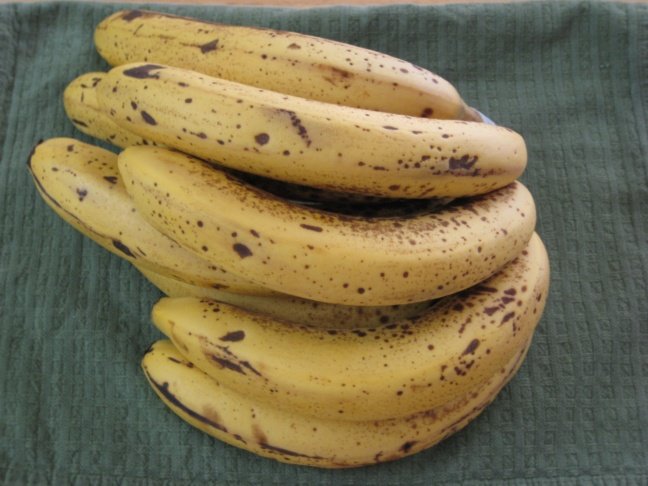
When I started eating a raw food diet 24 years ago, I thought that ripe bananas were simply yellow, with no green coloring. About a month after starting my raw food journey, a raw food friend of mine mentioned that bananas are truly ripe when they look like this:
Here is more of the story:
One of the best ways to keep in touch with us is to join our email list. You’ll receive a free copy of Our Top 12 Strategies for Long Term Success on A Raw Plant-Based Diet eBook along with regular information about raw food and plant-based diets and periodic promotions for our classes, events, and other offerings!
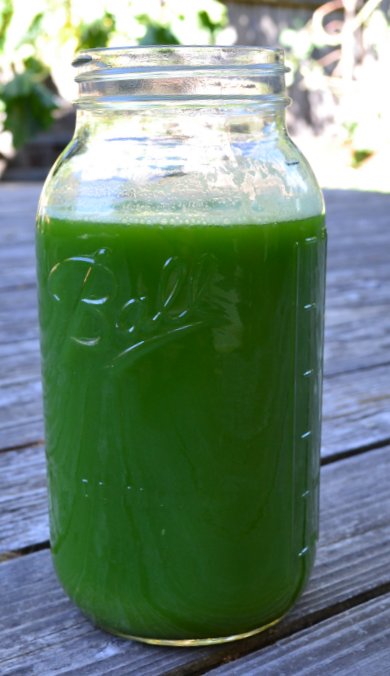
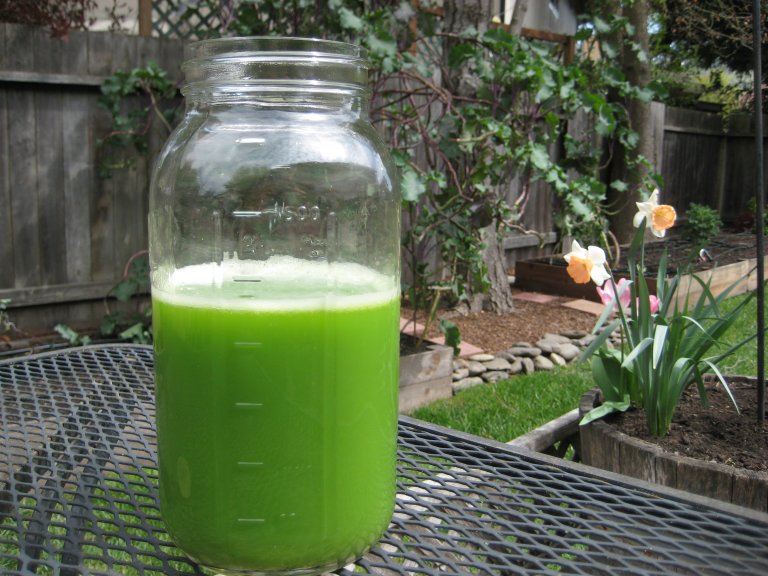
I have shared this recipe on my blog in the past and now I have a short video explaining how I make this juice:
This juice has been one of my favorites for years because of its simplicity, nutrient content, and versatility. I find it to be a great introductory juice recipe for people new to juicing, since it has a lighter taste than green juice that contains darker leafy greens. I personally love the taste of dark leafy greens, but for some, the taste may need some “getting used to”. I can certainly appreciate this, given that when I became interested in health years ago, I did not even know that dandelion greens were edible. Now, they are one of my favorite leafy greens!
Here is the recipe:
5 stalks of celery (12” long)
1 lemon, peeled
2 medium cucumber, 8” long
This recipe makes about 32 ounces of juice. Here are some of the nutrients found in these ingredients:
Light Green Juice ingredients
Adult Daily Values
Calories
165.9
Calcium
246.2
1000 – 1200 mg
Iron
2.83
8 – 18 mg
Zinc
1.67
8 – 11 mg
Magnesium
120.2
310 – 420 mg
Potassium
1832.9
4700 mg
The mineral content of such simple ingredients is amazing to me, especially calcium and iron. The sodium content of these ingredients is 270 mg, most of which is found in the celery. Cheers!
One of the best ways to keep in touch with us is to join our email list. You’ll receive a free copy of Our Top 12 Strategies for Long Term Success on A Raw Plant-Based Diet eBook along with regular information about raw food and plant-based diets and periodic promotions for our classes, events, and other offerings!
In this video, Rick explains his experience with juicing:
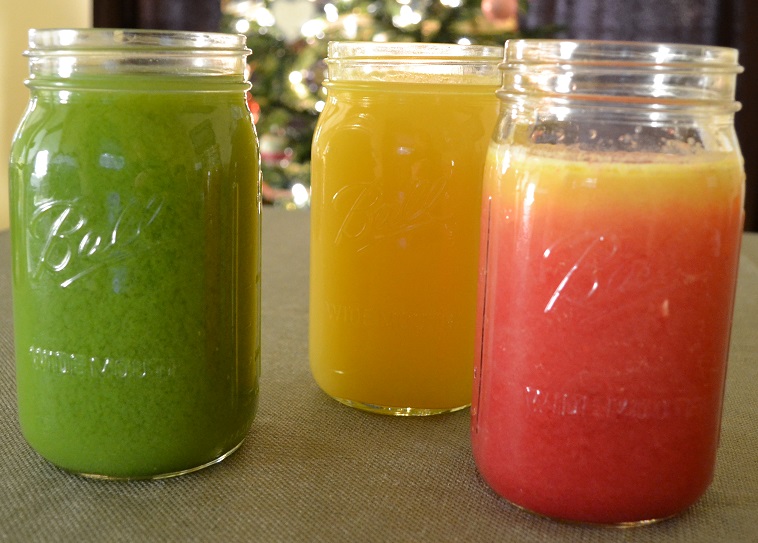
Here is one of Rick's favorite green juice recipes:
Here is another of Rick's favorite juice recipes:
One of the best ways to keep in touch with us is to join our email list. You’ll receive a free copy of Our Top 12 Strategies for Long Term Success on A Raw Plant-Based Diet eBook along with regular information about raw food and plant-based diets and periodic promotions for our classes, events, and other offerings!
Our new YouTube channel is LIVE! After so many requests, we finally have a YouTube channel where we will be posting videos on a variety of health related topics! We have a couple of videos posted there now, including Rick’s three part essential fat video, and a video about our visit to the NY wholesale produce market:
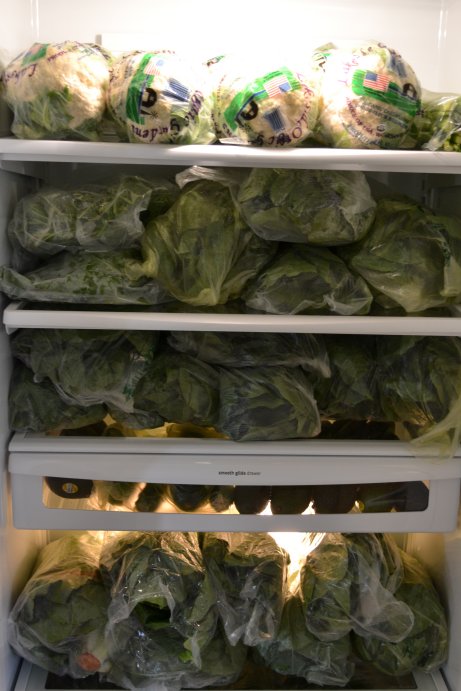
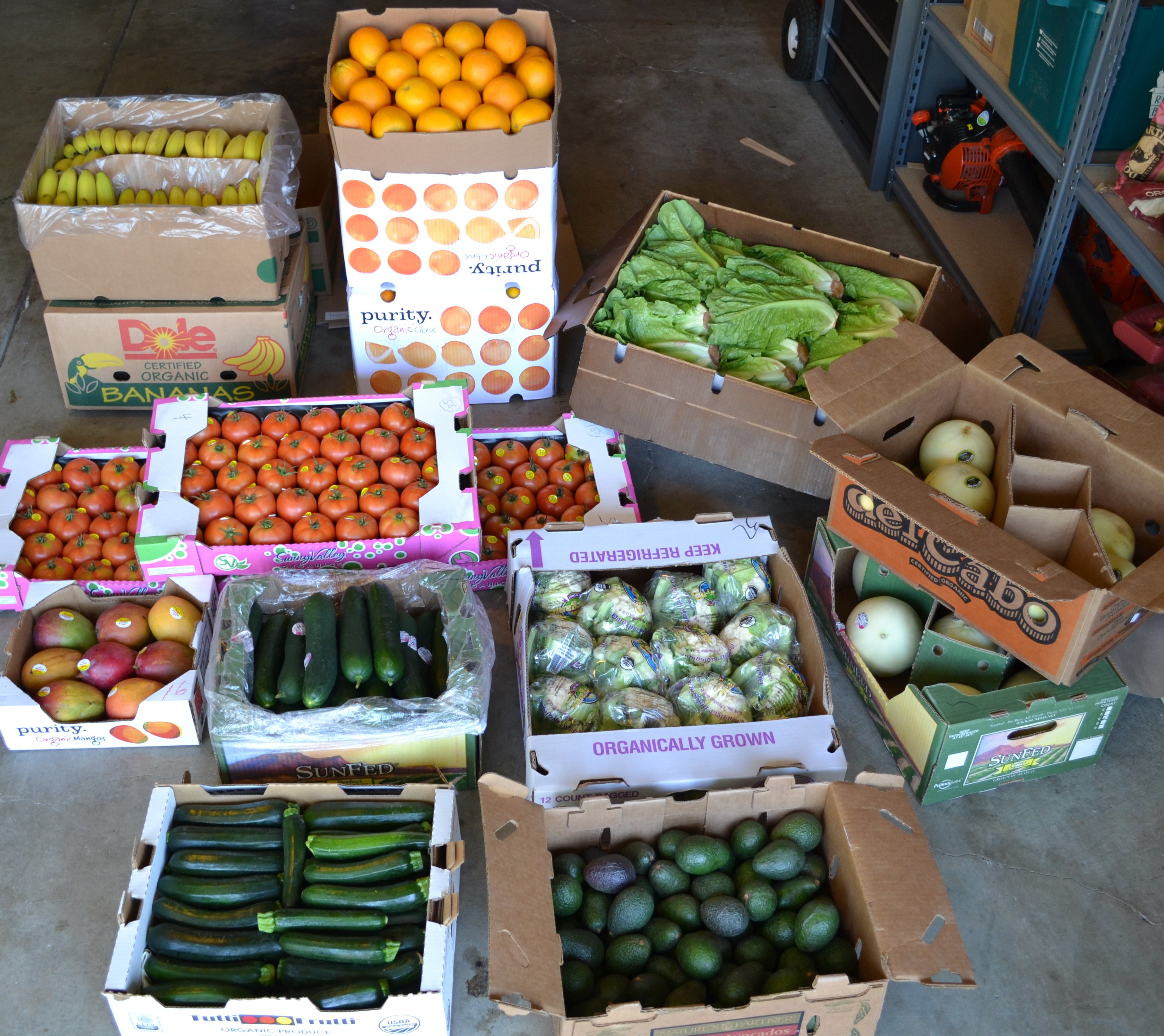
Rick and I have visited wholesale markets in both the San Francisco bay area and the New York metro area. We live in the SF bay area, so when we buy from our local wholesale produce markets we buy enough food to last us about 3 weeks. Why so much? The food available at wholesale markets is sold in boxes or cases. This works well for us because the produce is so fresh, that it lasts for often weeks at a time in our large-capacity dedicated refrigerator.
We have found that when we buy lettuce at wholesale, the heads are very large, since very few, if any of the outer leaves have been removed. These heads of lettuce are generally larger than the heads we see at the grocery store, which likely have had leaves removed to maintain a fresh look. I really enjoy going to wholesale markets because of the wide variety of food available, especially organic. A very large percentage of the food that we eat is organically grown here in California.
For produce enthusiasts like us, wholesale markets can be a great way to purchase in quantity and save a notable amount of money. Rick has calculated that on average, we spend about 50% less money on produce from the wholesale markets that we would spend on the same amount of produce at the grocery store. You may be wondering if we go to farmers markets and the answer is yes, we love our local farmers market! We can often find foods at the farmers market that are not available at the wholesale market and vice versa.
The wholesale markets we have attended open around midnight or later and close around 10 am or earlier, depending on the vendor, so Rick and I find ourselves waking at 5 am to beat rush hour to the markets. I especially love these markets, since our need to go shopping for food weekly is drastically reduced. I find myself only having to do some minor fill-in shopping for items not available at the wholesale markets, maybe once a week or twice a month. With this shopping strategy, Rick and I overall spend much less time shopping and have more time available for work and other activities we enjoy.
The challenge is that our local wholesale markets are in San Francisco and South San Francisco which are about an hour and fifteen minutes away from our home if there is little traffic. The wholesale produce market that we have visited in the New York area is in the Bronx, which is also about an hour and fifteen minutes from our parents’ homes, where we stay on our visits to the New York metro area. This market has similar hours to our bay area wholesale markets, but is much larger.
Without a doubt, wholesale markets are certainly an experience and a great way to buy fresh produce in quantity. They can also be a tremendous resource for people who live in areas that have limited access to fresh produce year round, providing that the person lives within driving distance of a wholesale market. Many major metro areas have wholesale markets, and our experience at the two we have visited is that most vendors sell to individuals, although some sell exclusively businesses. You will have to check with individual vendors to learn their sales policies.
One of the best ways to keep in touch with us is to join our email list. You’ll receive a free copy of Our Top 12 Strategies for Long Term Success on A Raw Plant-Based Diet eBook along with regular information about raw food and plant-based diets and periodic promotions for our classes, events, and other offerings!
My dad enjoys vegetables, such as those found in this salad.
Over the past several years, the longevity field has exploded in popularity as many people have become interested in staying as healthy and fit as possible into their golden years. My dad, who turned 87 this month, has been talking about the importance of fitness and health for as long as I can remember. Over the holidays this year, dad and I talked about the health-promoting habits that have made a difference in his life. Here are 5 things that he mentioned:
1. The importance of moving one’s body - When I was a child, dad started practicing yoga just about every morning upon rising at 5 AM – this was before many people had even heard of the practice. In addition this, my dad has been walking almost daily for the past 30+ years. His walking routine varies depending on the weather and ranges from 2 – 4 miles, with hills included. Dad walks within his body’s ability and he always says that it is important to not “overdo it”. He is happy to have maintained this level of fitness for so many years and does not experience any joint pain or lack of range of motion anywhere in is body. His friends often tell him that he is lucky to be able to move as well as he does, and his response to them is that he is able to do so because he started his exercise routine many years ago and has maintained it since then.
2. The importance of moving one’s mind – My dad is and has always been an avid reader. He loves learning and has numerous interests that keep his mind engaged constantly. Whenever I talk to him, he wants to talk about some new subject or idea he has recently learned. He thinks that this lifetime love of learning has helped him maintain his mental fitness over the years. He has volunteered at a local library for many years, and one of the benefits of this is exposure to lots of books within his areas of interest.
3. Relaxation is important – I work a lot, given the nature of my career. This work ethic extends to just about everything else I do, so when I am spending time working on projects with dad, I work on them until completion, even if it takes quite a bit of time and focus. When dad sees me working like this he commends me for my dedication and reminds me to take rest breaks, since he feels that rest is just as important as work. He also has told me on many occasions that excessive stress is “not worth it”. He thinks that a little stress can be a good motivator, but that constant stress can be harmful. He has always encouraged me to transform stress into action and not to worry about the things I can’t control. As much as that sounds like common sense, it’s always a good reminder.
4. A sense of humor is invaluable – Need I say more?
5. You are never too old to change – AKA flexibility of thinking. My dad has always said that “what you learn is important and how you apply what you have learned is equally important”. Dad thinks of himself as being selectively open minded, similar to me. He likes to educate himself well about subjects so that he can make a decision based on a substantial amount of information – sounds like critical thinking, which I talk about in our Science of Raw Food Nutrition classes.
When I first started becoming interested in health back in the late 1980s, dad was curious about the information I was learning and he was impressed with my health improvements. He made some changes to his diet here and there over the years, but did not really maintain the changes. About a year and a half ago, dad decided that he was ready to make some dietary changes and to move toward a plant-based diet. Over the past year and a half, he has noted that the more whole natural plant foods he consumes, the better he feels. He says he has more energy, thinks more clearly, has experienced improvements in his short and long term memory, can climb hills more easily while on his walks without having to rest at the top of the hill, etc. Myself and other family members have noticed these differences, too.
Dad attributes his improvements to both diet and exercise, but feels that diet especially has played a role, given that he has already been exercising for many years. He emphatically says that his changes have improved his life dramatically, and he thinks that at 87 years old, this has made all the difference in the world for him. He always says that age need not be a factor in one’s decision to make health promoting changes in one’s life and he is happy that he had the open mindedness to do so.
One of the best ways to keep in touch with us is to join our email list. You’ll receive a free copy of Our Top 12 Strategies for Long Term Success on A Raw Plant-Based Diet eBook along with regular information about raw food and plant-based diets and periodic promotions for our classes, events, and other offerings!
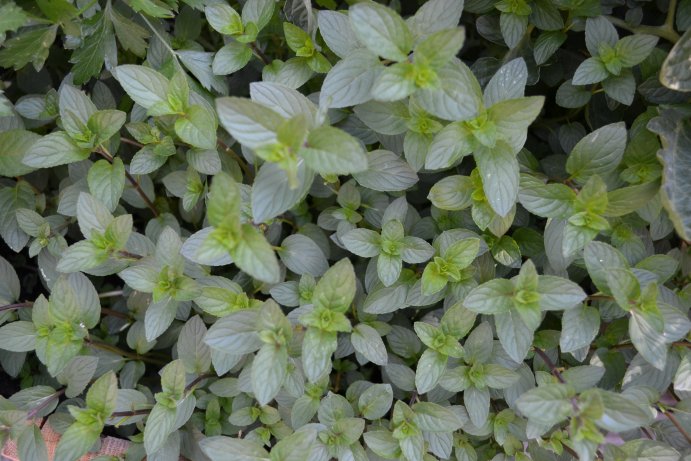
Chocolate, did someone say chocolate?! Yes, chocolate mint, which is one of the many types of mint that one can find in their search for mint plants. In my journeys to various nurseries and plant sales, I have seen the obvious peppermint and spearmint, along with other more exotic types of mint including chocolate mint, and so many more.
I personally love chocolate mint – the fragrance stays true to its name and the flavor to me has a mild peppermint flavor. I currently have chocolate mint and several other types of mint growing in a planter on our deck and find myself enjoying the fragrance of the mint plants whenever I venture into our backyard garden. I have yet to find information on the nutrient content of chocolate mint, so here is a nutrient analysis of its close relative, peppermint, which contains small amounts of important nutrients:
Fresh peppermint leaves, 10
Adult Daily Values
Calories
0.35
Calcium
1.22
1000 – 1200 mg
Magnesium
0.40
310 – 420 mg
Potassium
2.85
4700 mg
I know, nutrient-wise peppermint is rather unremarkable, but Rick and I have found it can really add some zing to frozen recipes especially on hot summer days like today.
Speaking of frozen recipes, I was recently inspired by the fragrance and taste of chocolate mint to create a fun and simple recipe that Rick loves:
Chocolate mint banana ice cream (1 – 2 servings)
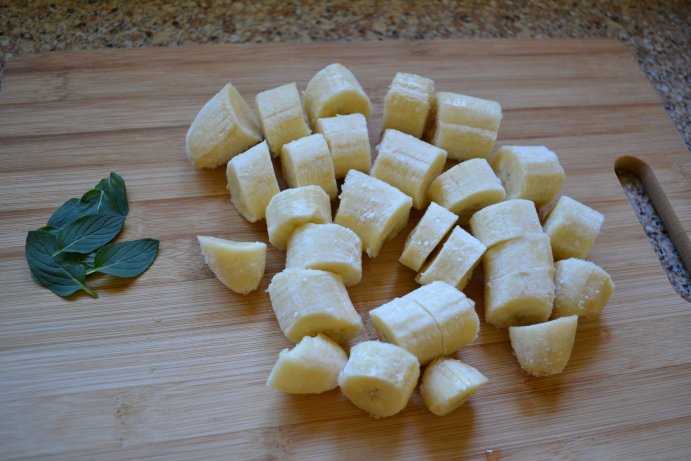
3 peeled frozen bananas
10 medium leaves of chocolate mint
There are many ways that Rick and I have made this ice cream. We have used a food processor, high powered blender, and twin-gear juicer. Today, I used the food processor. First, I gathered 10 leaves of chocolate mint from the garden, and then cut 3 frozen bananas into pieces about this size:
Next, I placed the banana pieces and the chocolate mint leaves into the food processor and placed the lid on the container. I blended the bananas and chocolate mint leaves using short pulses until the mixture became more homogenous:
I then blended the mixture continuously until smooth:
I then scooped the mixture into a serving bowl and placed into the freezer for about 5 minutes to let the mixture freeze. Today was a really hot day, so the mixture was a little runny after blending. Freezing for a few minutes after blending keeps the ice cream from melting before serving. When Rick and I were ready to eat the ice cream, we removed the mixture from the freezer and served with a chocolate mint garnish:
This recipe makes one medium serving or two small servings. Of course, one can make more or less depending on how much one would like to have – Rick likes to eat a lot more than this! 🙂
One of the best ways to keep in touch with us is to join our email list. You’ll receive a free copy of Our Top 12 Strategies for Long Term Success on A Raw Plant-Based Diet eBook along with regular information about raw food and plant-based diets and periodic promotions for our classes, events, and other offerings!
Whew, what a sense of accomplishment! Rick and I spent a large part of this weekend working on a front yard garden project – planting lemon bushes and a lime tree! We have wanted to do this project for so long, and finally took some time out of our very busy work schedule to do some landscaping that yields these two of our favorite fruits.
When we moved into our house, our front yard had numerous rose bushes with lovely flowers. After a period of time, we noticed that the blooms started to disappear. I would notice rosebuds on the verge of opening on one day, only to find the bud gone the next. Puzzling – why would a rosebud disappear? This occurrence became increasingly frequent, to the point where it was rare to see flowers or buds on our front yard rose bushes. We had a hunch about what was happening to our roses, but it wasn’t until one morning when I woke up for no particular reason around 4 am. I looked out one of our front windows to find a large deer feasting on our rose bushes! Just as we suspected, which hardly surprised us, given that we live near open space.
We have always loved lemons and limes, so we thought that they would make an attractive addition to our yard and replacement for the roses. About a month ago, we purchased 4 lemon bushes and a lime tree and set aside this past weekend for planting. Since our purchase, the lemon bushes have flowered and have small lemons growing on them! We really like the idea of landscaping that is both attractive and productive. Our neighbors with citrus plants have not had a problem with deer eating them, but we will see what happens. In the meantime, we are excited about the new additions to our yard! To celebrate, here is a recipe for green lemonade (aka my favorite green juice):
8 stalks of celery (12” long)
1 medium lemon, peeled
3 medium cucumber, 8” long
This recipe makes about 48 ounces of juice, depending on the ingredients. Here is a nutrient analysis of the juice ingredients:
Green lemonade ingredients
Adult Daily Values
Calories
241.7
Calcium
371.1
1000 – 1200 mg
Iron
4.1
8 – 18 mg
Zinc
2.5
8 – 11 mg
Magnesium
180.4
310 – 420 mg
Potassium
2774.5
4700 mg
Vitamin C
85.7
70 – 90 mg
Vitamin B1 (Thiamin)
0.38
1.1 – 1.2 mg
Vitamin B2 (Riboflavin)
0.61
1.1 – 1.3 mg
Vitamin B3 (Niacin)
2.61
14 – 16 mg
Folate
256.8
400 mcg
One of the best ways to keep in touch with us is to join our email list. You’ll receive a free copy of Our Top 12 Strategies for Long Term Success on A Raw Plant-Based Diet eBook along with regular information about raw food and plant-based diets and periodic promotions for our classes, events, and other offerings!
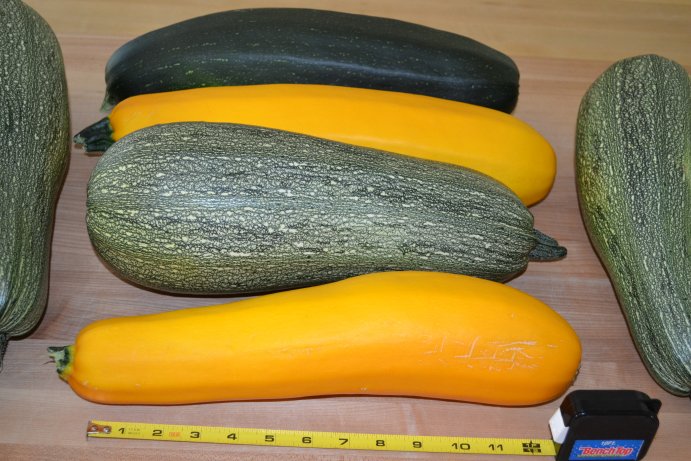
This week, Rick and I returned home from teaching out of town to find that many our small, six-inch long zucchini squash had grown to over a foot long! There was quite a bit of heat in our area while we were gone, so we weren’t too surprised, but now we are left with a dilemma – what to do with so many huge summer squash. Here are five ideas:
1. Shred into salad – Simple and one of our all-time favorite ways to enjoy summer squash. Rick especially loves summer squash in his salad.
2. Use in dressing – Summer squash is a great ingredient to help add volume to a salad dressing. For example, we use summer squash to increase the volume of our miso-tahini-lemon dressing which is a great strategy to decrease the fat content per volume of a higher fat dressing.
Our recipe: Juice of ½ lemon, 2 tablespoons tahini (we like raw tahini), ½ teaspoon chickpea miso, 2 cups chopped summer squash. Blend in blender until smooth.
3. Make spiralized summer squash pasta – Have a pasta party! Here is a blog post with recipes for squash pasta and sauce.
4. Steam them – This helps to soften the toughness of large summer squash skin. We enjoy steaming large summer squash and adding some avocado for consistency and flavor. This recipe reminds me of the steamed summer squash mom used to make when I was young.
5. Share the wealth – We are now in the process of trying 🙂 to share our squash with neighbors and friends. Resoundingly, they have said “hey, thanks for the month supply” (smile) and asked “how can we prepare these?” See 1 – 4 for ideas.
Nutrient analysis of summer squash – all varieties:
Summer squash – 2 cups chopped (226 g)
Adult Daily Values
Beta carotene
271 mcg
Vitamin B1 (Thiamin)
0.11
1.1 – 1.2 mg
Vitamin B2 (Riboflavin)
0.32
1.1 – 1.3 mg
Vitamin B3 (Niacin)
1.10
14 – 16 mg
Folate
65.5
400 mcg
Calcium
33.9
1,000 – 1,200 mg
Magnesium
38.4
310 – 420 mg
Potassium
592.1
4,700 mg
Summer squash may not be a nutrient powerhouse, but it certainly can provide contributory amounts of certain key nutrients, such as the B vitamins listed on the chart above, calcium, magnesium, and potassium.
One of the best ways to keep in touch with us is to join our email list. You’ll receive a free copy of Our Top 12 Strategies for Long Term Success on A Raw Plant-Based Diet eBook along with regular information about raw food and plant-based diets and periodic promotions for our classes, events, and other offerings!


 The primary measurement doctors use for testing blood sugar regulation is known as fasting glucose. Fasting in this case means the patient has not consumed any food or drink for the past 12 hours so we have a baseline, in between meals reading. Glucose, the simple carbohydrate that is the preferred source of fuel for nearly all cells in our body, is transported through the bloodstream in order to be distributed to all of those cells. A concentration of glucose between 65 and 99 mg per deciliter of blood is generally considered good and healthy, although I personally don’t like to see it rise above 90.



 The challenge is that our local wholesale markets are in San Francisco and South San Francisco which are about an hour and fifteen minutes away from our home if there is little traffic. The wholesale produce market that we have visited in the New York area is in the Bronx, which is also about an hour and fifteen minutes from our parents’ homes, where we stay on our visits to the New York metro area. This market has similar hours to our bay area wholesale markets, but is much larger.