One of the best ways to keep in touch with us is to join our email list. You’ll receive a free copy of Our Top 12 Strategies for Long Term Success on A Raw Plant-Based Diet eBook along with regular information about raw food and plant-based diets and periodic promotions for our classes, events, and other offerings!
Video on the Selenium Content of Brazil Nuts
One of the best ways to keep in touch with us is to join our email list. You’ll receive a free copy of Our Top 12 Strategies for Long Term Success on A Raw Plant-Based Diet eBook along with regular information about raw food and plant-based diets and periodic promotions for our classes, events, and other offerings!
Three common vitamin D questions answered: Is vitamin D deficiency just for vegans, how is vitamin D made in our skin, and what is the best test for vitamin D?
 Is vitamin D deficiency just for vegans?
Many times I have heard people say that they stopped eating a plant-based vegan diet because they tested low in vitamin D. The fact is that vitamin D deficiency is not solely an issue for vegans, vegetarians, and raw foodists. A 2011 study estimated the prevalence of vitamin D deficiency in the US population at 42 percent on average and in some segments of the population this prevalence is as high as 82 percent. The researchers in this study defined vitamin D deficiency as a blood level of vitamin D less than or equal to 20 ng/ml. Opinions on this number differ. For example, various clinicians and the Vitamin D Council define vitamin D deficiency as less than or equal to 30 ng/ml, so these sources may see the estimated average vitamin D deficiency prevalence in the US as higher than 42%.
According to a Vegetarian Times survey, about 3% of the US population follows a vegetarian diet and approximately half of these people identify as vegan. As we can see from the stats mentioned above, vitamin D deficiency is clearly not just a concern for vegans, vegetarians, and raw food enthusiasts. Vitamin D status is an important consideration for everyone regardless of diet.
How is vitamin D made in our skin?
When we are outside and we have bare skin exposed to the sun, ultraviolet B spectrum rays interact with 7-dehydrocholesterol in our skin to produce cholecalciferol, also known as vitamin D3. After vitamin D3 is formed, it travels via the bloodstream down to the liver where it is converted to 25-hydroxycholecalciferol, also known as 25-hydroxyvitamin D3. 25-hydroxycholecalciferol then travels via the bloodstream down to the kidneys, where it is transformed to 1,25-dihydroxycholecalciferol, also known as 1,25-dihydroxyvitamin D3, which is considered to be the activated form of vitamin D.
Vitamin D3 is produced in an area of the skin called the epidermis. The epidermis has five layers, the first of which we can see, called the stratum corneum. Vitamin D3 is produced further down in levels 4 and 5 of the epidermis called the stratum spinosum and the stratum basale, after which vitamin D3 travels through the bloodstream to the liver for conversion.
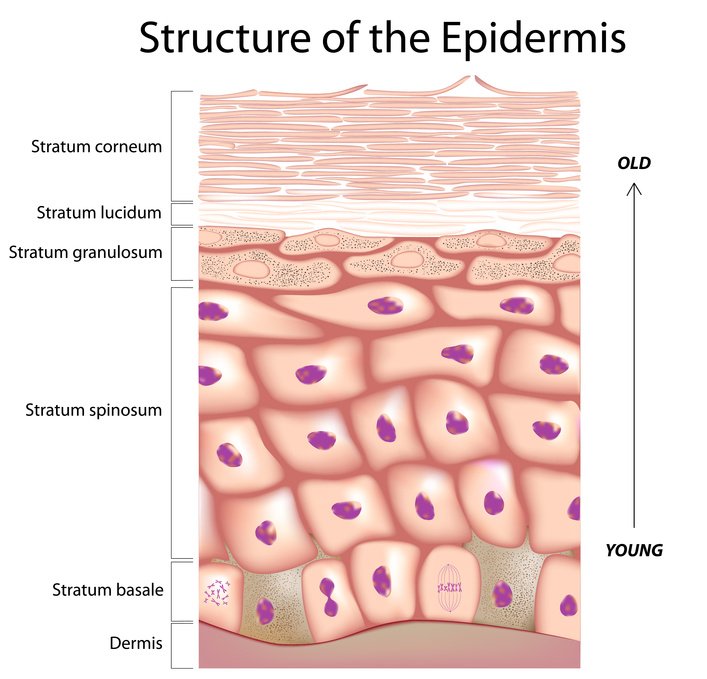
Many people spend time in the sun but still find that they test low in vitamin D. There are some factors that can inhibit vitamin D production in the skin, specifically air pollution, skin type, time of day, age, sunscreen usage, latitude, time of year, and other factors. For example, air pollution in significant amounts can potentially obscure the rays of the sun, inhibiting skin production of vitamin D.

Sunscreen use at SPF 8 and above may affect the production of vitamin D in the skin as can latitude and season. For example, the ability of one’s skin to make vitamin D year round is consistent at 35 degrees north latitude and below in the northern hemisphere*, or 35 degrees south latitude and above in the southern hemisphere*. In the United States, 35 degrees north is Los Angeles on the west coast and the border of North and South Carolina on the east coast. The ability of one’s skin to make vitamin D in the winter will be reduced or eliminated for someone living above 35 degrees north and below 35 degrees south. Simply stated, people who live in northern parts of the United States have been found not to produce vitamin D in their skin during the winter months.
How do we determine our vitamin D status?
The best way to know is to get a blood test, and the test currently considered to be the best measurement of vitamin D status is known as the 25-hydroxycholecalciferol, 25-hydroxyvitamin D3, or 25-OH D3 test.

Would you like to learn how much vitamin D is made in the skin per unit time or are you interested in taking your general vitamin D and nutrition knowledge to the next level? We cover this topic and so much more in our online Mastering Raw Food Nutrition and Educator Course. Mastering Raw Food Nutrition is the updated and expanded version of our popular Science of Raw Food Nutrition classes. For more class details, click here.
Additionally, our book The Raw Food Nutrition Handbook: An Essential Guide to Understanding Raw Food Diets addresses many hot topics in raw food nutrition such as vitamin D, essential fats, protein, nutrient content of raw food diets, food combining, enzymes, hydration, vitamins, minerals, and many more. We value education on these important topics and are happy to finally bring this book to you. The book is available on Amazon and other online booksellers.
One of the best ways to keep in touch with us is to join our email list. You’ll receive a free copy of Our Top 12 Strategies for Long Term Success on A Raw Plant-Based Diet eBook along with regular information about raw food and plant-based diets and periodic promotions for our classes, events, and other offerings!
References:
Dina K, Dina R. The Raw Food Nutrition Handbook. Summertown, TN: Healthy Living Publications, 2015.
Forrest KY, Stuhldreher WL. Prevalence and correlates of vitamin D deficiency in US adults. Nutr Res. 2011 Jan;31(1):48-54.
http://www.vegetariantimes.com/article/vegetarianism-in-america/
www.vitamindcouncil.org
*Examples of areas in the northern hemisphere include North America, Europe, and Asia. Examples of areas primarily in the southern hemisphere include: South America, Australia, New Zealand, and islands of the South Pacific Ocean. Africa is located in both the northern and southern hemispheres.
Here is a video summarizing this information on how vitamin D is made in the skin:
Video for My Pomegranate Green Smoothie Recipe
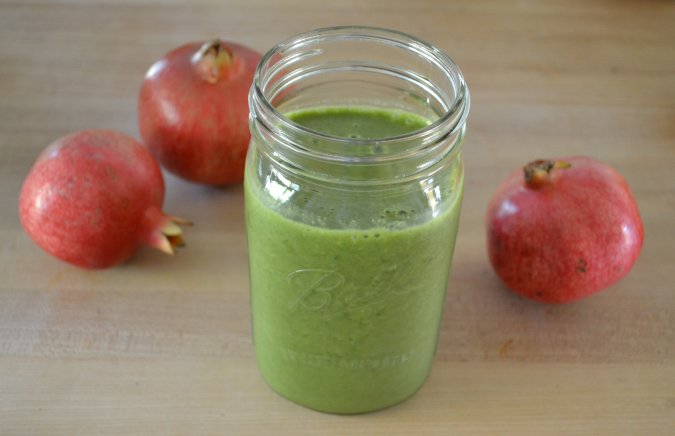
Here is the recipe:
½ cup of fresh pressed pomegranate juice
1 cup fresh pressed Valencia orange juice
2 medium bananas, peels removed
3 cups chopped kale, loosely packed
1 cup chopped mangoes, peels removed
½ cup blueberries
½ cup blackberries
Here is a nutrient analysis of the ingredients in this smoothie:
| Adult Daily Values | ||
| Protein | 15 grams | |
| Calcium | 361 | 1000 – 1200 mg |
| Iron | 5.7 | 8 – 18 mg |
| Zinc | 2.2 | 8 – 11 mg |
| Magnesium | 203 | 310 – 420 mg |
| Potassium | 2876 | 4700 mg |
| Vitamin C | 462 | 75 – 90 mg |
| Vitamin E | 4.0 | 15 mg |
| Vitamin B1 | 0.7 | 1.1 – 1.2 mg |
| Vitamin B2 | 0.7 | 1.1 – 1.3 mg |
| Vitamin B3 | 6.6 | 14 – 16 mg |
| Vitamin B5 | 2.3 | 5 mg |
| Vitamin B6 | 1.9 | 1.3 – 1.7 mg |
| Folate | 258 | 400 mcg |
| Beta carotene | 19538 mcg |
This is one of my post-workout green smoothies. On days that I do not have a big workout, my smoothies are usually smaller.
One of the best ways to keep in touch with us is to join our email list. You’ll receive a free copy of Our Top 12 Strategies for Long Term Success on A Raw Plant-Based Diet eBook along with regular information about raw food and plant-based diets and periodic promotions for our classes, events, and other offerings!
Video on Jerusalem artichokes: nutrient content, gardening experience, and an easy recipe
One of the best ways to keep in touch with us is to join our email list. You’ll receive a free copy of Our Top 12 Strategies for Long Term Success on A Raw Plant-Based Diet eBook along with regular information about raw food and plant-based diets and periodic promotions for our classes, events, and other offerings!
Produce Tip #1: How do you know when bananas are ripe?
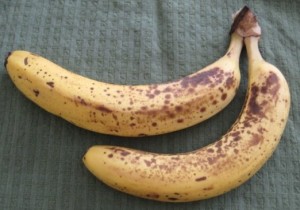
When I started eating a raw food diet 24 years ago, I thought that ripe bananas were simply yellow, with no green coloring. About a month after starting my raw food journey, a raw food friend of mine mentioned that bananas are truly ripe when they look like this:
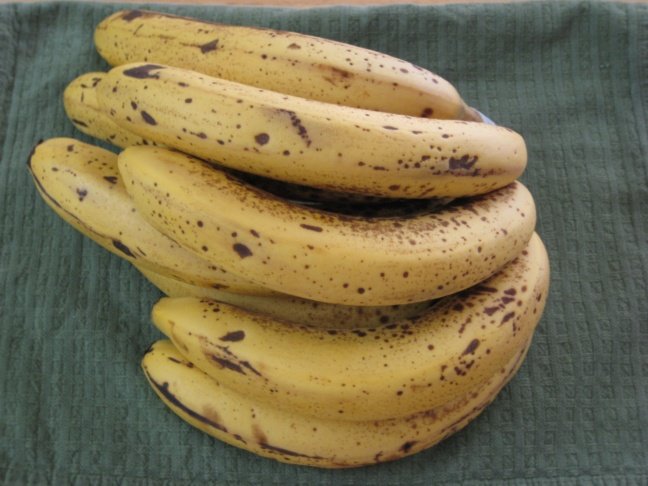
Here is more of the story:
One of the best ways to keep in touch with us is to join our email list. You’ll receive a free copy of Our Top 12 Strategies for Long Term Success on A Raw Plant-Based Diet eBook along with regular information about raw food and plant-based diets and periodic promotions for our classes, events, and other offerings!
Video for My Simple Green Juice Recipe
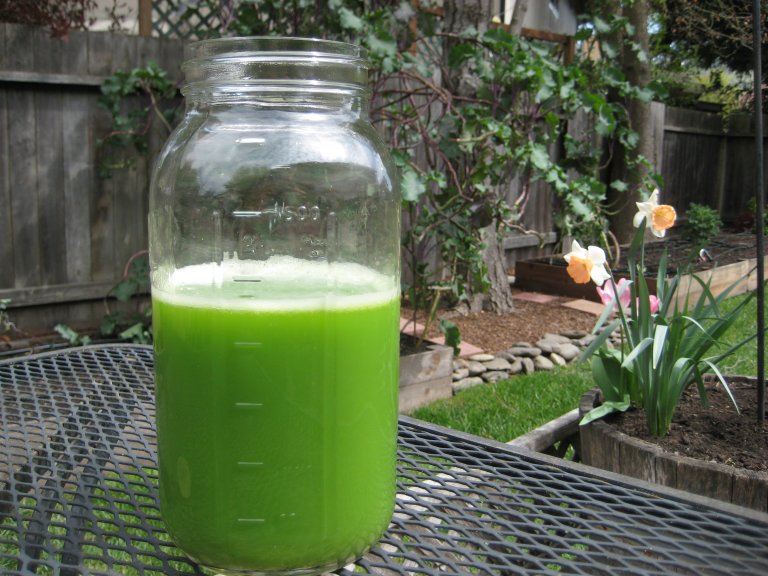
I have shared this recipe on my blog in the past and now I have a short video explaining how I make this juice:
This juice has been one of my favorites for years because of its simplicity, nutrient content, and versatility. I find it to be a great introductory juice recipe for people new to juicing, since it has a lighter taste than green juice that contains darker leafy greens. I personally love the taste of dark leafy greens, but for some, the taste may need some “getting used to”. I can certainly appreciate this, given that when I became interested in health years ago, I did not even know that dandelion greens were edible. Now, they are one of my favorite leafy greens!
Here is the recipe:
5 stalks of celery (12” long)
1 lemon, peeled
2 medium cucumber, 8” long
This recipe makes about 32 ounces of juice. Here are some of the nutrients found in these ingredients:
| Light Green Juice ingredients | Adult Daily Values | |
| Calories | 165.9 | |
| Calcium | 246.2 | 1000 – 1200 mg |
| Iron | 2.83 | 8 – 18 mg |
| Zinc | 1.67 | 8 – 11 mg |
| Magnesium | 120.2 | 310 – 420 mg |
| Potassium | 1832.9 | 4700 mg |
The mineral content of such simple ingredients is amazing to me, especially calcium and iron. The sodium content of these ingredients is 270 mg, most of which is found in the celery. Cheers!
One of the best ways to keep in touch with us is to join our email list. You’ll receive a free copy of Our Top 12 Strategies for Long Term Success on A Raw Plant-Based Diet eBook along with regular information about raw food and plant-based diets and periodic promotions for our classes, events, and other offerings!
Vitamin E in raw versus roasted almonds
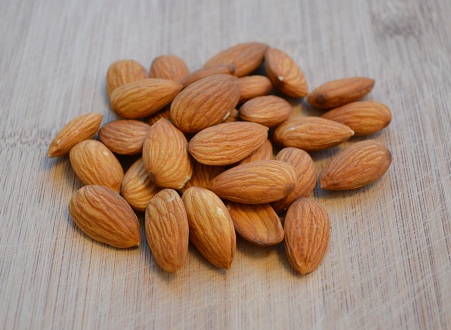
I am often asked by my students about the difference, if any, in nutrient content between raw and cooked foods. I recently found an interesting research article that considered the difference in vitamin E content between raw and roasted almonds. Vitamin E, often referred to as alpha tocopherol, is an antioxidant and an essential nutrient for humans. Antioxidants are well known for their ability to neutralize free radicals before they can cause damage to our cells.
Almonds are known as a rich source of vitamin E:
| Nutrient | Raw Almonds (2 Tbsp., 17.9 g, 0.63 oz.) | Adult Daily Values |
| Calories | 103 | |
| Vitamin E (alpha tocopherol specifically) | 4.69 | 15 mg |
This very recent study noted that subject blood levels of alpha tocopherol were 33% greater after the consumption of raw almonds versus roasted almonds. The researchers of this study speculated that the reason for this was that the alpha tocopherol content of the raw almonds was likely higher than in the roasted almonds. This makes sense, given that antioxidants are broken down in food by cooking in varying amounts depending on the type of food, cooking method, cooking time, and cooking temperature.
Could this outcome also have to do with vitamin E bioavailability differences between the raw and the roasted almonds? This potential was not mentioned in the study, but I think this is entirely possible. One would have to do another study or two to test these individual options. The bottom line here is that roasting did appear to have some type of effect on vitamin E, either directly through its breakdown, by changing its bioavailability, or maybe even through some other means that has yet to be considered.
References:
USDA Nutrient Database
Bornhorst GM, Roman MJ, Rutherfurd SM, Burri BJ, Moughan PJ, Singh RP. Gastric digestion of raw and roasted almonds in vivo. J Food Sci. 2013 Nov;78(11):H1807-13.
Interested in taking your raw food nutrition knowledge to the next level? We cover this topic and so much more in our online Mastering Raw Food Nutrition and Educator Course. For more class details, click here.
One of the best ways to keep in touch with us is to join our email list. You’ll receive a free copy of Our Top 12 Strategies for Long Term Success on A Raw Plant-Based Diet eBook along with regular information about raw food and plant-based diets and periodic promotions for our classes, events, and other offerings!
My Top 5 Favorite Leafy Greens
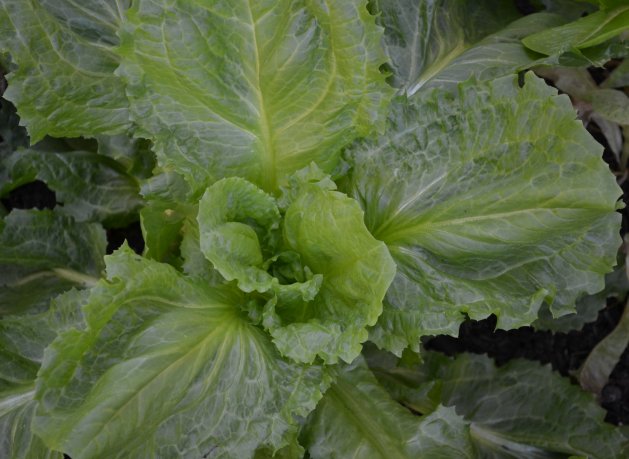
1. Lettuce
From the beginning of my raw food journey in 1990, lettuce has been one of my go-to leafy greens. I love the mild taste and versatility of lettuce, which often forms the basis for my salad recipes. Before my interest in raw food developed, I knew of one type of lettuce: iceberg. This changed quickly as I learned of the many varied types of lettuce including grocery store mainstays such as Romaine, green leaf, red leaf, and Boston. When I started shopping at farmers markets and growing my own food several years ago, I became familiar with lesser known and heirloom varieties of lettuce that expanded my lettuce repertoire further. Right now, Rick and I have 8 varieties of lettuce growing in our backyard garden. Lettuce is a member of the sunflower plant family.
2. Dandelion Greens
Dandelion greens are popularly consumed as an early spring green, but I personally love dandelion greens year round, and enjoy them in my salads, smoothies, and juices. The mineral content of dandelion greens is notable and rivals kale in calcium content. Dandelion greens are in the sunflower plant family (Asteraceae), along with lettuce, endive, escarole, frisée greens, sunflower seeds, and Jerusalem artichokes.
3. Tree Collard Greens
Rick and I planted several collard plants in our garden when moved into our house a few years ago, and they are still going strong and producing beautiful large deep green leaves, year round in northern California. What we love about our tree collards is that they are relatively low maintenance and are a reliable source of greens for us. We enjoy greens from our tree collard plants mostly in smoothies, but occasionally put them in juice or a salad. These tree collard greens are tender and easily digestible for us in comparison to collard greens we find in the grocery store that generally have a tougher consistency. Our tree collards are now about 12 feet tall and still growing, with numerous leaves that can measure up to 8 inches in diameter or more. Collard greens, like other members of the cabbage family (Brassicaceae) contain noteworthy amounts of certain minerals.
4. Kale
Kale is most certainly one of our many favorite leafy greens and a backyard garden staple. I first became interested in kale when I discovered its impressive calcium and iron content, which is not surprising, given that kale is a member of the cabbage family. Members of the cabbage plant family are also called “cruciferous”, in reference to the cross-like appearance of their flowers, or “brassica” vegetables, reflecting their plant family name Brassicaceae. Rick and I enjoy kale in smoothies, juices, soups, and many other recipes. Since we like to have a variety of foods in our diet, we rotate our leafy greens to enjoy the diversity of flavors, textures, and nutrients offered by different leafy greens. For example, we might have kale as our main leafy green on one day, dandelion greens the next, frisée greens the next, and so forth.
5. Escarole
Rick and I recently returned home from traveling, visiting, and teaching on the east coast to find that the tiny escarole starts we planted in September had grown into huge plants, with 9-inch diameter leaves, at the largest. Given the size of the leaves, this escarole would make great wraps. We have found that escarole grows well in cooler weather, so the size of our plants is not a surprise, given that it is mid-November.
Escarole is in the sunflower plant family, so its strong resemblance to some lettuce varieties is justified. I have found that the taste of escarole can vary, for example, the escarole growing in our yard has a more mild taste than the more bitter versions I have found in grocery stores and farmers markets.
Here are some of the nutrient highlights of escarole:
| 3 cups chopped escarole (150 g) | Adult Daily Values | |
| Calories | 25.5 | |
| Calcium | 78 mg | 1000 – 1200 mg |
| Iron | 1.24 mg | 8 – 18 mg |
| Zinc | 1.18 mg | 8 – 11 mg |
One of the best ways to keep in touch with us is to join our email list. You’ll receive a free copy of Our Top 12 Strategies for Long Term Success on A Raw Plant-Based Diet eBook along with regular information about raw food and plant-based diets and periodic promotions for our classes, events, and other offerings!
In Defense of Research
I recently read an online article in which the author criticized nutrition-related “science” and “research.” His criticism focused on the notion that research quickly becomes outdated as more current research takes its place, so what is the point in paying attention to it at all? I understand this questioning, but must suggest that the answer is not as simple as the author would imply.
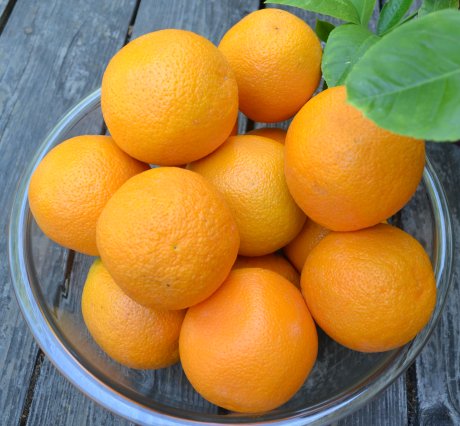
First of all, let’s explore the term “research”. The most common use of this term is to describe use of the scientific method to test a hypothesis in a controlled setting. In more relatable language, research is done to gather evidence that either supports or opposes a point of view, or adds to our knowledge of a subject. Let’s say that a researcher wants to assess the vitamin C content of oranges. In order to do this, the researcher would obtain a sample of oranges and use the appropriate technology to measure the vitamin C content, among other things. The amount of vitamin C found in this particular orange sample is new information, since it was just tested. Does this new information necessarily invalidate previous research done on the vitamin C content of oranges?
In my opinion, no.
I view this new information as additional knowledge to add to our growing understanding of the vitamin C content of oranges. I do not always see older information as being irrelevant, instead I recognize the importance of evaluating evidence on a case-by-case basis. For example, let’s say that a researcher wants to see if there is a change in the vitamin C content in oranges over a 50 year period. In this study, some of the data collected on the vitamin C content of oranges is decades old. Most people might think of this information as being outdated, but in the context of this comparison study, it is entirely relevant.
The bottom line is that we cannot lump all research into one category. In my opinion, if one believes that research is not worthy of consideration because it eventually becomes outdated, they are missing out on lots of great information as it becomes available. There is much that we know and much that we have yet to know. To discount research as incomplete is missing the very point of research, which is to discover new information.
Here is a real world example: should we not utilize the technology of today because it will be outdated tomorrow? Nothing will ever be 100% complete or perfect. If our knowledge on a topic is 80% complete, should we discount that 80% just because we don’t know everything yet? We recently watched the new Star Trek movie in 3D in a nearby theater, and enjoyed it very much – so much that we would like to see it again. Should we not purchase the blu-ray to watch it again at home because we don’t have 3D and our sound system is not as good and screen not as large as we experienced in the movie theater? Should I not use a computer because it will eventually become outdated?
I personally love to watch the evolution of information through all types of research, be it peer-reviewed studies, clinical outcomes, or personal experience. There is always more to explore in the health and nutrition field, and to discount any information is a missed opportunity to learn what may be the key to unlocking one’s health potential. I see research as an adventure of discovery and am happy to have the opportunity to watch the progression of knowledge in this exciting and ever-changing field!
One of the best ways to keep in touch with us is to join our email list. You’ll receive a free copy of Our Top 12 Strategies for Long Term Success on A Raw Plant-Based Diet eBook along with regular information about raw food and plant-based diets and periodic promotions for our classes, events, and other offerings!
Video series on juicing by Dr. Rick Dina, D.C.
In this video, Rick explains his experience with juicing:
Here is one of Rick's favorite green juice recipes:
Here is another of Rick's favorite juice recipes:
One of the best ways to keep in touch with us is to join our email list. You’ll receive a free copy of Our Top 12 Strategies for Long Term Success on A Raw Plant-Based Diet eBook along with regular information about raw food and plant-based diets and periodic promotions for our classes, events, and other offerings!
What I learned about vitamin B12 from the Framingham Offspring Study
![400px-Cobalamin.svg[1]](https://rawfoodeducation.com/wp-content/uploads/2013/07/400px-Cobalamin.svg1_.png) I first came across the Framingham Offspring Study several years ago when I was doing some research on the vitamin B12 status of people of various dietary persuasions. I found the results of this study to be fascinating, and apparently I am not the only one who feels this way, given that I have seen this study mentioned in numerous YouTube videos, in various health blogs, and in class by many of my students. Why is this study in particular so popular?
I first came across the Framingham Offspring Study several years ago when I was doing some research on the vitamin B12 status of people of various dietary persuasions. I found the results of this study to be fascinating, and apparently I am not the only one who feels this way, given that I have seen this study mentioned in numerous YouTube videos, in various health blogs, and in class by many of my students. Why is this study in particular so popular?
The answer likely involves many reasons. Here a couple of my thoughts:
- This study talks about the vitamin B12 status of the study participants. There is little doubt that vitamin B12 is a hot topic in the health community and most people I have spoken with over the years have expressed interest in learning about B12. In fact, it is one of the more popular questions that Rick and I are asked.
- The study participants were omnivores. People who eat a plant-based diet or vegan diet are told to be aware of their B12 status, but what about omnivores? Do they need to be aware of this too?
The Framingham Offspring Study (FOS) helps answer this question. The study examined the B12 status of 2,999 omnivores of ages ranging from 26 – 83, along with supplemental and food sources of B12, such as fortified cereal, dairy products, and various types of meat. Here is a brief summary of the data from this study:
- 39% of study participants were found to have blood levels of vitamin B12 in the “low normal” to deficient range (<258 pmol/L or 350 pg/ml) and the youngest members of the group (26 – 49 years) had similar B12 status to the 65 years and older group.
- Study participants who consumed supplements and/or cereal fortified with B12 had the highest blood levels of B12, followed by dairy products, and then meat.
- Study participants who got most or all of their B12 from meat sources, had the lowest blood B12 levels.
- The researchers commented that vitamin B12 supplements and fortified foods are likely to be more reliable sources of B12 than non-fortified foods, and that the use of supplements in particular was found to be protective against low vitamin B12 levels in this and previous studies.
- Because of these outcomes, the researchers suggest that the potential for B12 deficiency in the general adult population be examined.
I was not completely surprised to see that this study calls to question the reliability of meat as an adequate source of B12, as we have consulted with several people in the past few years that have been low in B12 despite eating an omnivorous diet. Hmmm…..
I would encourage you to read this study, and see for yourself what the data indicates. I have provided here a brief summary of what I learned from this study, but the actual full-text article gives much more specific information on the observations of the researchers.
Granted, this is only one study and some case histories, but nonetheless I personally feel that it is important for everyone to consider their B12 status regardless of whether or not they are a vegan, vegetarian, omnivore, etc. As this study indicates, there are many factors to consider in this B12 puzzle. Here is a link to the full text article of the Framingham Offspring Study.
Reference:
Tucker KL, Rich S, Rosenberg I, Jacques P, Dallal G, Wilson PW, Selhub J. Plasma vitamin B-12 concentrations relate to intake source in the Framingham Offspring study. Am J Clin Nutr. 2000 Feb;71(2):514-22.
Interested in taking your vitamin B12 and nutrition knowledge to the next level? We cover this topic and so much more in our online Mastering Raw Food Nutrition and Educator Course. For more class details, click here.
One of the best ways to keep in touch with us is to join our email list. You’ll receive a free copy of Our Top 12 Strategies for Long Term Success on A Raw Plant-Based Diet eBook along with regular information about raw food and plant-based diets and periodic promotions for our classes, events, and other offerings!
The role of critical thinking in making health decisions
 TMI, information overload, what on earth do I do with all of these little bits and pieces of health information, these “sound bites”? How do all of these pieces of information fit together into the puzzle of health, and is this information even accurate or relevant? Over the past 23+ years since I entered the health field, these questions have crossed my mind either consciously or unconsciously, and have even been something of a mountain at various times in my life. There is so much information “out there” on health and dietary choices that it can range from dazzling to overwhelming.
Many students I have spoken with over the years have said that one of the most important reasons they have attended the series of classes my husband and I teach is to make sense of all of this health information that they hear. One of the goals we have in teaching our classes is to provide a framework within which students can understand these individual pieces of information and how they fit into the larger picture of health. One of the ways we establish this health framework is though the encouragement of critical thinking.
Before we can proceed, we must consider the question “what is critical thinking?” I have read numerous definitions and points of view on critical thinking, some simple to understand and others more complex. Overall, most of the definitions of critical thinking involve the gathering of as much information as possible, including information in opposition to one’s current point of view, and then making a decision based on this information while still remaining open to possible alternatives, and considering that one has inherent personal biases that can influence the decision made.
In my very young years, I remember learning through memorization of information which I promptly forgot after the test was over, but more importantly, I believed that the information given to me was always accurate. Why wouldn’t it be? Later, I started considering other points of view as having validity and understanding the importance of thinking for myself. At this time, I found it somewhat challenging to make this change, given that I had become so accustomed to just accepting the information handed to me previously. Accepting is easy, thinking requires more effort. After a short period of time, I naturally started thinking for myself and the evaluation of information coming my way became second-nature. I eventually learned that this thought process I had adopted actually had a name: critical thinking.
The reason why I am sharing this story with you is because it is very much related to how some view health information.
To clarify, here is a relevant example:
There are lots of products being sold in the name of health and the people selling those products can be quite convincing. Is all of the information imparted about these products accurate? Or is the person saying whatever is necessary to make a sale?
In my pre critical thinking days, I would have likely accepted this information. Since my introduction to critical thinking, if I am interested in a product, I first gather information on the product, which includes:
- Reliable information supporting the popular view of the product
- Reliable information supporting the opposite view of the product
- Reliable information that supports other views of the product
- Reliable information that contradicts any of the points of view noted above.
Bottom line, I gather as much information as possible about the subject in question from multiple points of view, and very importantly I also consider what information is supported by human physiology and biochemistry. As I collect more information and make sense of it in a larger context, the least relevant, least compelling, and least accurate information is naturally supplanted by the most relevant, accurate, and compelling information. In a sense, the most accurate information becomes even more apparent, when compared to that which is less accurate or inaccurate.
It is important to consider that information on how the body works is constantly evolving and is and will always be incomplete, so for this reason and others, I remain open minded to changing my decision in the future, when and if compelling new information becomes available. I know this is a lot to consider, but this critical thinking and decision making process has become second nature to me. I liken this experience to learning how to ride a bicycle. It can be a little challenging at first, but soon becomes easy.
The bottom line here is that critical thinking can be very useful in helping evaluate information that comes one’s way. Many times I have heard students say that they feel that they were convinced to buy a product that they ended up wanting to return. Often times, being aware of ways in which one can evaluate information about such products can help people be more objective about their purchases before they hit the “buy” button. Of course, critical thinking can be useful in evaluating all health information, not just product purchases. I must clarify that Rick and I are not opposed to the use of health products, given that we find many to be useful. Both of us find it very useful to approach our buying choices with critical thinking.
The reason why I mention critical thinking in this article, is that in the coming weeks and months I plan to start talking about various studies and research on health and plant-based diet related topics, and will be considering critical thinking in the evaluation of this information. So this article is, in a sense, laying the groundwork for things to come. After all, a building is only as strong as its foundation, and the same is true for health information.
I know that many of you are familiar with this topic, so if you are, great! For those of you that have not considered this information previously, critical thinking can be an empowering tool in helping one with making decisions!
One of the best ways to keep in touch with us is to join our email list. You’ll receive a free copy of Our Top 12 Strategies for Long Term Success on A Raw Plant-Based Diet eBook along with regular information about raw food and plant-based diets and periodic promotions for our classes, events, and other offerings!
Video Series of How We Constructed a Raised Bed Garden: Parts 5 and 6 and Harvest Time!

Here are our most recent videos documenting our raised bed garden project. Since we live in northern California, we have dry summers and need to have an irrigation system to water our plants, which is especially handy when we are out of town teaching. This video shows the installation of the irrigation timer:
We have been harvesting the lettuce from our raised bed for a couple of weeks now – it is incredibly fresh and flavorful and has grown surprisingly quickly. Here is a video progress report:
Our raised bed is almost complete. The remaining aspect of this project is designing and finalizing the area around the bed to blend its appearance with the rest of our backyard. We will post a video when this final aspect of the project is finished. Have a great week!
One of the best ways to keep in touch with us is to join our email list. You’ll receive a free copy of Our Top 12 Strategies for Long Term Success on A Raw Plant-Based Diet eBook along with regular information about raw food and plant-based diets and periodic promotions for our classes, events, and other offerings!
Video Series of How We Constructed a Raised Bed Garden: Parts 3 and 4 and Garden Update
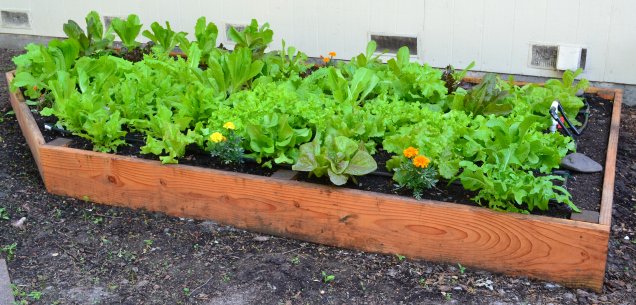
A couple of days ago, I returned from being out of town visiting family on the east coast to see that our lettuce had grown significantly since we planted it three weeks ago:
For comparison, here is the size of the lettuce when we planted it:
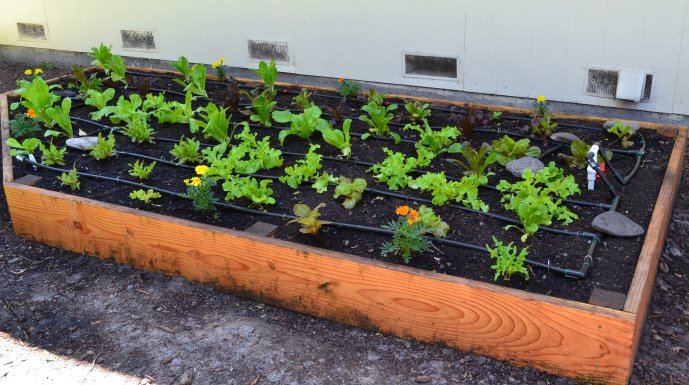
In less than a month, we are already reaping the benefits of our efforts on this several day project! The lettuce is so vibrant and fresh, and without a doubt we feel that the time and energy we put into this project was more than well worth it.
Now, on to the latest videos:
Here is video number 3 showing the planting and irrigation setup for the lettuce bed:
Here is video number 4 showing the ball valve and drip emitter installation:
Next week: Part 5 of this video series, showing the installation of the irrigation timer.
One of the best ways to keep in touch with us is to join our email list. You’ll receive a free copy of Our Top 12 Strategies for Long Term Success on A Raw Plant-Based Diet eBook along with regular information about raw food and plant-based diets and periodic promotions for our classes, events, and other offerings!
Video Series of How We Constructed a Raised Bed Garden: Parts 1 and 2
As we wrote in this blog last week, Rick and I recently converted a weedy unused area of our backyard into a raised bed garden for our lettuce plants.
Part 1 shows the planning of our raised bed:
Part 2 shows the construction of our raised bed:
Next week, we will post parts 3 and 4, showing the installation of the irrigation system and planting of the lettuce.
One of the best ways to keep in touch with us is to join our email list. You’ll receive a free copy of Our Top 12 Strategies for Long Term Success on A Raw Plant-Based Diet eBook along with regular information about raw food and plant-based diets and periodic promotions for our classes, events, and other offerings!
Ready, Set, Grow!
Rick and I have been growing vegetables in backyard raised beds for the past few years and have learned much from our experience. One thing we have learned and observed first hand is the self-evident notion that some plants thrive in areas of our yard that have more sun, while other plants grow better in shady areas. Case in point: lettuce. The lettuce we have grown tends to wilt in the hot afternoon sun regardless of how much water we give the plants.
What we historically did for this challenge was to shade the lettuce with large beach and patio umbrellas. Of course, gardening stores do sell shades specific for this purpose, but this year we came up with a more permanent solution, which was to build a raised bed for the lettuce in an area of our yard that gets some sun in the morning, but is shady during the hottest part of the day, the afternoon. This location will be especially important as the growing season progresses and the daily temperature rises.
The area where we built the lettuce bed is adjacent to our house, and in the morning until about midday, the lettuce receives sunlight and then as the sun moves across our yard in the afternoon, our house shades the lettuce. So far so good! The lettuce has been growing beautifully, but the real test will be later in the season as summer approaches.
Here are some photos showing the transformation of an unused weedy area into our lettuce bed!
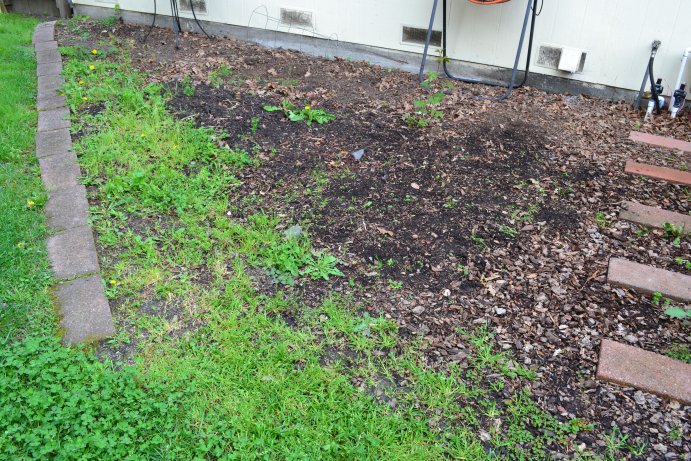
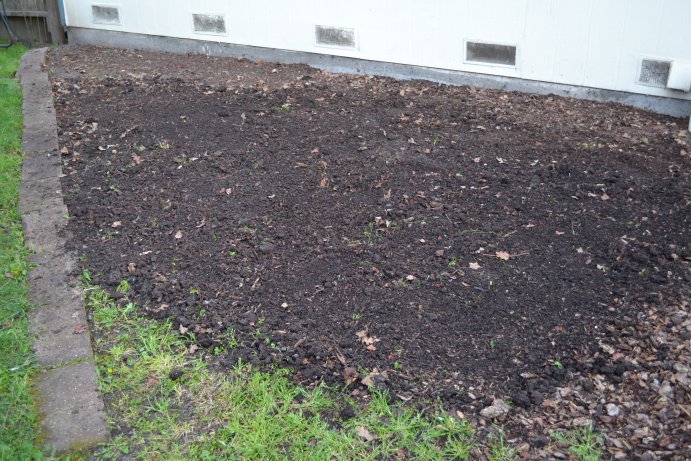
Here is the area weeded and leveled for construction of the bed:
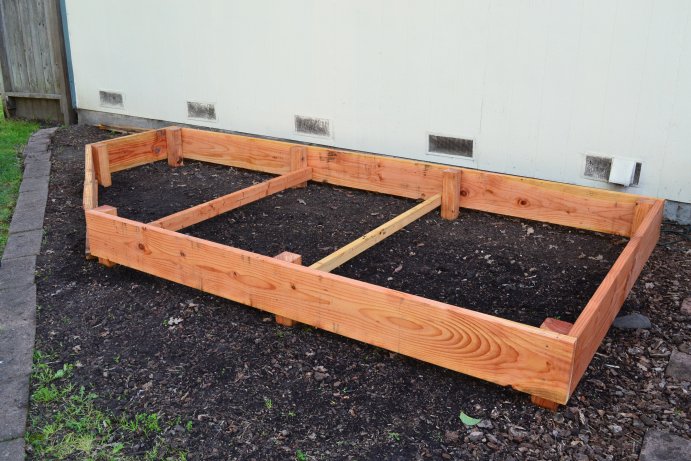
Here is the bed:
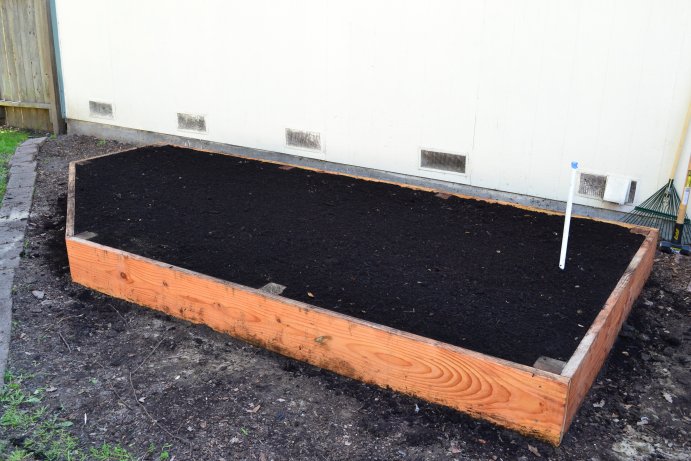
With added soil:
With plants and irrigation tubing:
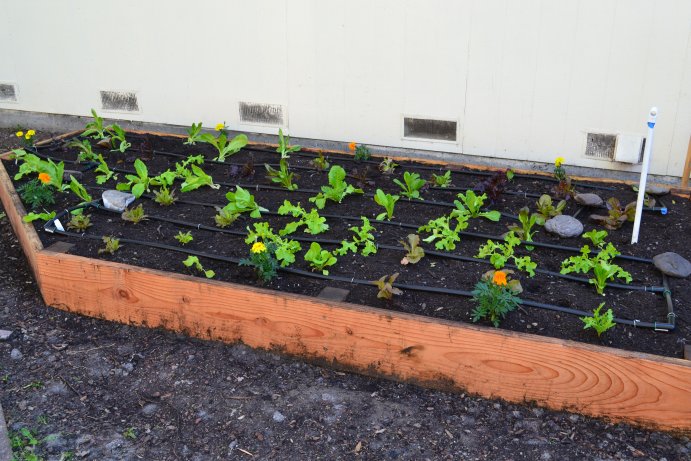
A couple days later, the irrigation tubing is hooked into the system, drip emitters are installed, and lettuce plants are growing!
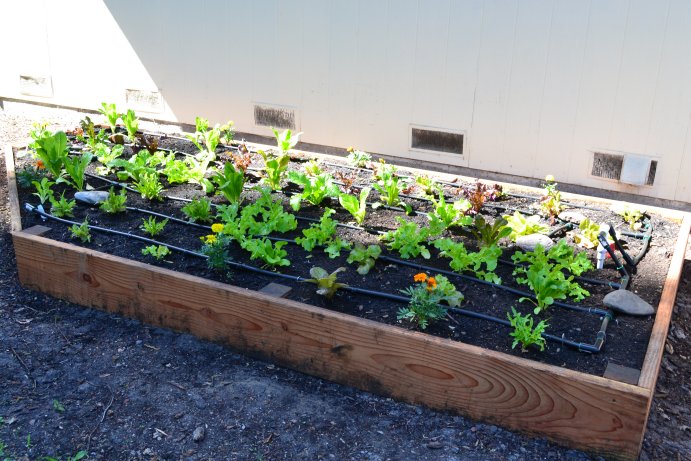
We'll post updates as the season progresses and stay tuned for a series of videos documenting the building of our lettuce bed!
One of the best ways to keep in touch with us is to join our email list. You’ll receive a free copy of Our Top 12 Strategies for Long Term Success on A Raw Plant-Based Diet eBook along with regular information about raw food and plant-based diets and periodic promotions for our classes, events, and other offerings!
Collard Greens and Tree Collard Greens
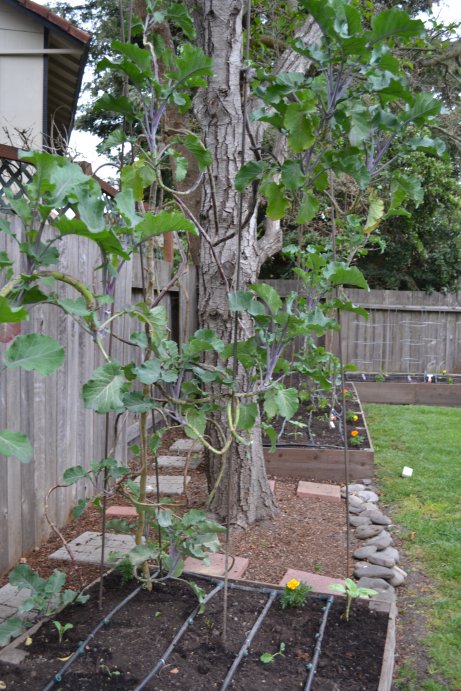
April 1st is upon us and here in northern California, Rick and I have been preparing our backyard raised beds for planting. This year, we are planting many of our garden staples such as heirloom tomatoes, squash, bell peppers, basil, and some plants we have not grown before, such as mizuna and stinging nettle. One plant that grows year round in our garden is tree collard greens. We have several tree collard plants that have been in our garden since we moved into our house a few years ago, and they are still going strong and producing beautiful large deep green leaves.
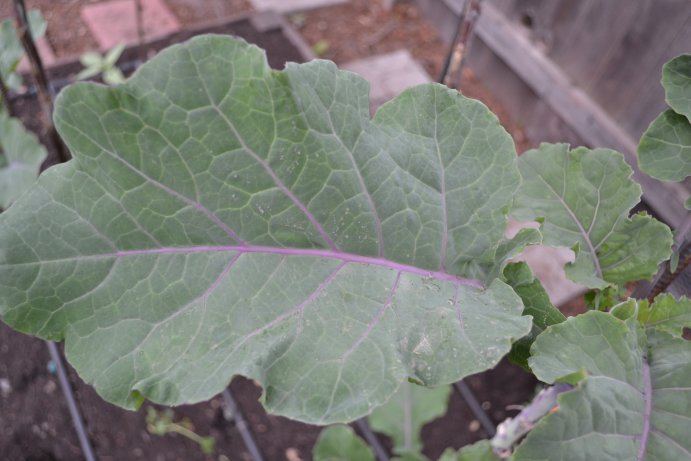
What we love about our tree collards is that they are relatively low maintenance and are a reliable source of greens for us. Of course, we rotate our greens for variety so we are planting a variety of other greens in our garden this year, which we will cover in another blog post or video. We enjoy greens from our tree collard plants mostly in smoothies, but occasionally may put them in juice or a salad. These collard greens are tender and easily digestible for us in comparison to collard greens we find in the store that have a tougher consistency. We have observed over the years, that the greens that we grow in our garden tend to be softer and more tender than commercially available greens. Although this may not be true across the board, this is just an observation from our own personal experience.
Here is a sampling of the nutrients found in regular collard greens:
| 3 cups chopped collard greens (108 g) | Adult Daily Values | |
| Calories | 32.4 | |
| Calcium | 156.60 | 1000 – 1200 mg |
| Potassium | 182.52 | 4700 mg |
| Folate | 179.28 | 400 mcg |
| Beta carotene | 4149.36 mcg |
How do these numbers compare to the nutrients found in actual tree collard greens? We have yet to know, given that I have not yet been able to find neutral information on the nutrients measured in actual tree collard leaves. I would not be surprised if they are similar. This is the beauty of science and research, there is much that is known and much that has yet to be known. Happy spring!
One of the best ways to keep in touch with us is to join our email list. You’ll receive a free copy of Our Top 12 Strategies for Long Term Success on A Raw Plant-Based Diet eBook along with regular information about raw food and plant-based diets and periodic promotions for our classes, events, and other offerings!
Why We Love Our Local Farmers Markets
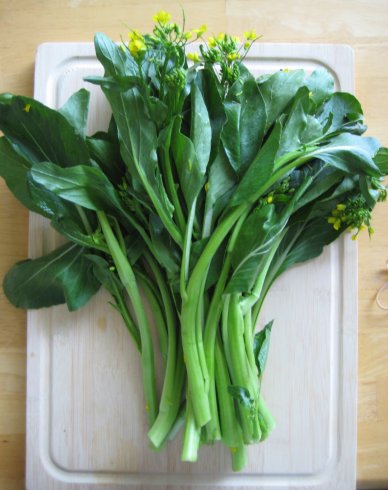
One of the many questions that Rick and I are asked about raw food is where to find it at reasonable prices. In my last blog post, I wrote about wholesale produce markets, which can really help one save money when produce is purchased in quantity, providing that one has access to a wholesale produce market. What about areas where one does not have access to such a place? One alternative is a local farmers market.
We love farmers markets. They are a great place find locally grown produce and to interact with the farmers directly, if they are present to sell their produce personally – and many of them do so. Numerous times I have asked the farmers about their food producing techniques, an opportunity that I find to be very valuable. For me, this is a great way to have knowledge of how our food is produced and how it is handled. I have also found the food to be exceptionally fresh! An average head of lettuce purchased at our local farmers market lasts about 2 weeks before showing signs of withering. Produce that I buy at our local farmers market is often picked the same day that I buy it – how much more fresh can one get! Given that our diets are based on fresh produce, Rick and I buy in large quantities, and many of the farmers often give us a price break on the food we buy. Several of the farmers from whom we buy know us by name and actually anticipate our arrival at the market, by putting aside the usual foods that we buy from them. Talk about personal service – we really enjoy having a personal connection with the people from whom we buy food!
Since we live in northern California, our local farmers markets are open year round. In other areas, we have noticed that farmers markets depend on the local growing season and produce availability. Similarly, the variety of produce at our local farmers market depends on the type of food being grown locally at the time. For example, winter is a great time to find oranges, fall and early winter is the best time to find locally grown almonds, and of course summer is the most abundant season of all! Here, Rick and I can get lettuce and other green leafy vegetables at our farmers market year round, along with a variety of other fruits and vegetables. Such availability makes eating a produce-based diet much simpler.
It is wonderful to see that farmers markets appear to have gained popularity in the last 5+ years, especially in areas that did not have such markets several years ago. It is great to see that the trend of eating more locally grown food and supporting local farmers directly is continuing to grow. I hope that one day this is no longer a trend, but a mainstay in our communities.
One of the best ways to keep in touch with us is to join our email list. You’ll receive a free copy of Our Top 12 Strategies for Long Term Success on A Raw Plant-Based Diet eBook along with regular information about raw food and plant-based diets and periodic promotions for our classes, events, and other offerings!
Saving money with wholesale produce
Our new YouTube channel is LIVE! After so many requests, we finally have a YouTube channel where we will be posting videos on a variety of health related topics! We have a couple of videos posted there now, including Rick’s three part essential fat video, and a video about our visit to the NY wholesale produce market:
Rick and I have visited wholesale markets in both the San Francisco bay area and the New York metro area. We live in the SF bay area, so when we buy from our local wholesale produce markets we buy enough food to last us about 3 weeks. Why so much? The food available at wholesale markets is sold in boxes or cases. This works well for us because the produce is so fresh, that it lasts for often weeks at a time in our large-capacity dedicated refrigerator.
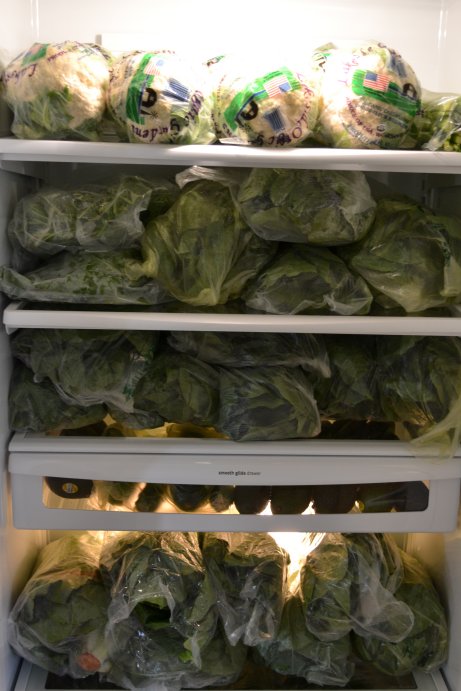
We have found that when we buy lettuce at wholesale, the heads are very large, since very few, if any of the outer leaves have been removed. These heads of lettuce are generally larger than the heads we see at the grocery store, which likely have had leaves removed to maintain a fresh look. I really enjoy going to wholesale markets because of the wide variety of food available, especially organic. A very large percentage of the food that we eat is organically grown here in California.
For produce enthusiasts like us, wholesale markets can be a great way to purchase in quantity and save a notable amount of money. Rick has calculated that on average, we spend about 50% less money on produce from the wholesale markets that we would spend on the same amount of produce at the grocery store. You may be wondering if we go to farmers markets and the answer is yes, we love our local farmers market! We can often find foods at the farmers market that are not available at the wholesale market and vice versa.
The wholesale markets we have attended open around midnight or later and close around 10 am or earlier, depending on the vendor, so Rick and I find ourselves waking at 5 am to beat rush hour to the markets. I especially love these markets, since our need to go shopping for food weekly is drastically reduced. I find myself only having to do some minor fill-in shopping for items not available at the wholesale markets, maybe once a week or twice a month. With this shopping strategy, Rick and I overall spend much less time shopping and have more time available for work and other activities we enjoy.
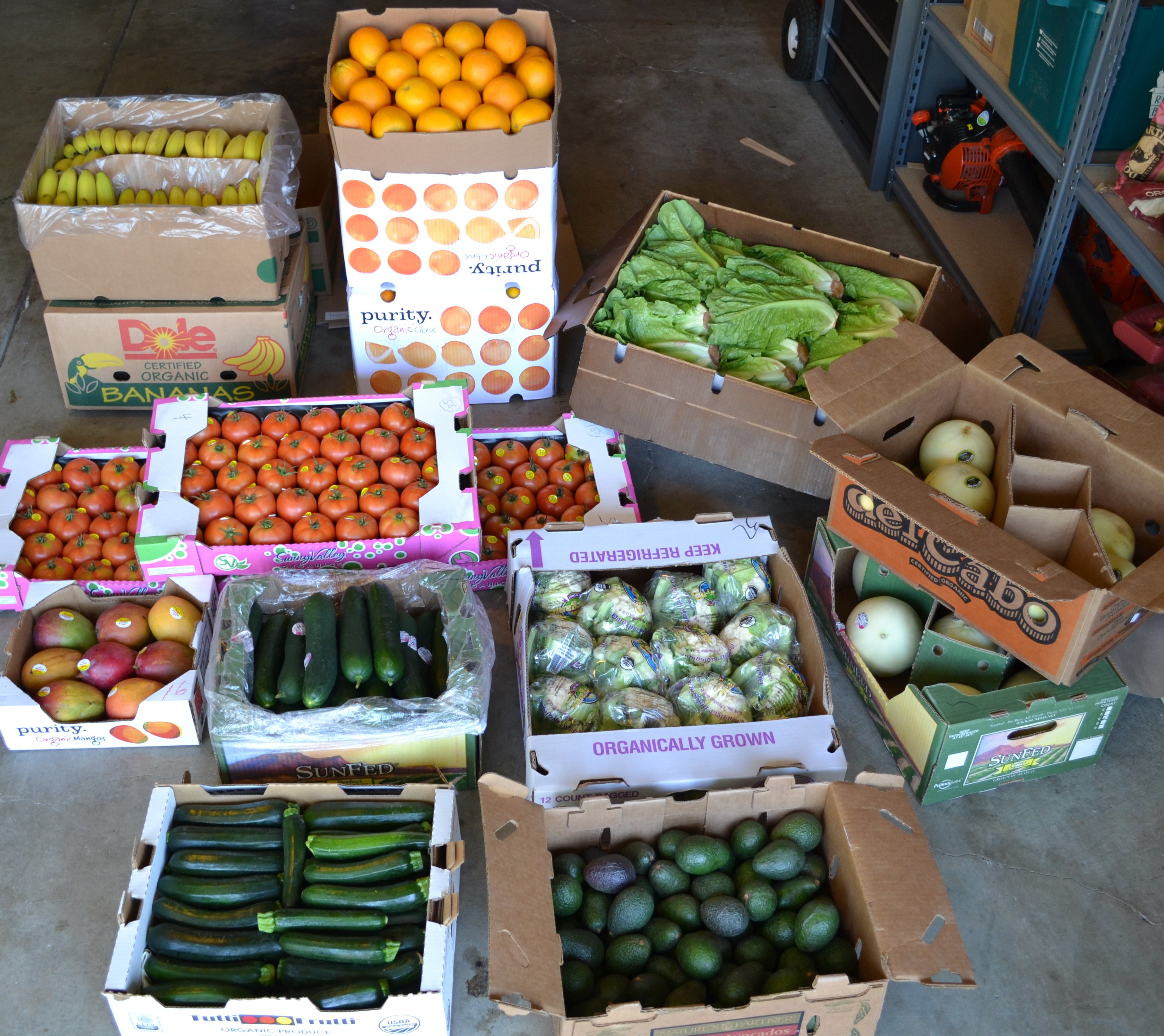 The challenge is that our local wholesale markets are in San Francisco and South San Francisco which are about an hour and fifteen minutes away from our home if there is little traffic. The wholesale produce market that we have visited in the New York area is in the Bronx, which is also about an hour and fifteen minutes from our parents’ homes, where we stay on our visits to the New York metro area. This market has similar hours to our bay area wholesale markets, but is much larger.
Without a doubt, wholesale markets are certainly an experience and a great way to buy fresh produce in quantity. They can also be a tremendous resource for people who live in areas that have limited access to fresh produce year round, providing that the person lives within driving distance of a wholesale market. Many major metro areas have wholesale markets, and our experience at the two we have visited is that most vendors sell to individuals, although some sell exclusively businesses. You will have to check with individual vendors to learn their sales policies.
One of the best ways to keep in touch with us is to join our email list. You’ll receive a free copy of Our Top 12 Strategies for Long Term Success on A Raw Plant-Based Diet eBook along with regular information about raw food and plant-based diets and periodic promotions for our classes, events, and other offerings!