Category: Uncategorized
Happy 2026 Everyone and a Smoothie Recipe…
Happy 2026 Everyone!
I’m putting together a list of topics to cover this year in posts, articles, and videos. Is there a particular nutrition-related topic you would like to learn about this year? If so, please comment below and I’ll add it to my list!
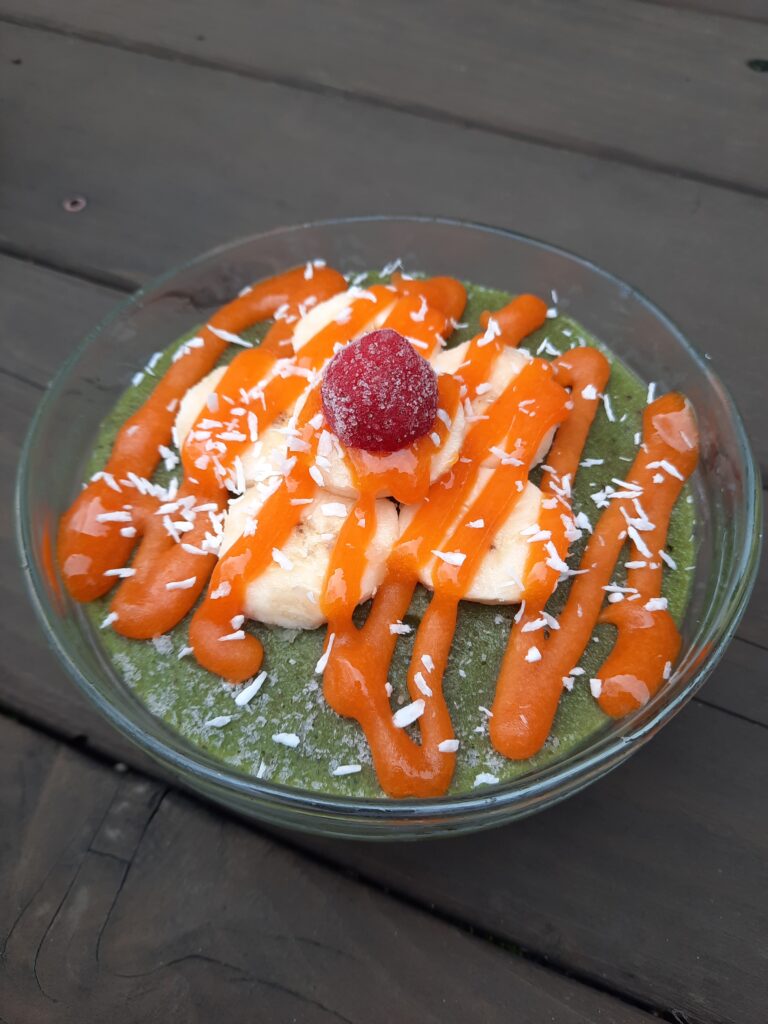
By the way, this smoothie was really good! It is made of 2 ½ bananas, 2 cups of dandelion greens, and 2 oranges. The design on the top is composed of ½ of one banana cut into slices, ½ of one ripe persimmon, one small strawberry, and 1/8 tsp. of coconut flakes.
Here are some of the nutrients:
Vitamin B1 0.7 mg
Vitamin B2 0.4 mg
Vitamin B3 4.3 mg
Vitamin B5 2.2 mg
Vitamin B6 1.3 mg
Choline 102.4 mg
Folate 166.3 mcg
Vitamin C 231.9 mg
Vitamin E 5.5 mg
Vitamin K1 858.9 mcg
Calcium 336.2 mg
Magnesium 173.6 mg
Potassium 2212.6 mg
Sodium 84.5 mg
Zinc 1.3 mg
Almost all of these values are pretty impressive for almost 550 calories, including the B vitamins, choline, folate, vitamin C, vitamin E, vitamin K1, calcium, magnesium, potassium, and zinc!
We’ve found smoothies to be a super easy and quick way to enjoy fruit and leafy greens. We mostly enjoy eating our fruit non-blended, but smoothies are one of my go-to breakfasts when I have a busy day ahead of me and find them to be especially filling for hours with the addition of leafy greens.
Micronutrient Content of Celery Juice
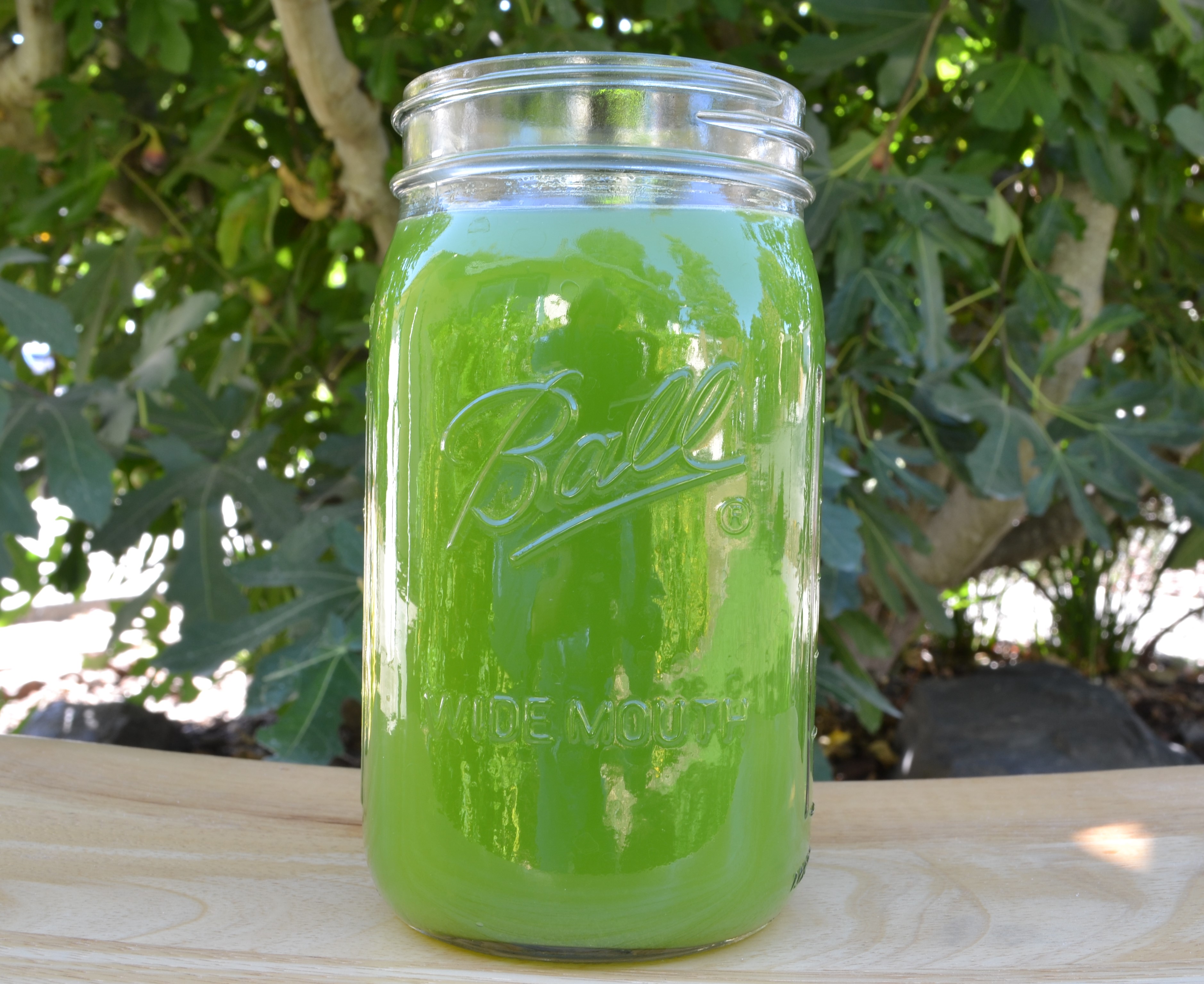
I love celery juice and have been drinking it on and off for decades, long before it ever became popular. On numerous occasions, I’ve been asked about the nutrient content of celery juice and I’m happy to say that it looks like some information on it is now available!
Here is a sampling of the micronutrients found in 16 ounces (448 ml) of celery juice:
Vitamin B1 0.1 mg
Vitamin B2 0.3 mg
Vitamin B3 1.5 mg
Vitamin B5 1.2 mg
Vitamin B6 0.2 mg
Choline 28.8 mg
Folate 169.9 mcg
Vitamin C 14.6 mg
Vitamin E 1.2 mg
Vitamin K1 136.9 mcg
Calcium 217.2 mg
Magnesium 51.9
Potassium 1250.8 mg
Sodium 457.8 mg
Zinc 0.4 mg
A significant number of these values are exceptional, especially calcium! Very often I’m asked about good sources of calcium and other important nutrients, which is one of the many reasons we created our 24-hour course Creating Nutrient Replete Meals that covers all the important nutrients (they’re all important), what foods they are found in (especially foods that are easy to find in grocery stores), and how to create nutrient-dense recipes and meal plans. This course is now available in our Raw Vegan Lifetime Success Community. There are lots of other resources available in this community, which is soon to include Dr. Rick’s New Years Juice Cleanse that starts on January 5th! Click this link for more information about the community and registration: https://www.skool.com/raw-vegan-lifetime-success-7461/about
When you join the community, you’ll automatically have access to the juice program information as it becomes available, including juice recipes, along with live check-ins and presentations, and recordings of live segments after they are complete. If you are already a member of our Raw Vegan Lifetime Success Community, great! If not, we hope to see you there!
Banana Strawberry Pie
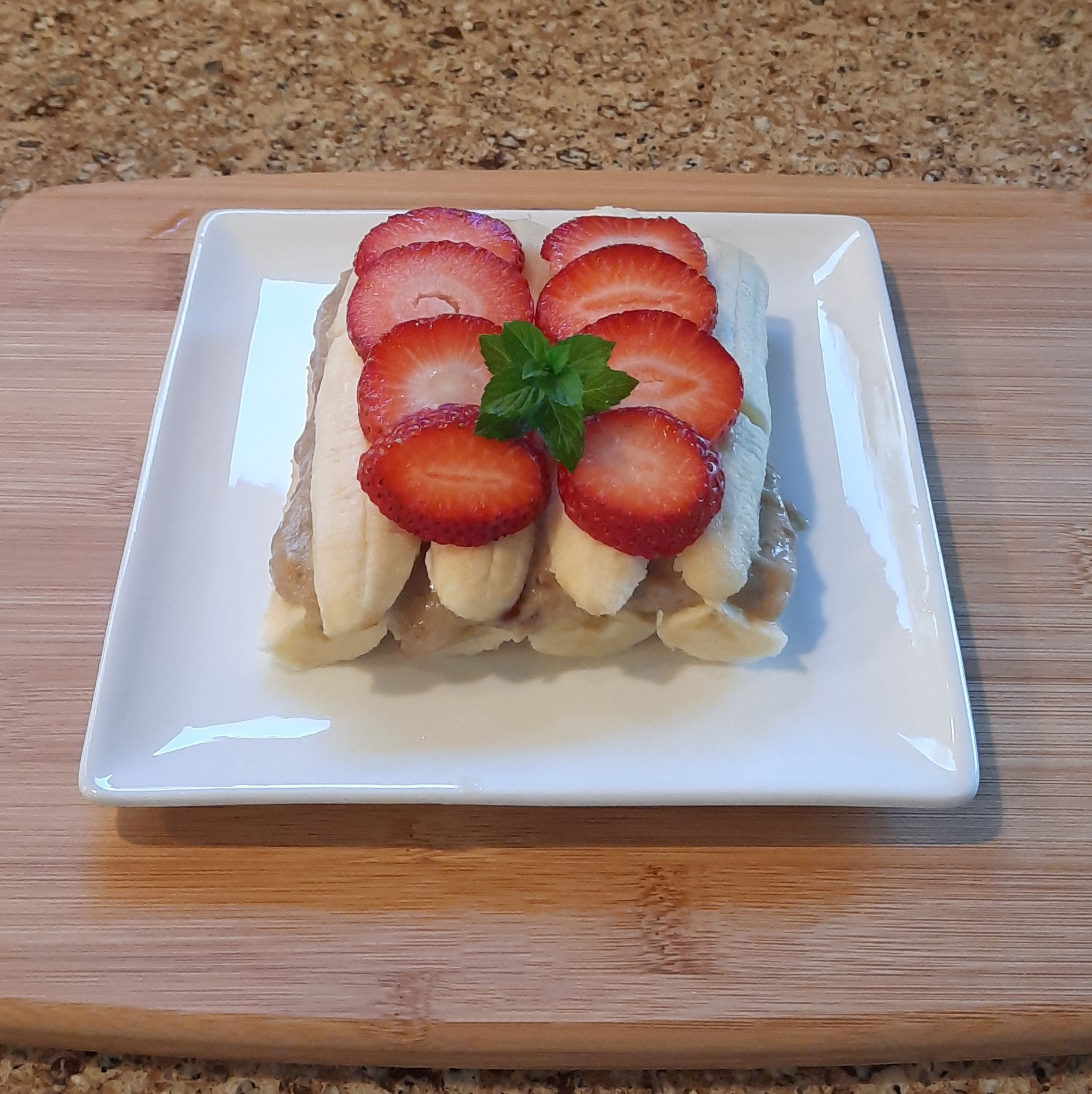
Looking for a quick, delicious recipe? Here’s a super-simple recipe that you can make in minutes (this one takes us about 15 min)!
Ingredients:
2 medium bananas
2 medium strawberries (or 8 raspberries)
2 medjool or other type of dates
0.5 oz walnuts (1/8 cup, 13 g)
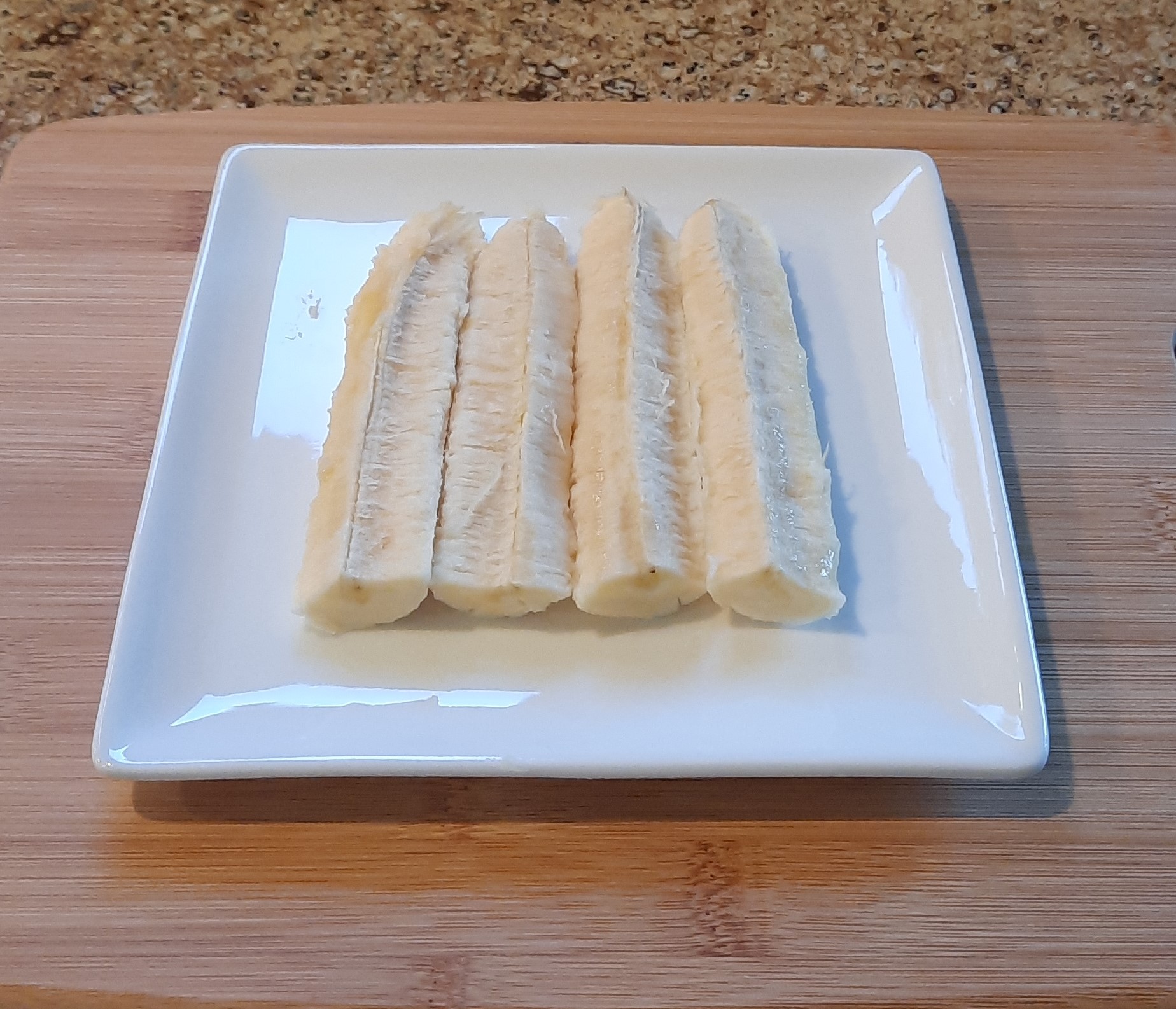
Peel bananas and cut each of them in half. Then pull them apart into their individual three sections – you should now have 12 banana sections (6 for each banana). Line up 4 banana sections on a plate as shown in the photo:
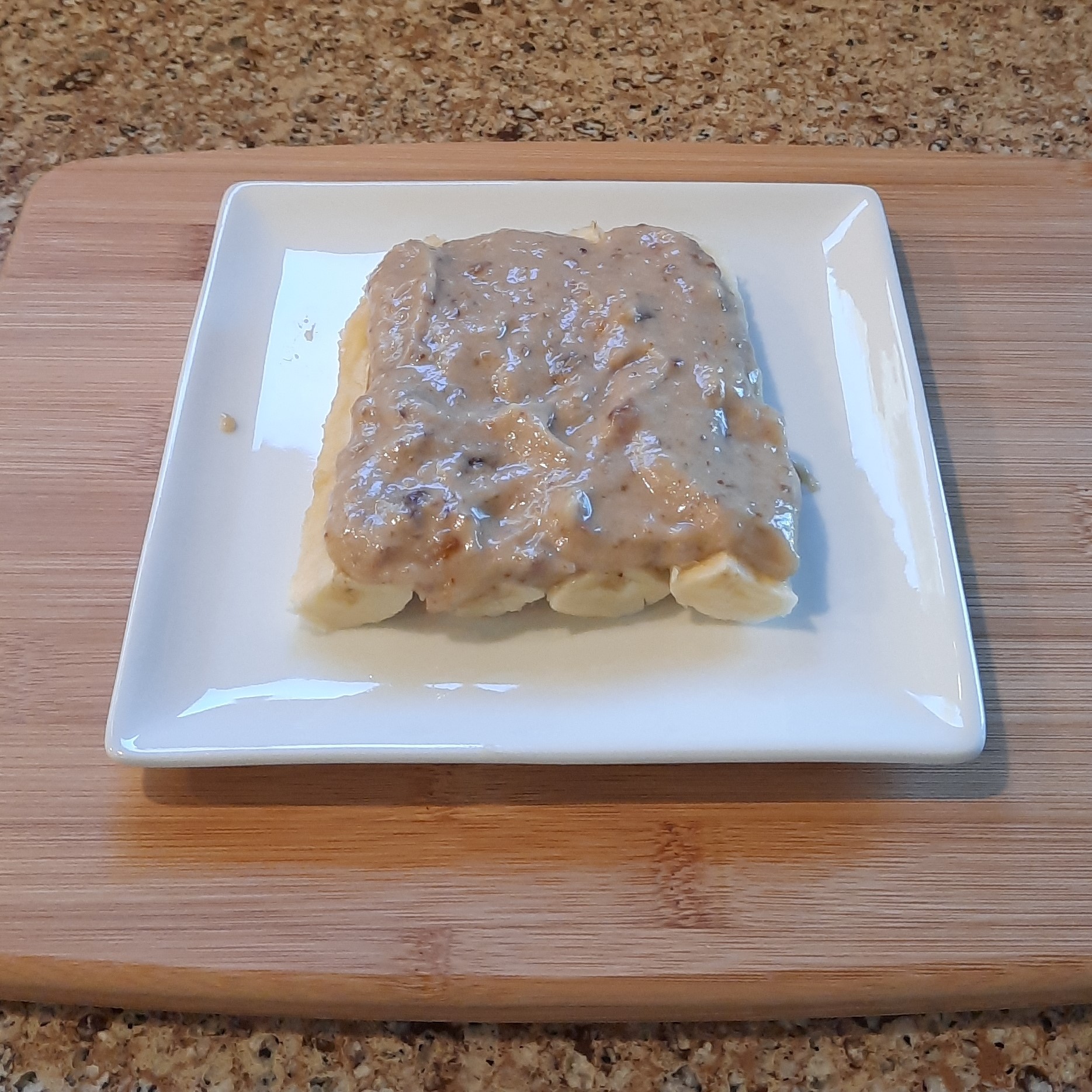
Next, blend 4 banana sections with the 2 dates and walnuts. Then, spread this mixture on top of the banana sections as shown:
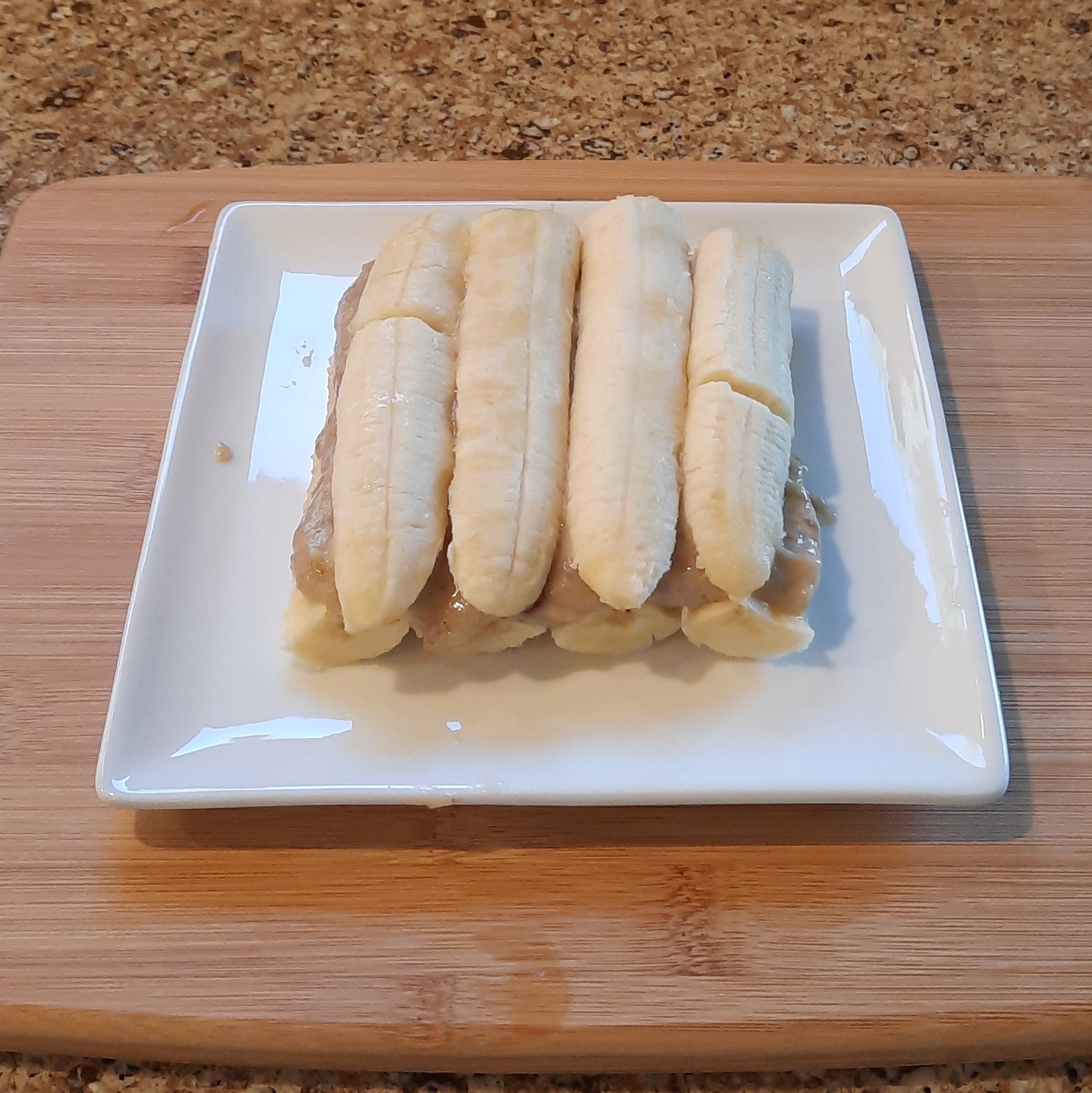
Place the remaining 4 banana sections on top of the banana-date-walnut mixture:
Slice strawberries (or raspberries) and arrange on top of the bananas. You can add a mint sprig if desired.
For a lower fat version or well-combined version, you can leave out the walnuts.
Enjoy!
Banana Blueberry + Banana Strawberry Cupcakes
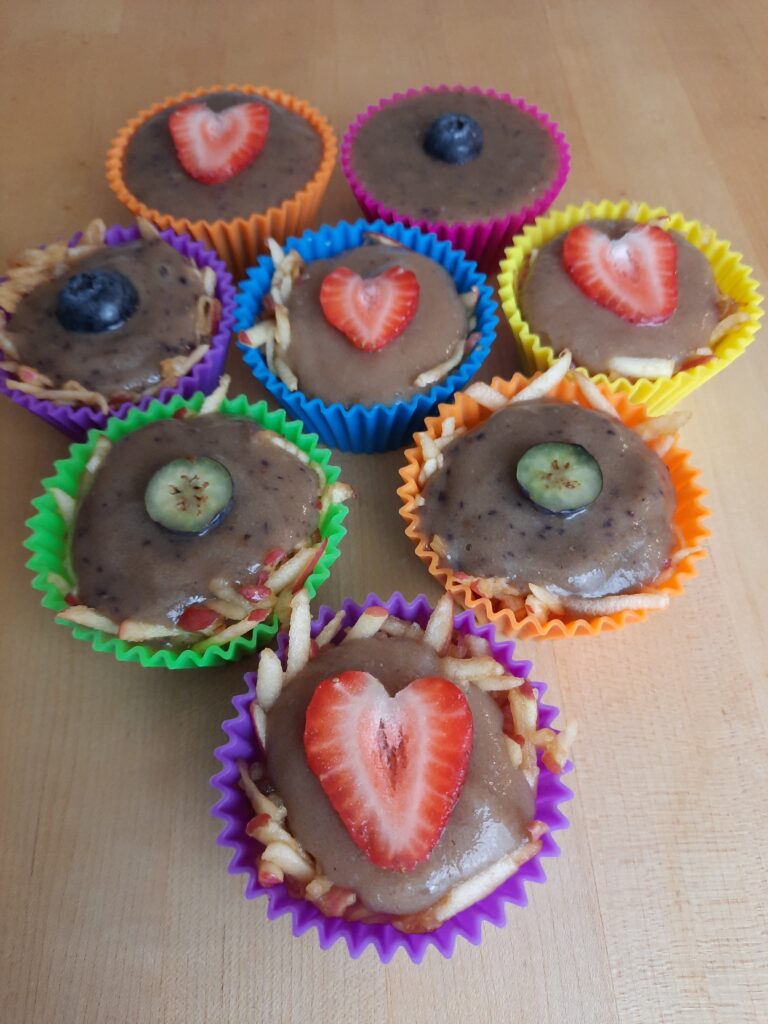
Here is a super-simple, well-combined fruity dessert/addition to a fruit-based meal that we really like:
Ingredients:
Two large ripe bananas
4 dates (pits removed)
6 or 7 blueberries
4 or 5 strawberries
One medium apple
Preparation instructions we followed:
Rinse apple and remove core. Grate apple using a coarse grain grater into a bowl. Line 6-8 cupcake cups (we used silicone ones) with the grated apple pieces. Put aside.
Next, remove peels and place bananas into blender. Add dates and blend until smooth. Pour off approximately half of the mixture into a bowl. Add 3 rinsed strawberries to the remaining mixture in the blender and blend until smooth. Pour this mixture immediately into apple-lined cupcake cups, cover, and refrigerate.
Clean blender and add the remaining banana date mixture and 4 rinsed blueberries to the blender. Blend until smooth and immediately pour mixture into remaining apple-lined cupcake cups. Cover and refrigerate for at least 8 hours. This amount of time will allow the cupcakes to become firm enough to be removed from the cupcake cups. Freezing for 3 to 4 hours works well too. Add strawberry and blueberry garnish/design to top of the cupcakes right before serving.
Makes 6 to 8 average-sized cupcakes.
Enjoy!
Additional preparation tips: Adding some chia seeds to the banana/strawberry/date and banana/blueberry/date mixtures before blending may help the cupcakes harden quicker. Also, using bananas that are slightly less-ripe will have a similar result.
So many reasons to love dandelion greens…
I love dandelion greens! I love the bitterness. I love their crunchy texture. But what I love the most about dandelion greens is their nutritional value - their mineral content is especially notable:
3 cups chopped dandelion greens (165 g)
Calcium 309 mg
Iron 5.1 mg
Zinc 0.70 mg
Potassium 655 mg
Magnesium 59 mg
As one can see, the leaves of this plant often regarded as a garden weed have significant nutritional value. In addition, dandelion greens are known for their prebiotic fiber content specifically inulin. Three cups of dandelion greens contain almost 20 g of inulin!
Even though there is not a daily value for prebiotic fiber yet, there are established DRIs (specifically Adequate Intakes – AIs) for total fiber:
• 25 g for women (21 g over 50 years of age)
• 38 g for men (30 g over 50 years of age)
To put these numbers in perspective, most Americans get around 15 g of total fiber per day. Standard western diets tend to be lower in fruits, vegetables, and whole plant foods in general so this number is not surprising.
Despite all these benefits of dandelion greens, people often shy away from them because of their concern that dandelion greens may contain goitrogens. Goitrogens are largely (but not completely) found in the cabbage family (Brassicaceae) and certain other foods, but are not found in dandelion greens, which are found in the sunflower family (Asteraceae). Want to learn more about goitrogens?
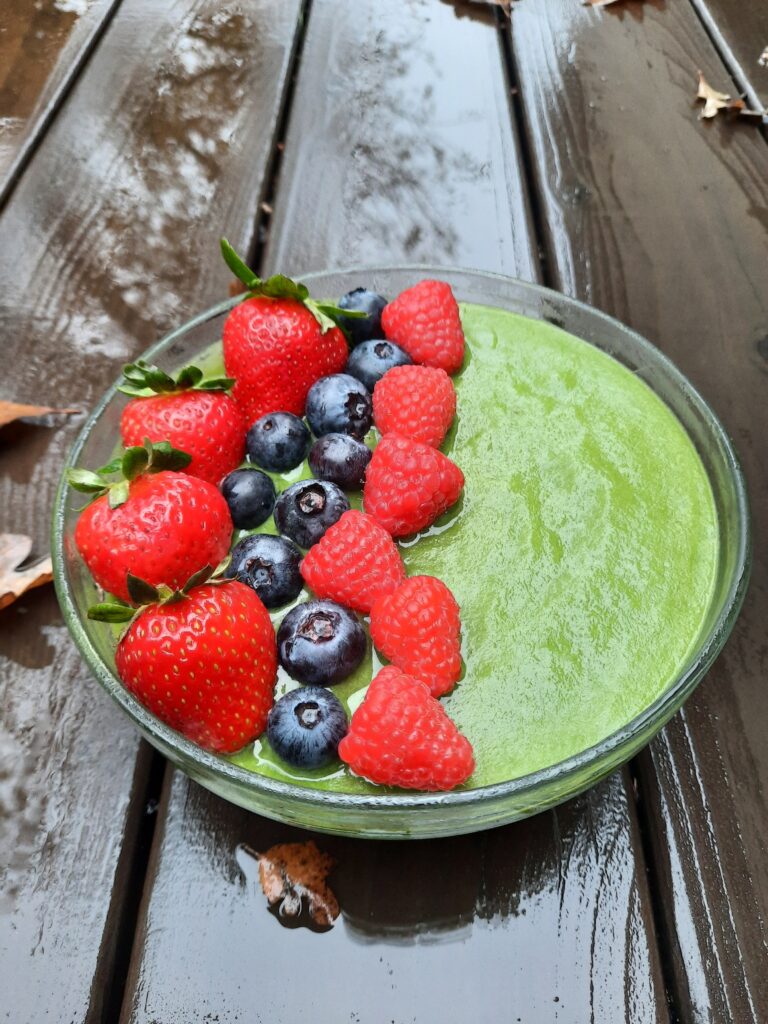
The dandelion greens I planted last spring are still growing well in my garden, despite it being late December, so today I picked a large handful and put them in this smoothie:
3 bananas
2 cups chopped dandelion greens
2 medium oranges
2 cups mangoes
Strawberry, blueberry, and raspberry garnishes
It was delicious.
And if you want to learn more about raw food plant-based nutrition, please feel free to sign up for our email list in the right column on this webpage. When you do so, you can receive our Top 12 Strategies for Long-Term Success on a Raw Food Diet eBook!
Another Selenium Alternative to Brazil Nuts
A couple of weeks ago, I shared a post about a selenium alternative to Brazil nuts. After all, one average-sized (5 gram) Brazil nut reportedly has almost 96 mcg (micrograms) or 174% of the adult RDA for selenium, which is 55 mcg.
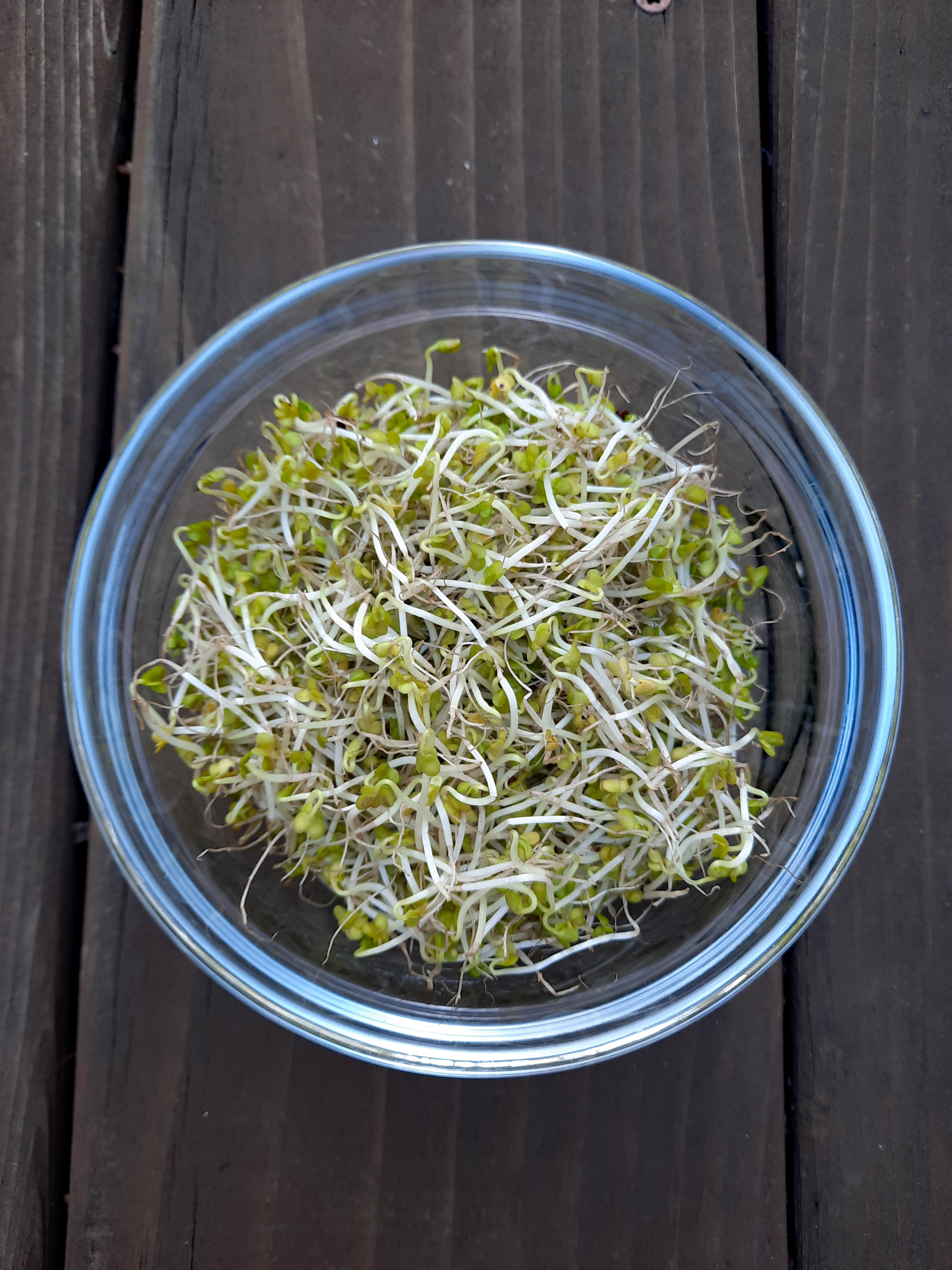
But what if someone is allergic or sensitive to Brazil nuts? What’s a good alternative? Broccoli sprouts are known for their sulforaphane content, but a lesser-known benefit of them is their selenium content. 2 ounces of broccoli sprouts has been measured to contain 28.3 mcg of selenium! This number is notable when compared to the adult selenium RDA of 55 mcg.
I do want to be clear though that this information was just from one entry on Cronometer, and not all broccoli sprout entries on nutrient databases may be in perfect agreement with this number and/or may not have been tested for selenium. Nonetheless, I thought this information was fascinating and thought that you might be interested, especially those of you with Brazil nut or general tree nut sensitivities.
In our new class, Creating Nutrient Replete Meals, we talk about selenium sources and sources of other important nutrients too. The course is $99 and along with it you get a yearly membership in our Raw Vegan Lifetime Success Community. You can learn more and register for the course by clicking here: https://www.skool.com/raw-vegan-lifetime-success-7461/about
Cherry Mint Chia Pudding
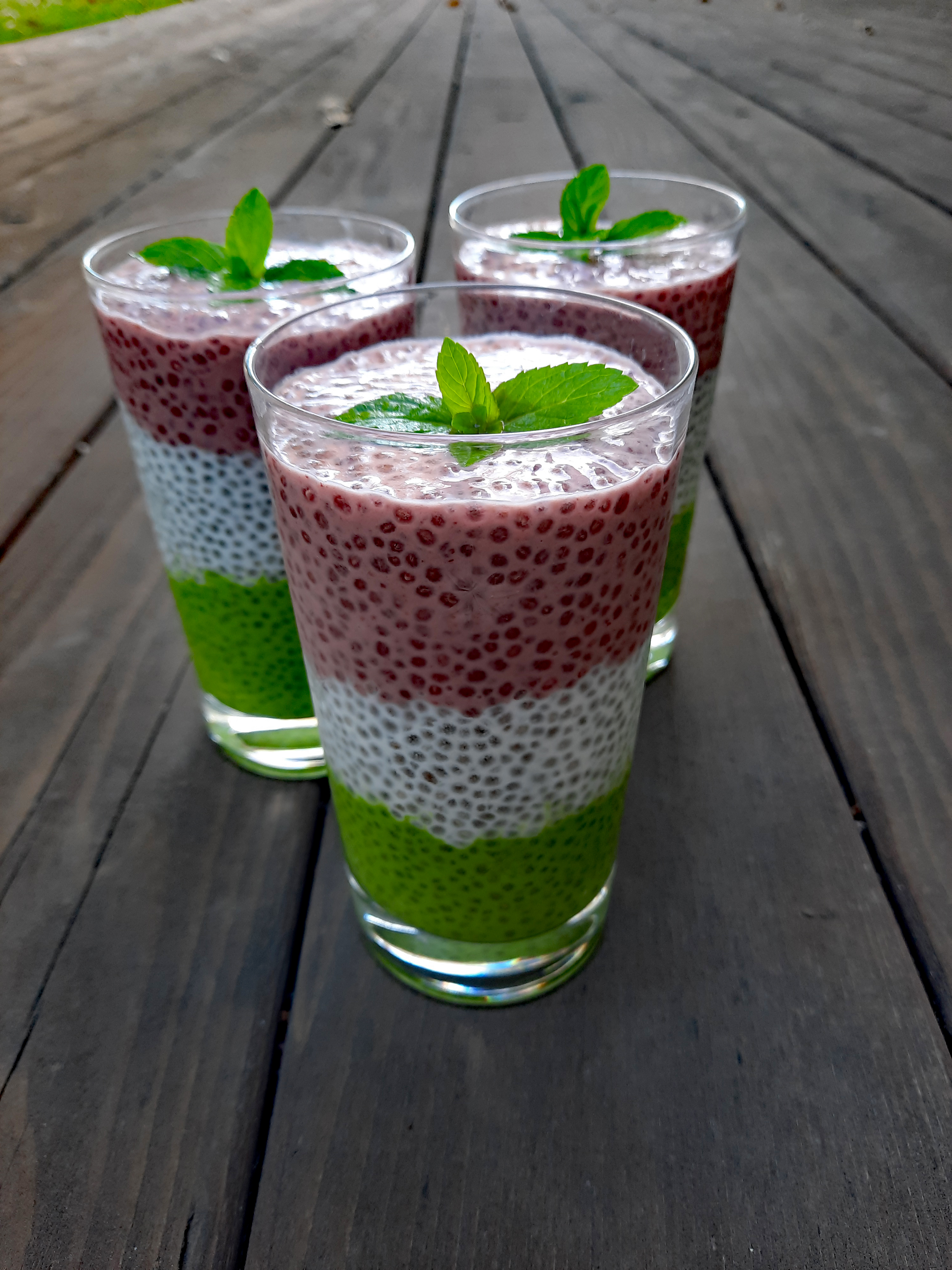
We all know that standard holiday fare, especially desserts, can easily contain a notable amount of long-chain saturated fats and omega 6 fats. But what if desert could be rich in omega 3 fats? Here’s a holiday version of chia pudding – with a cherry mint flavor and holiday colors:
Cherry Mint Chia Pudding
¾ cup freshly made walnut milk (or nut/seed milk of your choice)
3 tsp chia seeds
1 medjool date (or more if you want a sweeter pudding)
4 medium peppermint leaves
3 cherries (pits removed)
Mint sprig decoration on top (optional)
Here’s how I made it:
Blend the date with ¾ cup of walnut milk until smooth. Pour equal amounts of this mixture into three separate small mason jars. Add 1 tsp. chia seeds to one of the jars, stir until the seeds are well distributed, then cover and put in refrigerator for 8 hours. This mixture will be the white layer. Next, add the three cherries and the contents of one of the remaining walnut milk/date mixtures to a blender and blend until smooth. Pour this mixture into a clean small mason jar, add 1 tsp. chia seeds, stir until the seeds are well distributed, then cover and put in refrigerator for 8 hours. This will be the red layer. Clean blender carafe and add the 4 medium peppermint leaves to the blender carafe along with the remaining walnut milk/date mixture. Blend until smooth and pour this mixture into a clean small mason jar, add 1 tsp. chia seeds, stir until the seeds are well distributed, then cover and put in refrigerator for 8 hours. This will be the green layer.
After the chia puddings have become relatively firm, layer the 3 colors in small glasses of your choice. Chill and serve.
Serves 2-4 or more depending on the size of the glasses used. I’ve found this pudding to be quite rich-tasting so glasses about half the size of the 5-inch ones shown in this photo would be plenty for most people.
I rinse the chia seeds before adding them to the walnut milk/date mixture to remove debris and small stones. I also clean/rinse all other ingredients before using.
Enjoy and Happy Holidays!
Selenium Alternative to Brazil Nuts
Whenever someone asks me for a good source of selenium, my quick answer is Brazil nuts. After all, one average-sized (5 gram) Brazil nut reportedly has almost 96 mcg (micrograms) or 174% of the adult RDA for selenium, which is 55 mcg.
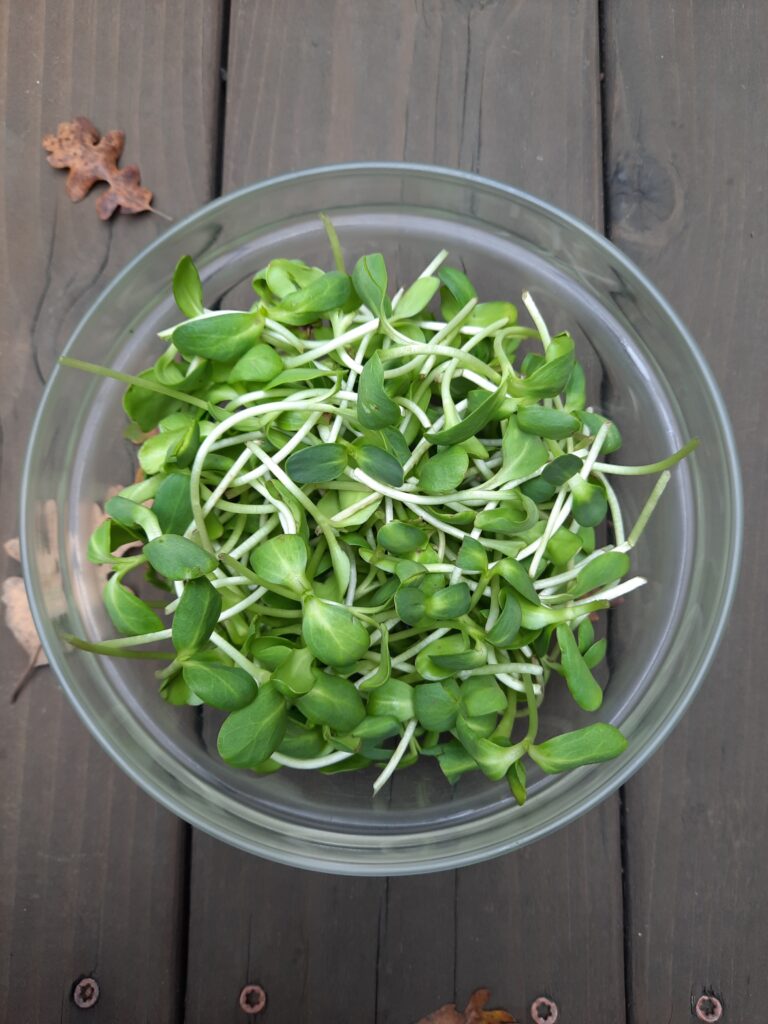
But what if someone is allergic or sensitive to Brazil nuts? What’s a good alternative? Sunflower seeds are a decent source of selenium too at almost 19 mcg per quarter-cup (34% of the adult RDA), but who is going to eat this many sunflower seeds? I had a thought that maybe some of the selenium in sunflower seeds could be transferred into sunflower microgreens during the sprouting and growth process and here’s what I found:
3 ounces of sunflower microgreens, which is about the size of a large handful, has been measured to contain just over 23 mcg of selenium (42% of the RDA). That’s pretty good! This amount of selenium can potentially make a significant contribution to one’s selenium intake.
I do want to be clear though that this information was just from one entry on Cronometer, and not all sunflower microgreen entries on nutrient databases may be in perfect agreement with this number and/or may not have been tested for selenium. Nonetheless, I thought this information was fascinating and thought that you might be interested, especially those of you with Brazil nut or general tree nut sensitivities.
In our new class, Creating Nutrient Replete Meals, we talk about selenium sources and sources of other important nutrients too. The course is $99 and along with it you get a yearly membership in our Raw Vegan Lifetime Success Community. You can learn more and register for the course by clicking here: https://www.skool.com/raw-vegan-lifetime-success-7461/about
Orange Pomegranate Juice
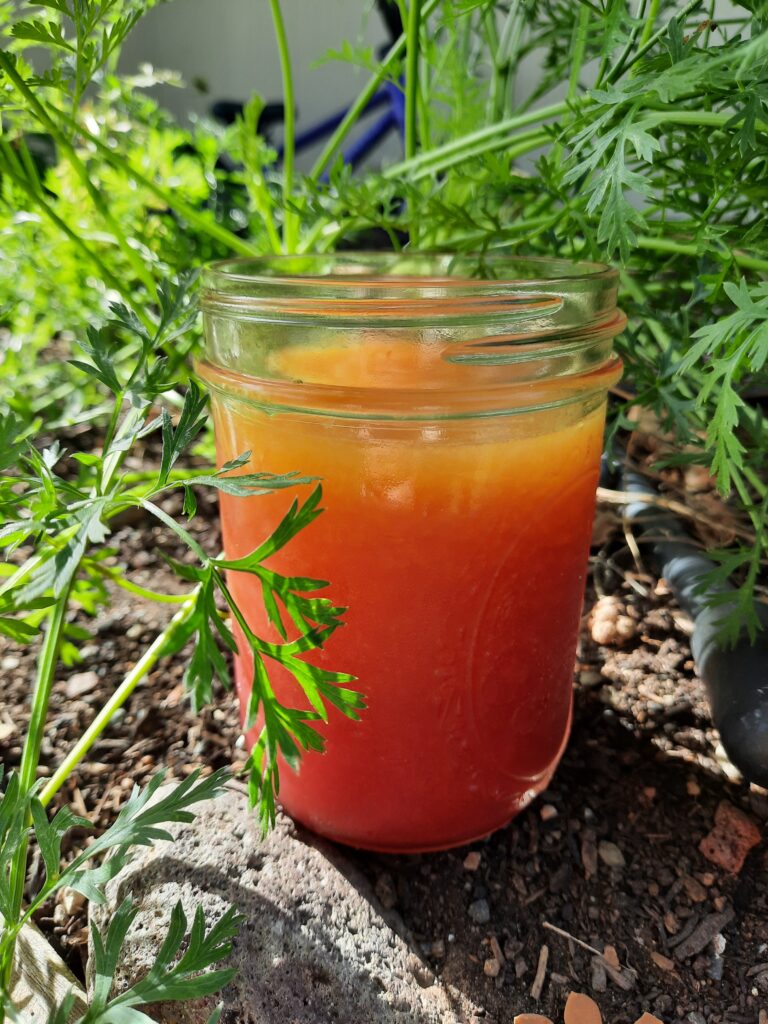
Or also known as Tropical Punch!
We actually discovered this recipe by accident – but it sure was a happy one!
Several years ago, we purchased an upright manual citrus press to make citrus juice easier than the hand-held press we had been using for many years. The press worked so beautifully that we thought it would be fun to juice pomegranates in the press too, which ended up being a game changer for making and enjoying our beloved pomegranate juice!
On one occasion when we were making both pomegranate and orange juice in the press, we mixed the two and were astounded to find the taste similar to our old childhood favorite from growing up in the 1970s – Hawaiian Punch – which was super popular among kids our age back then.
We call our version tropical punch and it consists of 3 parts orange juice and 1 part pomegranate juice. So, if you wanted to make a cup (8 ounces) of tropical punch, the recipe would be ¾ cup of fresh squeezed orange juice mixed with ¼ cup of fresh pomegranate juice.
For a cool visual effect, pour the pomegranate juice into the orange juice in a clear glass and watch it settle on the bottom of the glass creating a gradation between the red and orange juices – it makes for a beautiful presentation!
Cheers!
Mangoes for Choline?
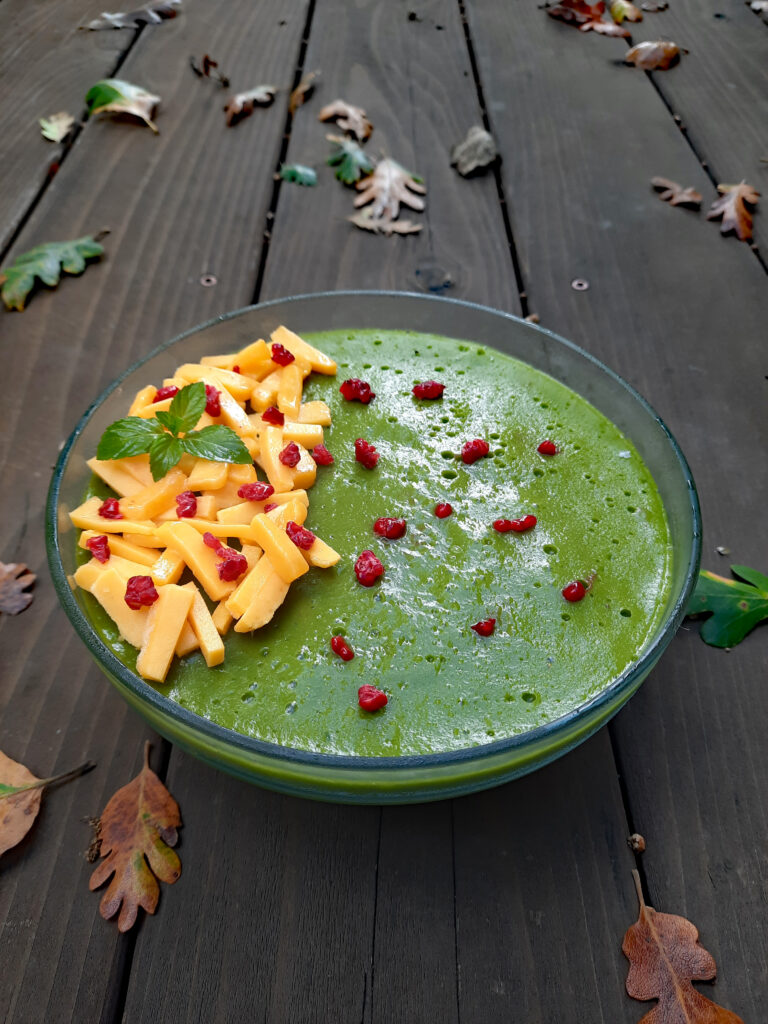
Choline sources is a popular question we’re asked these days, especially from people eating high-fruit diets. The typical answer we give is certain vegetables such as cauliflower and many others, but one very popular fruit in the raw food community can actually be a notable source of choline when eaten in quantity.
And that fruit is mango! In fact, one mango with the seed and skin removed, has over 25 mg of choline. In general, when I have seen people in the high-fruit community eating mangoes, they are usually eating them in quantities larger than this, such as 2, 3, 4 or more mangos. So if one eats for example, 3 mangoes, they are having just over 75 mg of choline. That’s pretty decent for a fruit!
I love smoothies, so here is one of my higher-choline smoothies:
1 mango, seed and skin removed
1 cup chopped cauliflower
3 medium bananas, peel removed
1 cup chopped kale
Two oranges, peels removed
Mint and raspberry garnish
This smoothie has 130 mg of choline! That’s a great start toward meeting the DRI (AI) for choline which is 425 mg for women and 550 mg for men.
Enjoy!
In our new class, Creating Nutrient Replete Meals, we talk about choline source and sources of other important nutrients too. The course is $99 and along with it you get a yearly membership in our Raw Vegan Lifetime Success Community. You can learn more and register for the course by clicking here: https://www.skool.com/raw-vegan-lifetime-success-7461/about
Our Coconut Persimmon Pie
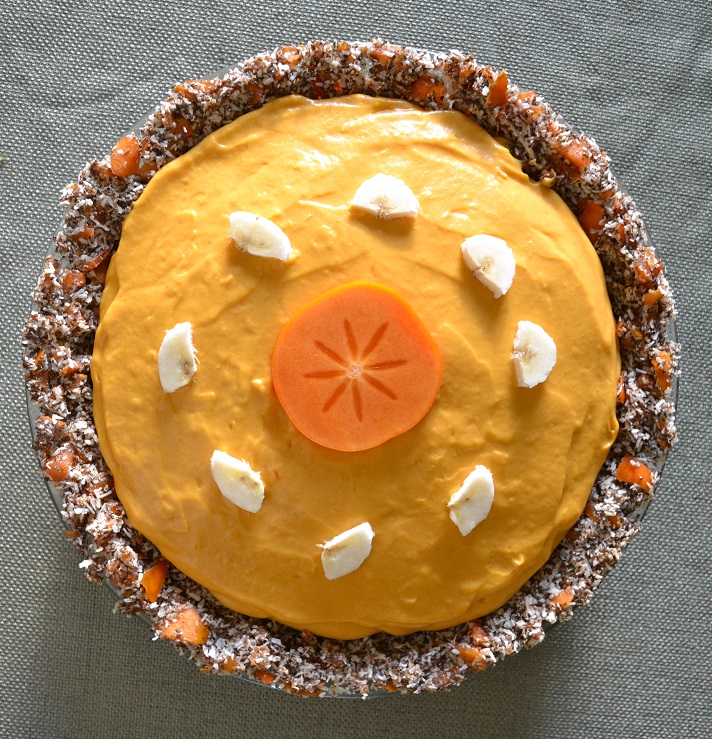
Thanksgiving and the holidays are right around the corner! We know it can be a challenge to eat healthfully around the holidays, especially when there may be little time for menu planning. This year is like that for us.
🥥
Fortunately we can lean on one of our favorite holiday desserts that we have shared at holiday parties and family gatherings for years. It’s relatively easy to make and has been one of the first to disappear with requests for more – even among our conventionally eating relatives 🙂
🥮
It’s our coconut persimmon pie. You can get the recipe for this and more of our simple, delicious, whole raw food recipes!
Here is the recipe:
Pie Crust for Coconut Persimmon Pie
½ cup chia seeds (70 g, 2.5 oz.)
1 cup shredded dehydrated coconut (93 g, 3.28 oz.)
3 small Fuyu persimmons (250 g, 8.8 oz.)
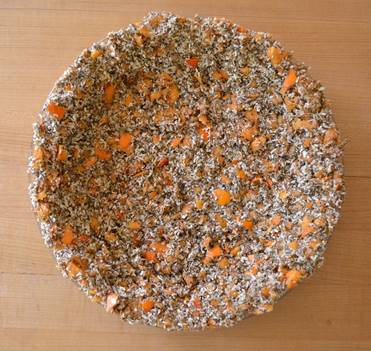
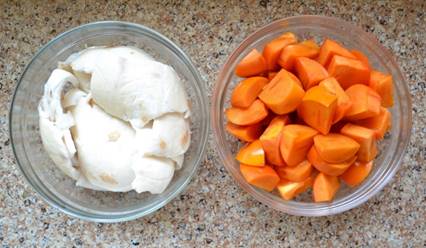
Grind chia seeds in a clean coffee grinder (we have a coffee grinder we use exclusively for grinding seeds) until a meal-like texture is achieved. Blend persimmons in a food processor until homogenized but still a little chunky. Stir chia meal, coconut, and persimmon mixture together in a bowl. Press crust mix into a pie plate. To avoid the pie crust sticking to the bottom of the pie plate, sprinkle some shredded coconut onto the bottom of the pie plate before pressing crust into the plate. Please note: This pie crust is not super-sweet. If you desire a sweeter pie crust, please see the pumpkin pie crust recipe presented later in this eBook.
Coconut Persimmon Pie Filling
Meat of 4 young coconuts (490 g, 17.28 oz.)
6 small Fuyu persimmons (500 g, 17.64 oz.)
2 ripe fresh bananas with skins removed (236 g, 8.32 oz.)
Cut slices of banana and place in bottom of pie crust. Mix coconut and persimmons in high-power blender until completely smooth and pour coconut/persimmon mixture over bananas. Chill for at least two hours before serving.
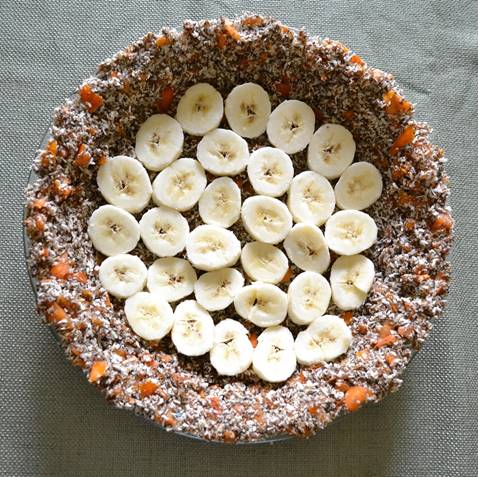
Preparation strategy: It is best to have the pie crust with banana slices ready before mixing the coconut and persimmons in the high-power blender, since the coconut-persimmon mixture gels quickly after blending. You want the gelling of the ingredients to take place in the pie crust instead of in the blender. If the mixture gels in the blender, simply re-blend the mixture until smooth and pour it into the pie crust immediately. The filling for this pie also makes a great pudding!
🥰
We wish you a happy and healthy holiday season!
The Pomegranate – Inflammation Connection
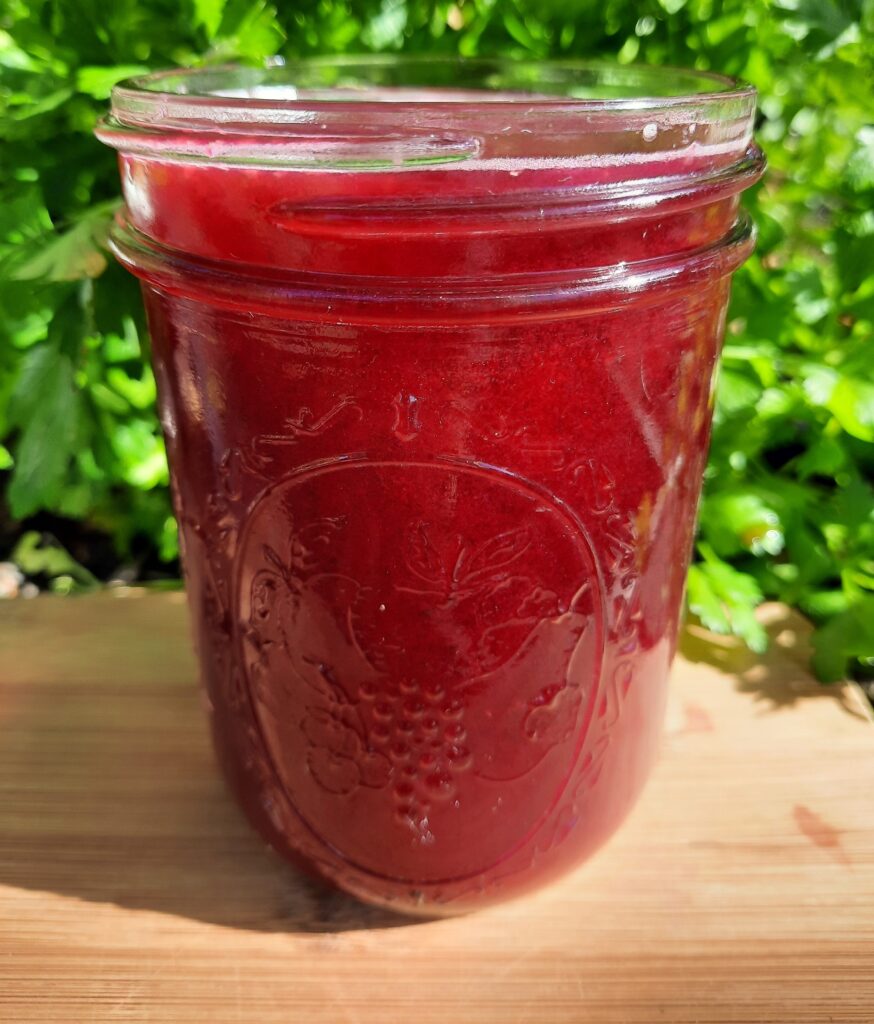
One of the many things I love about fall is pomegranate season! And I love making fresh pomegranate juice with my citrus press juicer – the juice made with this juicer is a rich red color as the seeds are left behind with the pulp. Lately I’ve been reading about the many health benefits of pomegranate, including the numerous phytochemicals therein and their role in mitigating inflammation. Here is a sampling of a few:
💥 Punicalagins – Powerful antioxidants that help reduce oxidative stress and block inflammatory enzymes like COX-2
🍒 Anthocyanins – These give pomegranate its red color and help stop inflammation by blocking key pathways (like NF-κB) that trigger immune responses.
❤️ Ellagic Acid – Helps to lessen the production of inflammatory molecules in our body.
🌱 Flavonoids such as Quercetin & Kaempferol which are known for reducing inflammatory cytokines helping to keep inflammation in check.
🍊 Vitamin C – Supports one’s immune system while fighting oxidative damage, helping to reduce overall inflammation.
Together, these compounds work to protect our cells, support one’s immune system, and fight chronic inflammation! It goes without saying that consuming a diet rich in foods that don’t create inflammation in the first place such as various plant foods and avoidance of those that do so, is the first preference. But as we can see here, fresh pomegranates and juice can be a great adjunct to a low-inflammation or anti-inflammatory diet.
🍷
I especially love straight pomegranate juice when it is not too astringent. I also love it mixed with orange juice or in my post-workout smoothies!
🤸
Enjoy!
Lemon Banana Nice Cream
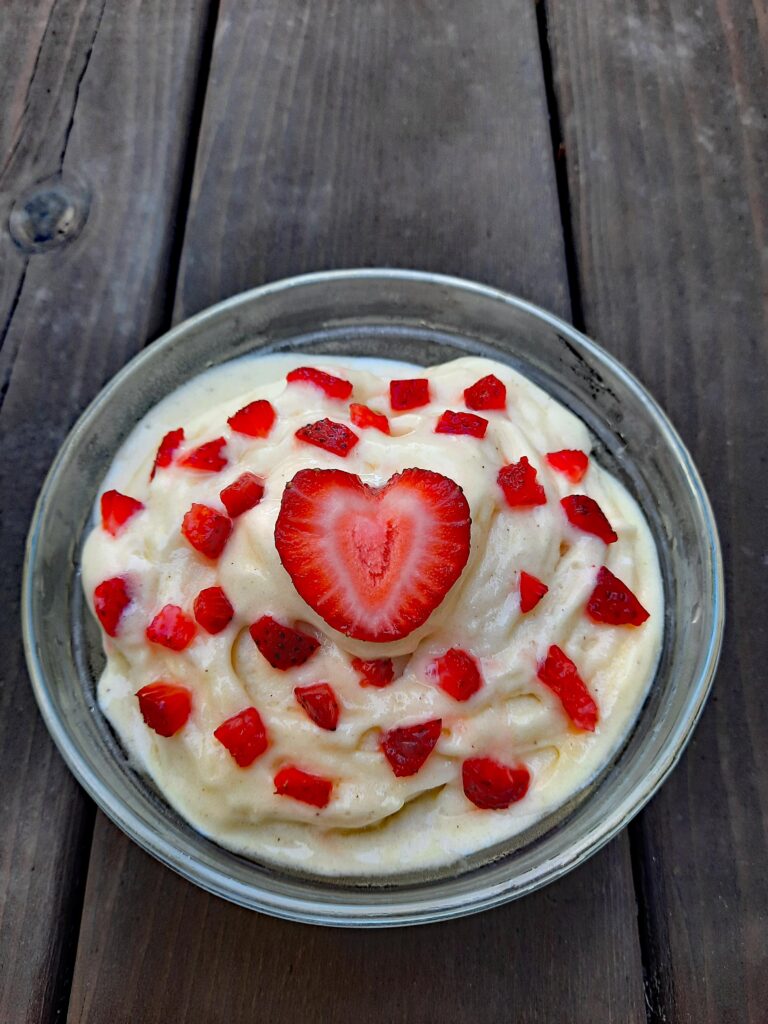
THIS was surprisingly delicious! And beautifully simple…
🍌
We have many lemons growing in our yard right now along with lots of bananas in our freezer. Put the two together on a hot July day and you get lemon banana nice cream!
🍋
We froze a small lemon (skin and seeds removed) and then ran it through our champion juicer, with the blank attachment in place of the juicing screen, with three medium frozen bananas and the resulting ice cream had the consistency of a lemon sorbet. If you love lemons and bananas, this is a real treat.
🍓
We added a strawberry from our garden for the design on top. So good!
❤️
Enjoy!
Simple Green Smoothie with Papaya!
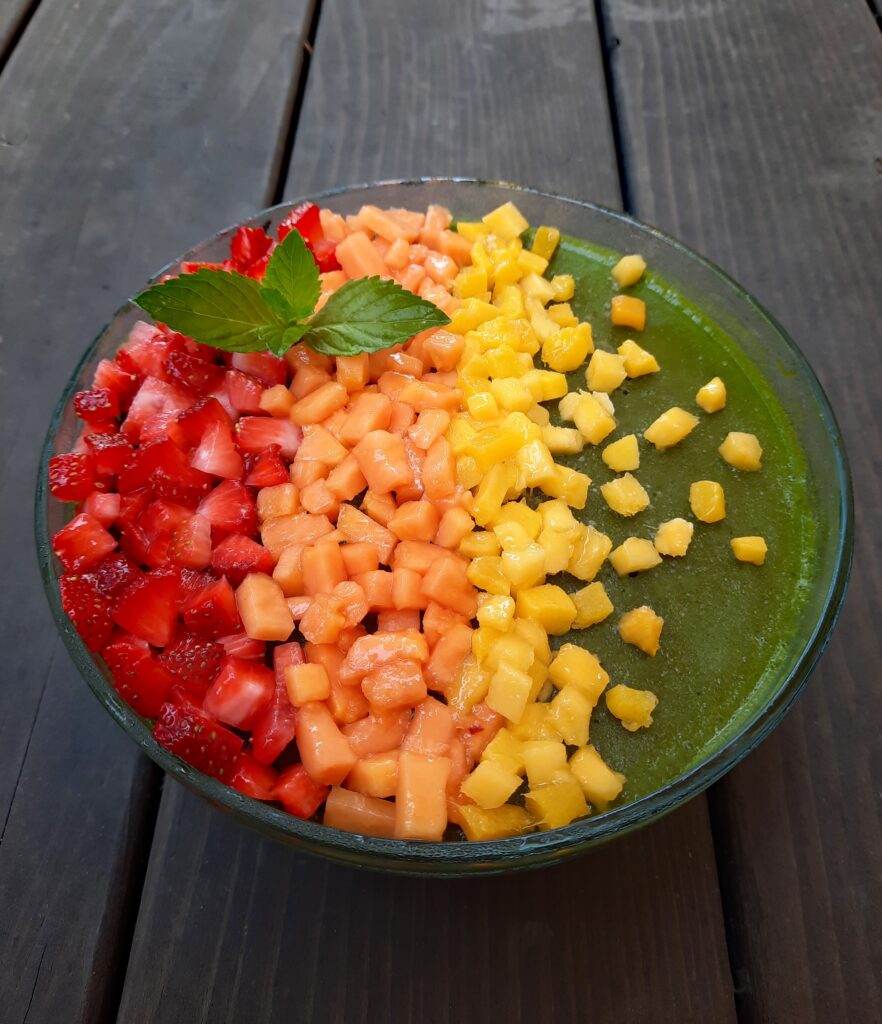
We found a beautiful papaya at our favorite natural foods store the other day and our 3 ½ year old was so excited to have some!! In his own words, it was ‘yummy, yummy’ as he says for all foods he loves. I put some papaya along with mango and strawberry on the top of this equally delish green smoothie:
- 4 medium bananas (472 g)
- 1 medium orange (131 g)
- 4 small leaves of kale (40 g)
- ¾ cup chopped mango (124 g)
On top of the smoothie:
- ¼ cup strawberries (55 g)
- ¼ cup papaya (50 g)
- ¼ cup mango (41 g)
- Fresh peppermint sprig
Nutrient analysis:
| Nutrient Content | Dietary Reference Intakes (DRIs) – not including pregnancy and lactation or children | |
| Calories | 634 | |
| Vitamin B1 | 0.5 mg | 1.1 mg for women 1.2 mg for men |
| Vitamin B2 | 0.3 mg | 1.1 mg for women 1.3 mg for men |
| Vitamin B3 | 5.5 mg | 14 mg for women 16 mg for men |
| Vitamin B5 | 2.5 mg | 5 mg for both men and women |
| Vitamin B6 | 1.4 mg | 1.3 mg for both men and women 50 and under 1.5 mg for women over 50 1.7 mg for men over 50 |
| Folate | 232 mcg | 400 mcg for both men and women |
| Vitamin A (RAE) | 233 mcg | 700 mcg RAE for women 900 mcg RAE for men |
| Vitamin C | 283 mg | 75 mg for women 90 mg for men |
| Vitamin E | 3.0 mg | 15 mg for both men and women |
| Calcium | 216 mg | 1,000 mg 19-70 year-old men and 19-50 year-old women. 1,200 mg 70+ year-old men and 50+ year-old women. |
| Iron | 1.6 mg | 18 mg pre-menopausal women 8 mg for men and post-menopausal women |
| Magnesium | 193 mg | 310 mg 19-30 year-old women 320 mg 31+ year-old-women 400 mg 19-30 year-old men 420 mg for 31+ year-old-men |
| Potassium | 2379 mg | 2,600 mg for women 3,400 mg for men (used to be 4,700 mg for each) |
| Zinc | 1.3 mg | 8 mg for women 11 mg for men |
You can add more strawberries or other berries to the blended portion of the smoothie to increase the already notable nutrient content even more. Concerned about blending bananas with berries because of polyphenol oxidase? We’ll be talking about this controversial topic on our webinar next week.
Stay tuned!
Carrot Tomato Dressing Recipe Demonstration
Recipe:
- 1 medium tomato (roma or similar) (1.88 oz.,53 g)
- 4 medium carrots (8.6 oz., 244 g)
- 1/8 cup walnuts (0.5 oz., 14 g)
- 1 tsp chia seeds (0.2 oz., 5 g)
- Juice of one large lemon (1.5 fl oz., 42 ml)
Blend, pour over salad or dish of your choice. Enjoy!
If you enjoyed this presentation and if raw food nutrition explained to you in easy to understand terms in a fun format with plenty of time to sink in, a manageable time commitment, and plenty of opportunity to ask questions and get clarification directly from us is important to you, we invite you to join us for our online Mastering Raw Food Nutrition Course!
We are so happy to bring this program to you! We want you to experience all the joy and benefits eating and living this way has brought to our lives. We've listened and created this curriculum based on your input!
Mastering Raw Food Nutrition Program Details:
- 12 Month Online and Interactive Course
- Our next program will begin on August 27, 2025.
- You can schedule a time to speak with us about Mastering Raw Food Nutrition here:
- https://masteringrawfoodnutrition.as.me/
- Our Super Early Bird Special is going on right now - schedule a time to speak with us now to get the best price of the year!
- Self-Paced Version Now Available!
- You may now join the self-paced version of this course at any time. If you are considering joining the class you can schedule an information session with us at the bottom of this page. Please continue reading about the course below.
- Time Commitment: about 4 hours per week
- 2 hours of information-dense, easy-to-follow educational video content
- Four comprehensive, professionally printed and bound, 8.5" x 11" sets of paperback notes including graphics that follow along with our presentations. Close to 900 pages of notes between all four notebooks.
- 6 – 8 monthly live zoom meetings in real time with Drs. Rick or Karin Dina, D.C. in small group sessions.
- You can access these via phone or through your computer. This is another 100+ hours of time over the course of the 12 months!
- All meetings will be recorded in case you miss one and want to still listen in afterwards, or review later even if you were on the call.
- You can even ask your questions in advance through the computer!
- We have listened! Many people have told us they have trouble following through with other online courses and find regular opportunities to meet, ask questions, and have time for sharing experiences very valuable for understanding course information.
- Other types of online courses do not offer the support provided in this class.
- Our Mastering Raw Food Nutrition Course is a total of over 100 hours worth of solid instructional video content and 100+ additional hours of class discussion Q+A sessions that you can attend live or access once we've recorded them.
- Please keep in mind that 100 hours from us is probably more like 500 or so hours elsewhere. For example, we purchased an online program a few years back that was 6 hours worth of content. We were very frustrated going through it because it easily could have been delivered in about an hour, without missing anything. We value your time as much as we value our own, and our commitment to you is make the best use of that time.
- This curriculum is based on peer-reviewed research (thousands of journal articles), our personal experience of 35+ years each, our clinical experience, and our doctorate level educations, presented in an easy to understand format!
Interested in joining us for Mastering Raw Food Nutrition? Please click on this link to schedule a time to speak with us: https://masteringrawfoodnutrition.as.me/
Topics we cover in this class include and are not limited to the following:
- Successful weight management
- Blood sugar regulation from a dietary perspective
- Acid/Alkaline balance
- Food changes from cooking
- Nutrient loss
- Novel/toxic substance formation
- Anti-inflammatory nutrition
- Anti-aging and longevity
- Minerals including iron, calcium, zinc, selenium, potassium, magnesium, iodine, etc...
- Protein
- Essential fatty acids
- Antioxidants and phytonutrients
- Choline, TMA, and TMAO
- Understanding human digestion, absorption, and assimilation of nutrients
- Soluble and insoluble fiber, resistant starch
- The importance of water and high water content foods
- Vitamins K1, K2, and D
- Vitamins A, C, B1, B2, B3, B5, B6, B7, B9, B12, E, and more...
- Beta-carotene, lycopene, lutein, zeaxanthin, and other carotenoids
- Statistics in U.S. healthcare – We have the most costly healthcare system in the world, but are plagued by many diseases. Why? We will explore this question and more.
- The quick fix approach vs. long-term change. How do health outcomes differ?
- A history of the raw and living foods movement:
- Natural Hygiene and the Ann Wigmore program contrasted with popular diet programs
- Evolution within the raw food movement with growing national and international popularity
- Personal responsibility and health achievement
- Major studies in support of plant-based diets
- Evaluation of the health promoting properties of different foods
- Making sense of food labels
- Phytoestrogens, soy, xenoestrogens
- Enzyme theory and enzyme science
- Food combining theory and practical applications
- Essentials for success with raw foods
- The history of human food choices
- Grains - what they are and why they are so controversial
- Organically grown produce - a scientific perspective
- Nutrition from whole natural plant foods vs. supplements
- More about essential fatty acids
- Philosophy vs. science – the benefits and limitations of both
- Comparison and contrast of different approaches to raw food nutrition
- high fruit raw
- low fruit raw
- the importance of greens
- much more
- Comparison of raw food dietary approaches to other approaches
- Avoidance of common pitfalls in raw food and designing a health program for success
- Raw food exaggerations and raw food facts
- The effects of heating on food
- The benefits of sprouting and greens, the science of sprouting
- Antioxidants and phytonutrients
- Nutrient synergy
- Lighter eating for more energy
- Healthy weight control
- Raw superfoods, an objective and scientific look
- Attitude and psychological considerations for healthy eating
- Sleep and optimal health
- Comparison of different types of fasts and cleanses
- Food choices and ecological sustainability
- Various supplements – what are they, what do they do, and do we actually need them?
- Survey of sweeteners
- What are the various sweeteners used by raw food enthusiasts and the population in general?
- Are they good for us and what are healthy alternatives?
- Advanced topics in weight loss and metabolism
- Do hormones play a role?
- How do diet, activity level, stress, sleep, etc. affect weight loss/gain?
- Digestive health
- The effect of various foods
- Stress/emotional state
- Probiotics, prebiotics, and microbiomes
- Oxalate and oxalobacter formigenes
- How our body utilizes carbohydrates, protein, and fat
- Sea vegetables
- Raw food challenges, pitfalls, and solutions
- Different types of oils
- What are they, are they really healthy and do we need them?
- Nutrient analysis of popular raw food staples
- What popular raw foods are nutrient powerhouses?
- Is it necessary to spend a lot of money to be healthy?
- The raw health continuum
- Where do different foods fall on the scale of health?
- The importance of fiber for intestinal health
- Raw food / plant-based diet research
- And so much more...
We invite you to learn more about this class can assist you in reaching your health and personal goals. To book a time to speak with us about registering for this curriculum, please click on this link:
Zucchini Nut Dressing Recipe Demonstration
Recipe:
- 1.5 cups chopped zucchini (6.5 oz., 183 g)
- 1/4 cup walnuts (1 oz., 28 g)
- 1 tsp chia seeds ( 0.2 oz., 5 g)
- Juice of one large lemon (1.5 fl oz., 42 ml)
- 1 tsp chickpea miso (0.25 oz., 7 g) (optional)
- One piece of yellow onion (size is your choice) one chopped green onion (optional)
Blend ingredients (we used a high-power blender). Pour over salad or dish of your choice! Enjoy!
If you enjoyed this presentation and if raw food nutrition explained to you in easy to understand terms in a fun format with plenty of time to sink in, a manageable time commitment, and plenty of opportunity to ask questions and get clarification directly from us is important to you, we invite you to join us for our online Mastering Raw Food Nutrition Course!
We are so happy to bring this program to you! We want you to experience all the joy and benefits eating and living this way has brought to our lives. We've listened and created this curriculum based on your input!
Mastering Raw Food Nutrition Program Details:
- 12 Month Online and Interactive Course
- Our next program will begin on August 27, 2025.
- You can schedule a time to speak with us about Mastering Raw Food Nutrition here:
- https://masteringrawfoodnutrition.as.me/
- Our Super Early Bird Special is going on right now - schedule a time to speak with us now to get the best price of the year!
- Self-Paced Version Now Available!
- You may now join the self-paced version of this course at any time. If you are considering joining the class you can schedule an information session with us at the bottom of this page. Please continue reading about the course below.
- Time Commitment: about 4 hours per week
- 2 hours of information-dense, easy-to-follow educational video content
- Four comprehensive, professionally printed and bound, 8.5" x 11" sets of paperback notes including graphics that follow along with our presentations. Close to 900 pages of notes between all four notebooks.
- 6 – 8 monthly live zoom meetings in real time with Drs. Rick or Karin Dina, D.C. in small group sessions.
- You can access these via phone or through your computer. This is another 100+ hours of time over the course of the 12 months!
- All meetings will be recorded in case you miss one and want to still listen in afterwards, or review later even if you were on the call.
- You can even ask your questions in advance through the computer!
- We have listened! Many people have told us they have trouble following through with other online courses and find regular opportunities to meet, ask questions, and have time for sharing experiences very valuable for understanding course information.
- Other types of online courses do not offer the support provided in this class.
- Our Mastering Raw Food Nutrition Course is a total of over 100 hours worth of solid instructional video content and 100+ additional hours of class discussion Q+A sessions that you can attend live or access once we've recorded them.
- Please keep in mind that 100 hours from us is probably more like 500 or so hours elsewhere. For example, we purchased an online program a few years back that was 6 hours worth of content. We were very frustrated going through it because it easily could have been delivered in about an hour, without missing anything. We value your time as much as we value our own, and our commitment to you is make the best use of that time.
- This curriculum is based on peer-reviewed research (thousands of journal articles), our personal experience of 35+ years each, our clinical experience, and our doctorate level educations, presented in an easy to understand format!
Interested in joining us for Mastering Raw Food Nutrition? Please click on this link to schedule a time to speak with us: https://masteringrawfoodnutrition.as.me/
Topics we cover in this class include and are not limited to the following:
- Successful weight management
- Blood sugar regulation from a dietary perspective
- Acid/Alkaline balance
- Food changes from cooking
- Nutrient loss
- Novel/toxic substance formation
- Anti-inflammatory nutrition
- Anti-aging and longevity
- Minerals including iron, calcium, zinc, selenium, potassium, magnesium, iodine, etc...
- Protein
- Essential fatty acids
- Antioxidants and phytonutrients
- Choline, TMA, and TMAO
- Understanding human digestion, absorption, and assimilation of nutrients
- Soluble and insoluble fiber, resistant starch
- The importance of water and high water content foods
- Vitamins K1, K2, and D
- Vitamins A, C, B1, B2, B3, B5, B6, B7, B9, B12, E, and more...
- Beta-carotene, lycopene, lutein, zeaxanthin, and other carotenoids
- Statistics in U.S. healthcare – We have the most costly healthcare system in the world, but are plagued by many diseases. Why? We will explore this question and more.
- The quick fix approach vs. long-term change. How do health outcomes differ?
- A history of the raw and living foods movement:
- Natural Hygiene and the Ann Wigmore program contrasted with popular diet programs
- Evolution within the raw food movement with growing national and international popularity
- Personal responsibility and health achievement
- Major studies in support of plant-based diets
- Evaluation of the health promoting properties of different foods
- Making sense of food labels
- Phytoestrogens, soy, xenoestrogens
- Enzyme theory and enzyme science
- Food combining theory and practical applications
- Essentials for success with raw foods
- The history of human food choices
- Grains - what they are and why they are so controversial
- Organically grown produce - a scientific perspective
- Nutrition from whole natural plant foods vs. supplements
- More about essential fatty acids
- Philosophy vs. science – the benefits and limitations of both
- Comparison and contrast of different approaches to raw food nutrition
- high fruit raw
- low fruit raw
- the importance of greens
- much more
- Comparison of raw food dietary approaches to other approaches
- Avoidance of common pitfalls in raw food and designing a health program for success
- Raw food exaggerations and raw food facts
- The effects of heating on food
- The benefits of sprouting and greens, the science of sprouting
- Antioxidants and phytonutrients
- Nutrient synergy
- Lighter eating for more energy
- Healthy weight control
- Raw superfoods, an objective and scientific look
- Attitude and psychological considerations for healthy eating
- Sleep and optimal health
- Comparison of different types of fasts and cleanses
- Food choices and ecological sustainability
- Various supplements – what are they, what do they do, and do we actually need them?
- Survey of sweeteners
- What are the various sweeteners used by raw food enthusiasts and the population in general?
- Are they good for us and what are healthy alternatives?
- Advanced topics in weight loss and metabolism
- Do hormones play a role?
- How do diet, activity level, stress, sleep, etc. affect weight loss/gain?
- Digestive health
- The effect of various foods
- Stress/emotional state
- Probiotics, prebiotics, and microbiomes
- Oxalate and oxalobacter formigenes
- How our body utilizes carbohydrates, protein, and fat
- Sea vegetables
- Raw food challenges, pitfalls, and solutions
- Different types of oils
- What are they, are they really healthy and do we need them?
- Nutrient analysis of popular raw food staples
- What popular raw foods are nutrient powerhouses?
- Is it necessary to spend a lot of money to be healthy?
- The raw health continuum
- Where do different foods fall on the scale of health?
- The importance of fiber for intestinal health
- Raw food / plant-based diet research
- And so much more...
We invite you to learn more about this class can assist you in reaching your health and personal goals. To book a time to speak with us about registering for this curriculum, please click on this link:
Banana Blueberry Parfaits
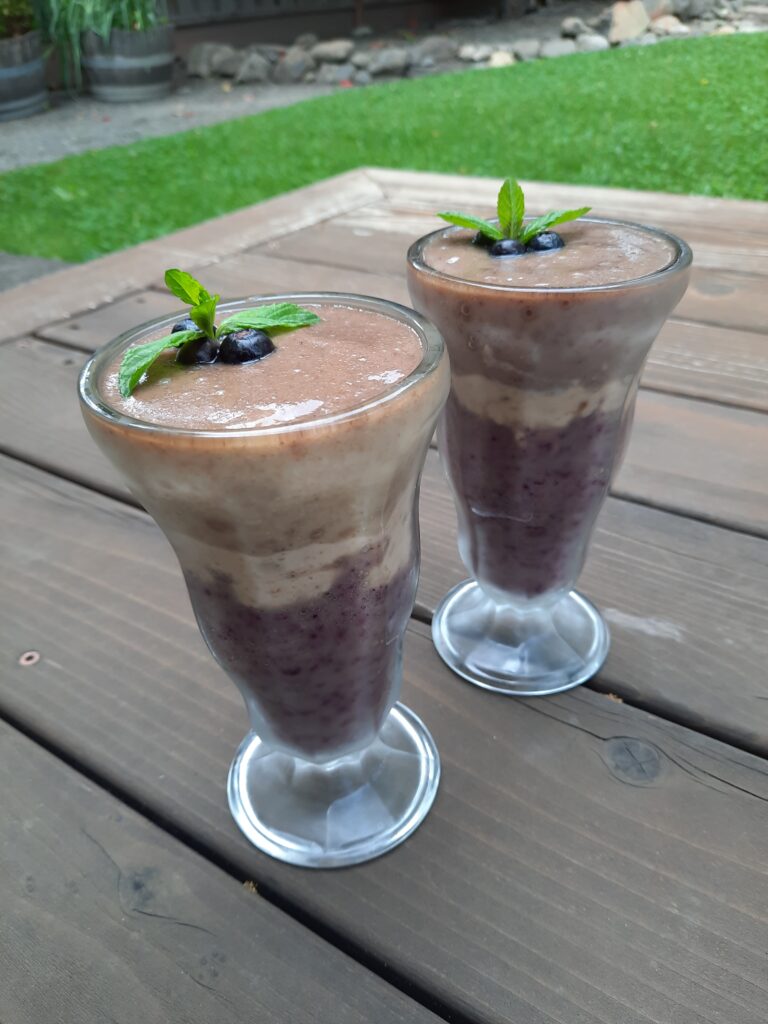
Here’s a fun super-simple dessert (or anytime) recipe you can make in a pinch with common ingredients that you likely have in your house right now or can easily find at the grocery store: bananas, blueberries, dates, and walnuts.
Each of these parfaits pictured has 3 medium bananas, a small handful of blueberries, ½ ounce (or less) walnuts, and 1 date. For a smaller parfait, you can cut each of the ingredients in half.
To make this recipe, blend ½ of one banana with the walnuts and date. You can add a little water if the mixture is too thick. Set aside.
Then blend the remaining 2 ½ bananas, pour off half into a parfait glass of your choice. Pour or scoop the date-walnut-banana mixture unto the top of the blended banana in the parfait glass.
Blend the remaining banana mixture with the blueberries and then pour into the parfait glass on top of the date-walnut-banana mixture. Garnish with mint or leafy green/fruit of your choice.
The photo shows the banana-blueberry mixture on the bottom and the banana-only mixture on the top while the recipe above describes the opposite. From our experience, either has worked well and taste similar. Strawberries, raspberries, mulberries, blackberries are good in place of the blueberries too!
Enjoy!
Apple Banana Pie
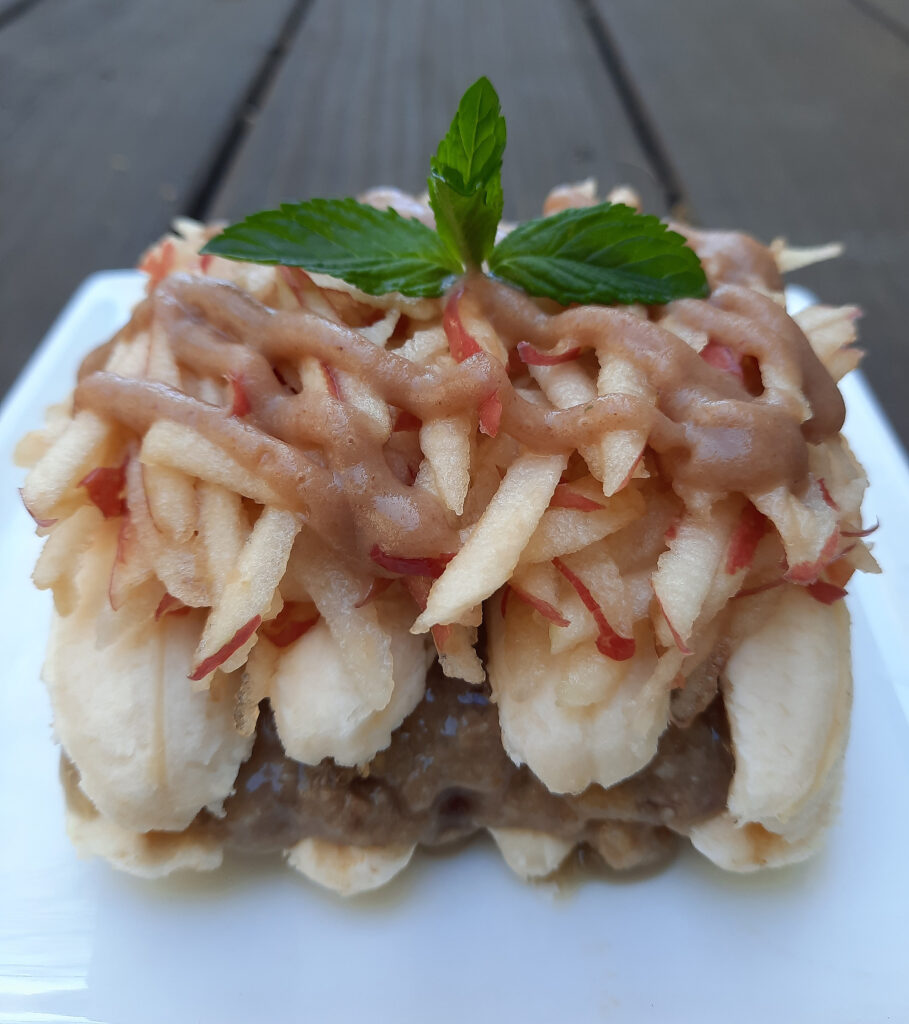
We’re on a raw pie kick this week! Here is the apple pie version of the recipe I shared earlier this week:
Ingredients:
2 medium bananas
½ medium fuji apple or apple variety of your choice
1 teaspoon fresh squeeze lemon juice
3 medjool or other type of dates
0.5 oz walnuts (1/8 cup, 13 g)
Peel bananas and cut each of them in half. Then pull them apart into their individual three sections – you should now have 12 banana sections (6 for each banana).
Line up 4 banana sections on a plate as shown in the photo. Next, blend 4 banana sections with the 2 dates and walnuts. Then, spread this mixture on top of the banana sections as shown.
Place the remaining 4 banana sections on top of the banana-date-walnut mixture.
Wash and shred ½ half of apple. Add lemon juice to apple shreds, mix and let stand for a few minutes. Place apple shreds on top of the pie as shown in photo.
Next blend remaining banana pieces with one date and a little water for consistency. Pour banana/date mixture over the tops of the pie. You can add a mint sprig to the if desired.
For a lower fat version, you can replace the walnuts with peeled zucchini or simply leave them out of the recipe.
Enjoy!
Additionally, would you like to receive our eBook "Our Top 12 Strategies for Long Term Success on A Raw Plant-Based Diet"? Just fill out the email form in the right column of this website and you’ll receive it for free!
Blueberry Banana Pie
Here is one of our favorite dessert recipes! It doesn’t require extensive preparation and we can make it in less than 15 minutes. This is the blueberry version of this recipe. Other versions are coming soon!
Ingredients:
2 medium bananas
Small handful of blueberries (strawberries or raspberries work well too)
2 medjool or other type of dates
0.5 oz walnuts (1/8 cup, 13 g)
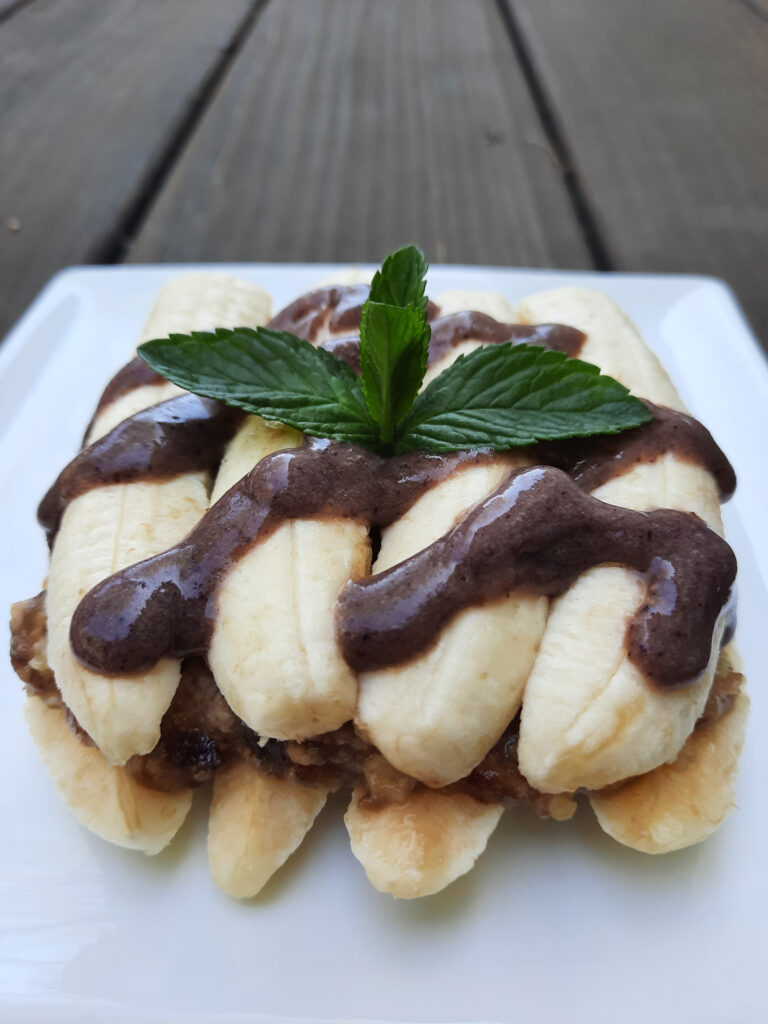
Line up 4 banana sections on a plate as shown in the photo. Next, blend 4 banana sections with the 2 dates and walnuts. Then, spread this mixture on top of the banana sections as shown.
Place the remaining 4 banana sections on top of the banana-date-walnut mixture. Blend the small handful of blueberries alone or with an additional banana. Pour blueberry banana mixture over the top of the pie. You can add a mint sprig if desired.
For a lower fat version, you can leave out the walnuts.
Enjoy! Happy spring everyone!
Peel bananas and cut each of them in half. Then pull them apart into their individual three sections – you should now have 12 banana sections (6 for each banana).
Additionally, would you like to receive our eBook "Our Top 12 Strategies for Long Term Success on A Raw Plant-Based Diet"? Just fill out the email form in the right column of this website and you’ll receive it for free!