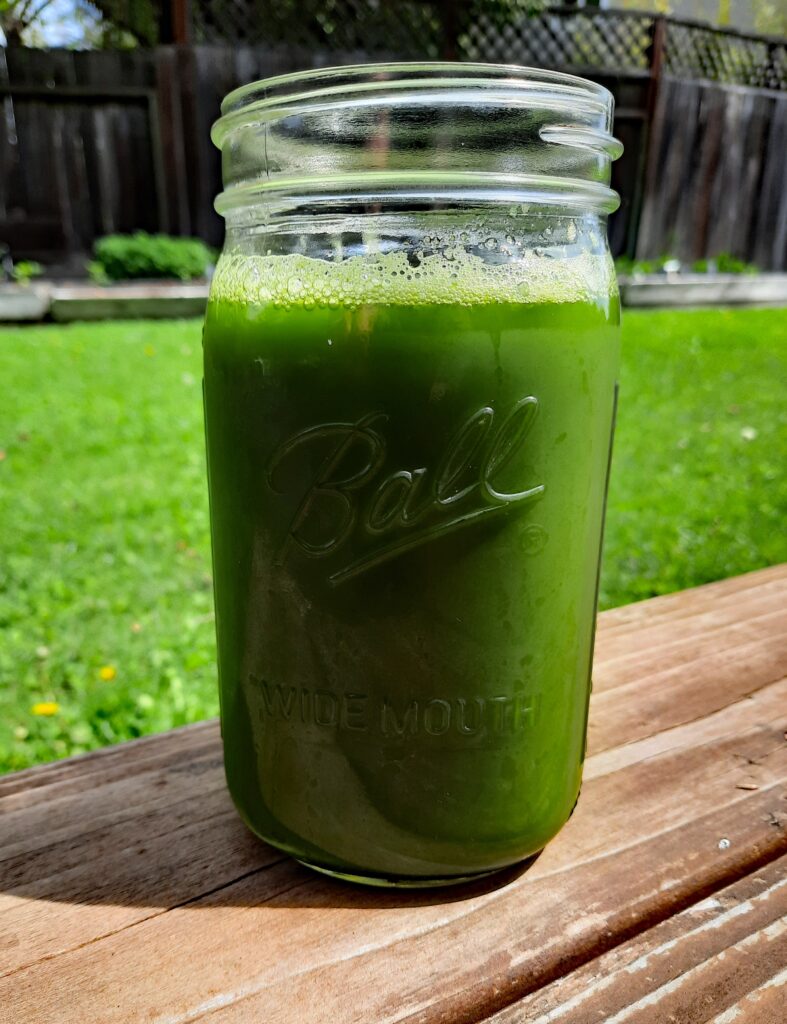
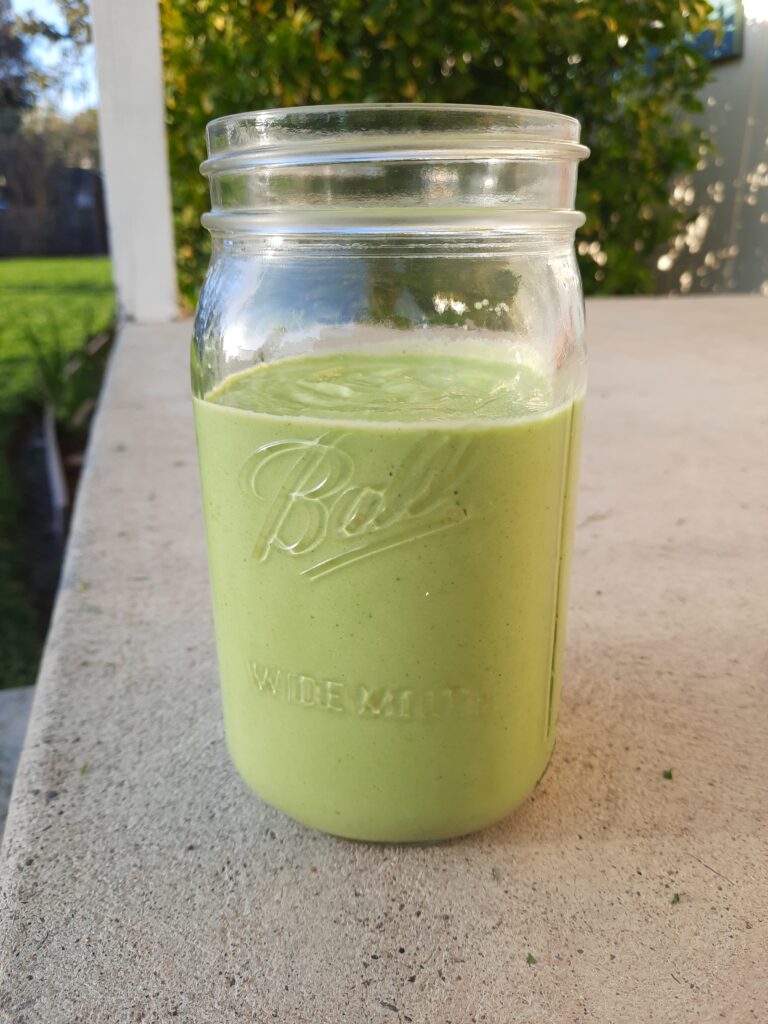
I’ve been juicing for the past few days and discovered my new favorite green juice. It’s actually super simple, with two ingredients – celery and dandelion greens. I used one head of celery and a handful of dandelion greens.
Here is a sampling of the nutrients found in these ingredients:
It’s not surprising to see numbers like this when we put two nutrient powerhouses together!
Enjoy!
Additionally, would you like to receive our eBook "Our Top 12 Strategies for Long Term Success on A Raw Plant-Based Diet"? Just fill out the email form in the right column of this website and you’ll receive it for free!
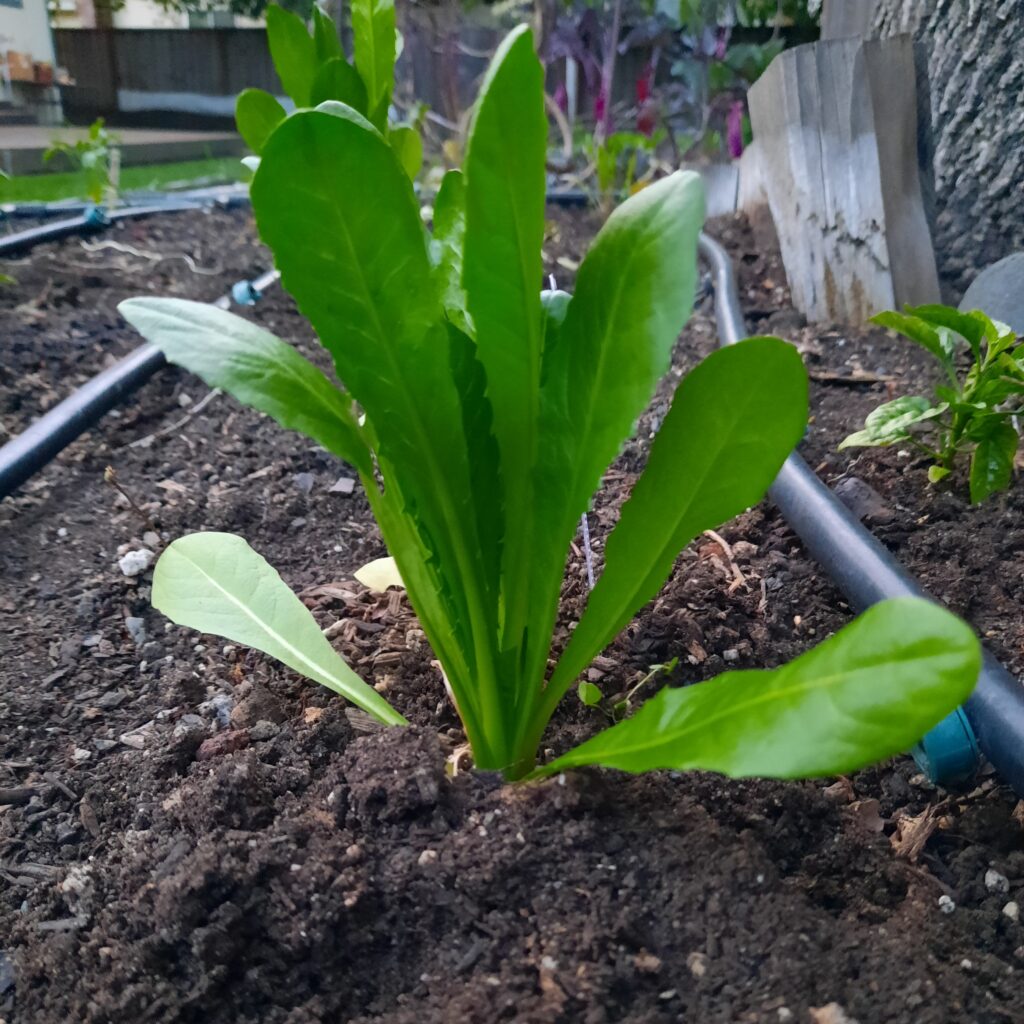
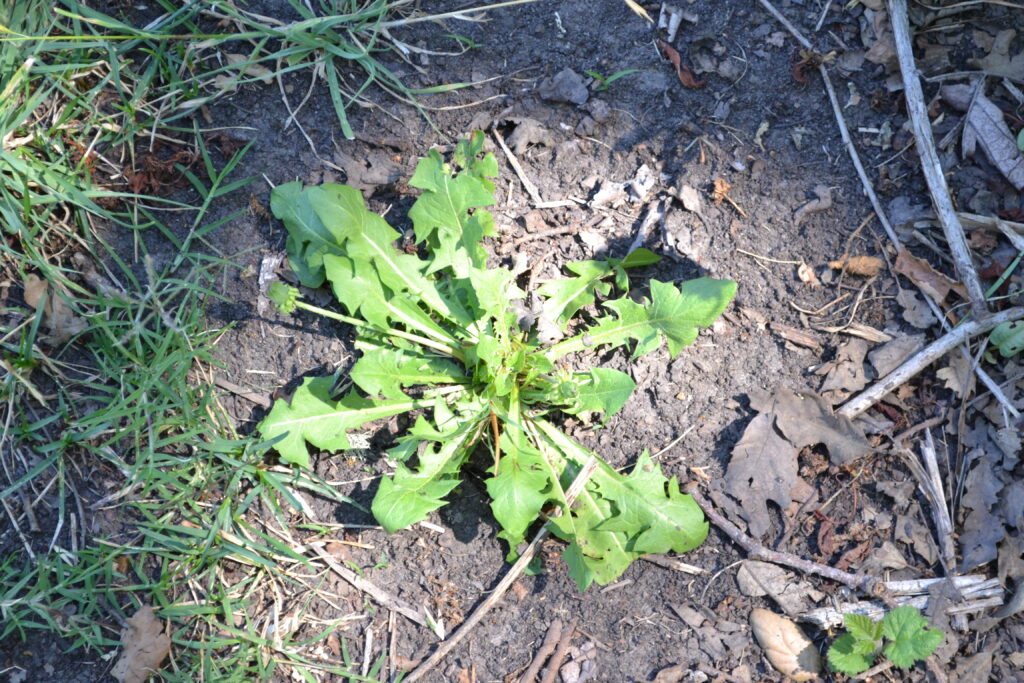
Yesterday, I was jumping for joy when I found dandelion green starts at a local nursery! You may be wondering why I would be happy to purchase plants that can be so easily found growing wild or in one’s backyard. The reason why is because these “dandelion” plants are a particular species commonly called Italian dandelion with the scientific name of Chicorium intybus. Italian dandelion is not a true dandelion as it has a blue flower and much longer leaves than your garden-variety dandelion, which has a yellow flower and generally shorter leaves. The scientific name for common dandelion is Taraxacum officinale.
So why am I making this distinction?
Because the dandelion greens you find in the grocery store are Italian dandelion greens. And the dandelion greens listed on most nutrient analysis software programs/apps are also Italian dandelion greens.
Here is the selected mineral content of Chicorium intybus according to Chronometer:
And I found a research study that measured the same minerals in Taraxacum officinale:
100 g dandelion greens Taraxacum officinale Calcium 192 mg Iron 3.1 mg Potassium 393 mg Magnesium 38 mg
As we can see here, the nutrient content per gram is similar between the two for the minerals tested. So, the bottom line is that even though most nutrient analysis software/apps do not contain common dandelion greens (Taraxacum officinale), one can use the nutrient data of Chicorium intybus in its place for the minerals shown here as a reasonable alternative.
One last note here: I just found a study with the nutrient content of Chicorium intybus that shows a calcium content of 293 mg per 100 grams and iron content of 9.2 mg per 100 grams which are both higher than the values we just discussed. This exemplifies that there can be nutrient differences between samples tested. I always look for multiple samples, compare the nutrient content between them, and look for trends in the data. More on this in a future post!
Additionally, would you like to receive our eBook "Our Top 12 Strategies for Long Term Success on A Raw Plant-Based Diet"? Just fill out the email form in the right column of this website and you’ll receive it for free!
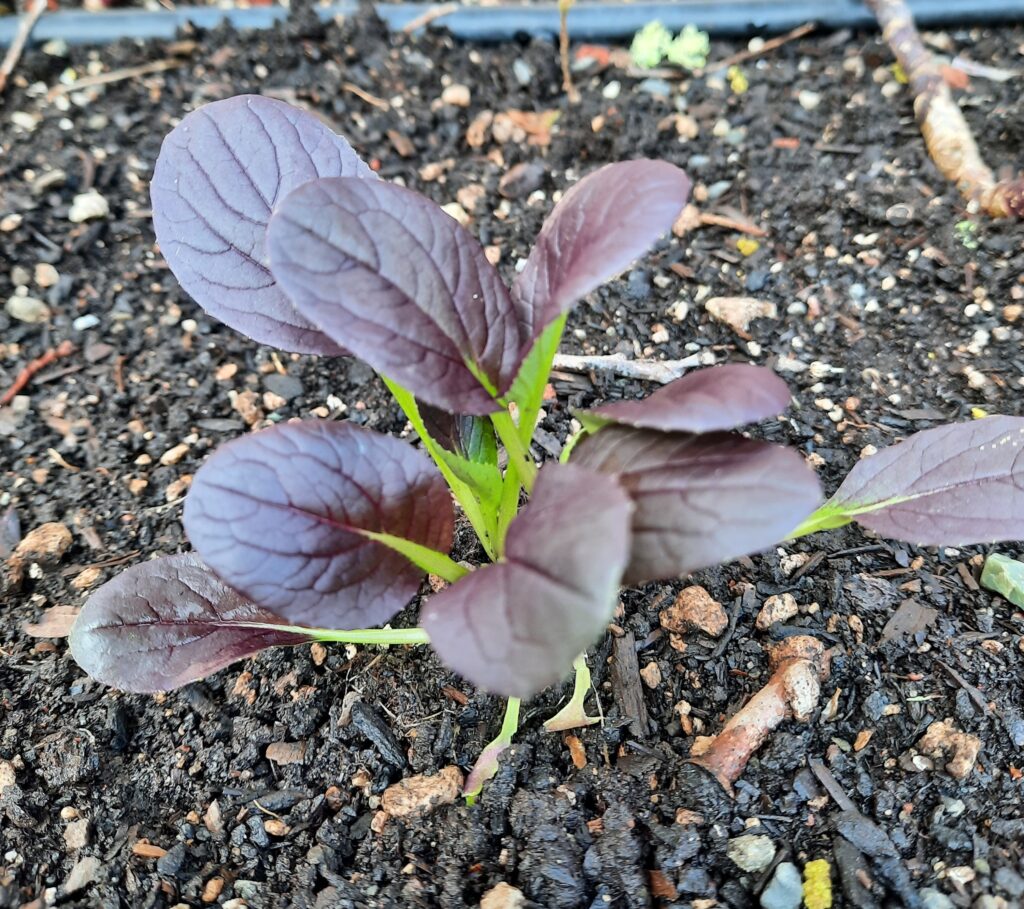
Spring green growing season has arrived – I was just thrilled to see bok choy starts at our local plant nursery last week! I have been a huge fan of bok choy for many years, especially after I saw the nutrient content of this lovely leafy green:
Bok choy – 3 cups chopped Calcium 220.5 Iron 1.68 Zinc 0.40 Magnesium 39.9 Potassium 529.2 Folate 138.6 Vitamin C 94.5
Three cups of bok choy contains notable amounts of calcium, vitamin C, folate, and potassium. The calcium content of bok choy is exceptional among leafy greens and plant foods in general.
Bok choy, which also goes by the common name pac choi (there are actually a few common names), is a member of the cabbage plant family, also known as the Brassicaceae. Other members of this plant family include kale, cauliflower, and broccoli, which are also known for their notable calcium content. The cabbage family used to be known as the Cruciferae, which was originally named for the cross-like appearance of the flower petals among members of this plant family.
I love the purple color of this bok choy variety in addition to the usual dark green color of bok choy leaves. At this stage, bok choy leaves have a very mild flavor in comparison to mature bok choy plants.
Additionally, would you like to receive our eBook "Our Top 12 Strategies for Long Term Success on A Raw Plant-Based Diet"? Just fill out the email form in the right column of this website and you’ll receive it for free!
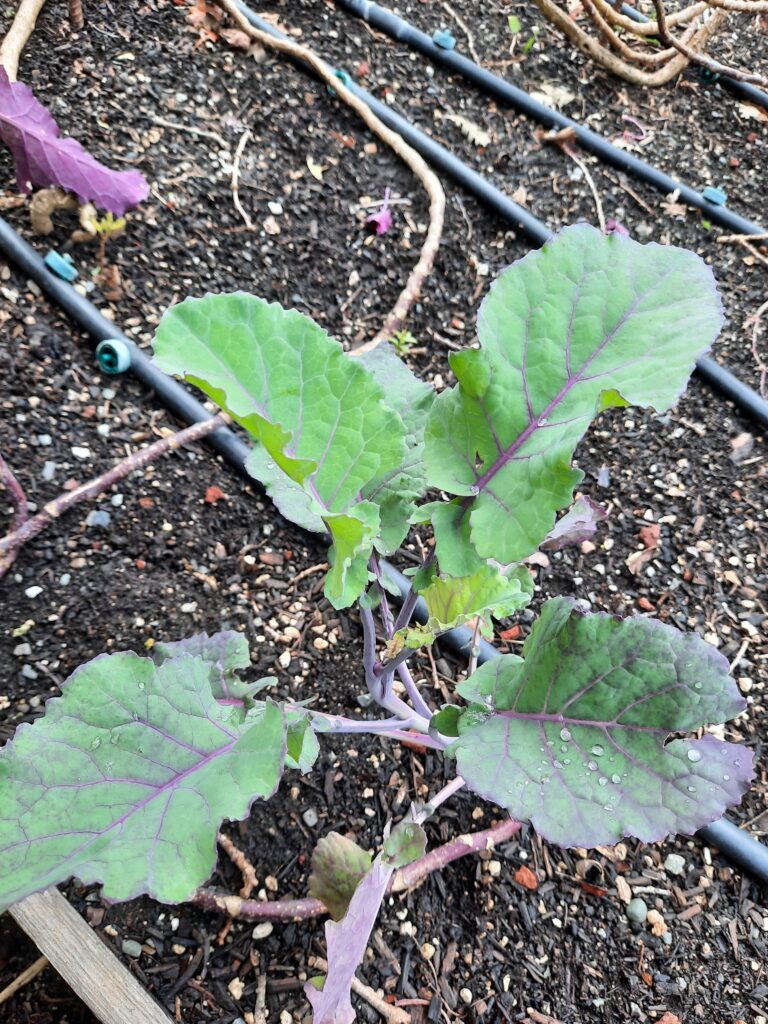
Early spring is here and we are enjoying early spring greens – especially our tree collard plants. We have several tree collard plants that have been in our garden for years, and they are still going strong and producing beautiful large green leaves.
What we love about our tree collards is that they are relatively low maintenance and are a reliable source of greens for us. Of course, we rotate our greens for variety so we are planting a variety of other greens in our garden this year, which we will cover in another post. These collard greens are tender and easily digestible for us in comparison to collard greens we find in the store that have a tougher consistency. We have observed over the years, that the greens that we grow in our garden tend to be softer and more tender than commercially available greens. Although this may not be true across the board, this is just an observation from our own personal experience.
Here is a sampling of the nutrients found in regular collard greens:
3 cups chopped collard greens (108 g) Calcium 251 mg (This is great!) Iron 0.5 mg Folate 139 mcg Beta-carotene 3230 mcg
How do these numbers compare to the nutrients found in actual tree collard greens? We have yet to know, given that I have not yet been able to find neutral information on the nutrients measured in actual tree collard leaves. I would not be surprised if they are similar. This is the beauty of science and research, there is much that is known and much that has yet to be known.
Happy spring!
Additionally, would you like to receive our eBook "Our Top 12 Strategies for Long Term Success on A Raw Plant-Based Diet"? Just fill out the email form in the right column of this website and you’ll receive it for free!
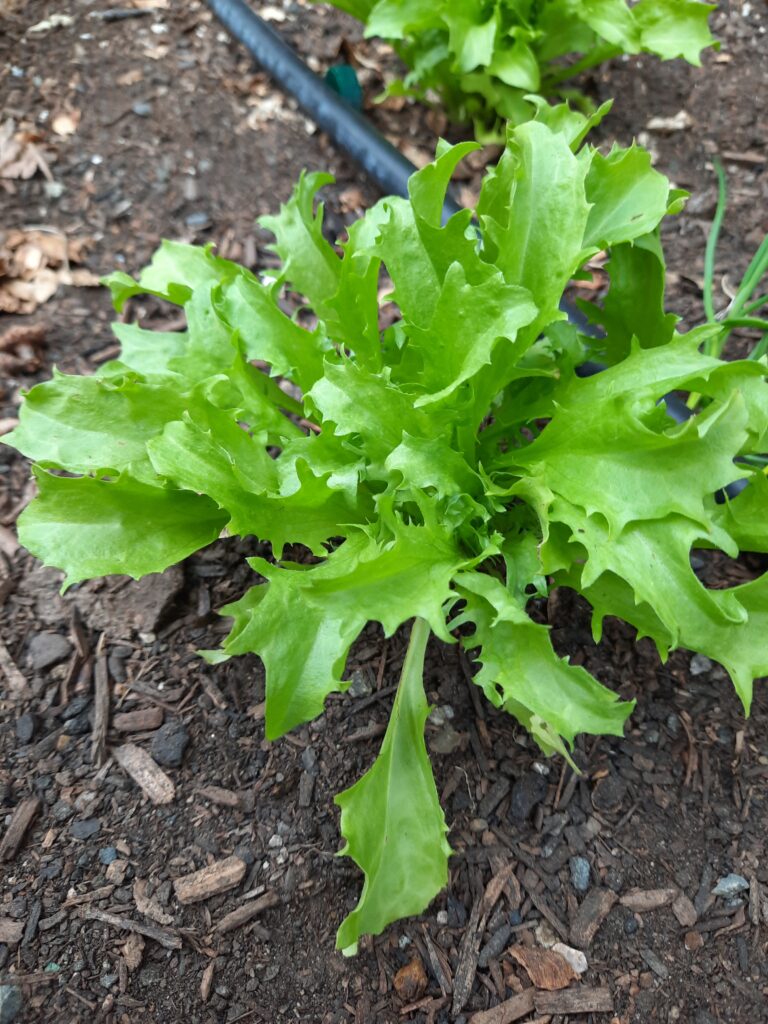
While shopping for plant starts last week, we found some starts for frisée greens. Have you ever heard of them or seen them?
The reason I ask is because they are one of the “unsung heroes” of the leafy greens. They can be challenging to find in grocery stores, but if you can find them, they are a worthwhile purchase. As the photos show, frisée greens have curly leaves with light to dark green coloring, with a yellowish tint toward the center of the plant, especially as the plant grows and matures. Frisée greens are in the sunflower plant family which also includes dandelion greens, escarole, endive, and the different varieties of lettuce.
Here is a nutrient comparison of frisée greens with Romaine lettuce:
In general, Romaine lettuce is thought to be one of the highest in nutrient content in the sunflower family, however frisée greens are higher per calorie in the important minerals: calcium, zinc, potassium, and magnesium. It’s also higher in a number of other nutrients not listed here. As an aside note, frisée can have a bitter flavor (which I actually like), so adding it to salad with a milder lettuce can help balance the bitterness. From our experience, growing it at home can significantly reduce the bitterness 😊
Enjoy!
Additionally, would you like to receive our eBook "Our Top 12 Strategies for Long Term Success on A Raw Plant-Based Diet"? Just fill out the email form in the right column of this website and you’ll receive it for free!
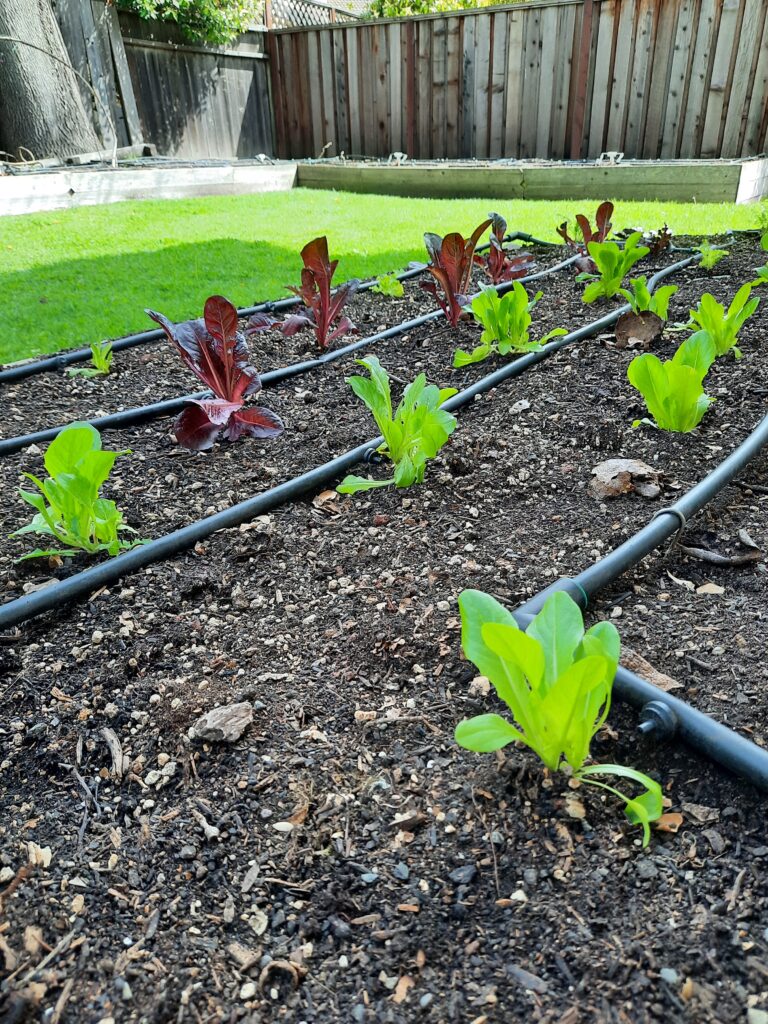
Getting started early with the garden this year! Liam was especially excited about planting the lettuce starts. He now checks on them every day to watch their progress! We're involving him in the care of plants from a young age, and already, he's enjoying gardening. He's also starting to enjoy eating various garden vegetables, and soon we'll be planting more of his favorites - we'll post photos as the season progresses.
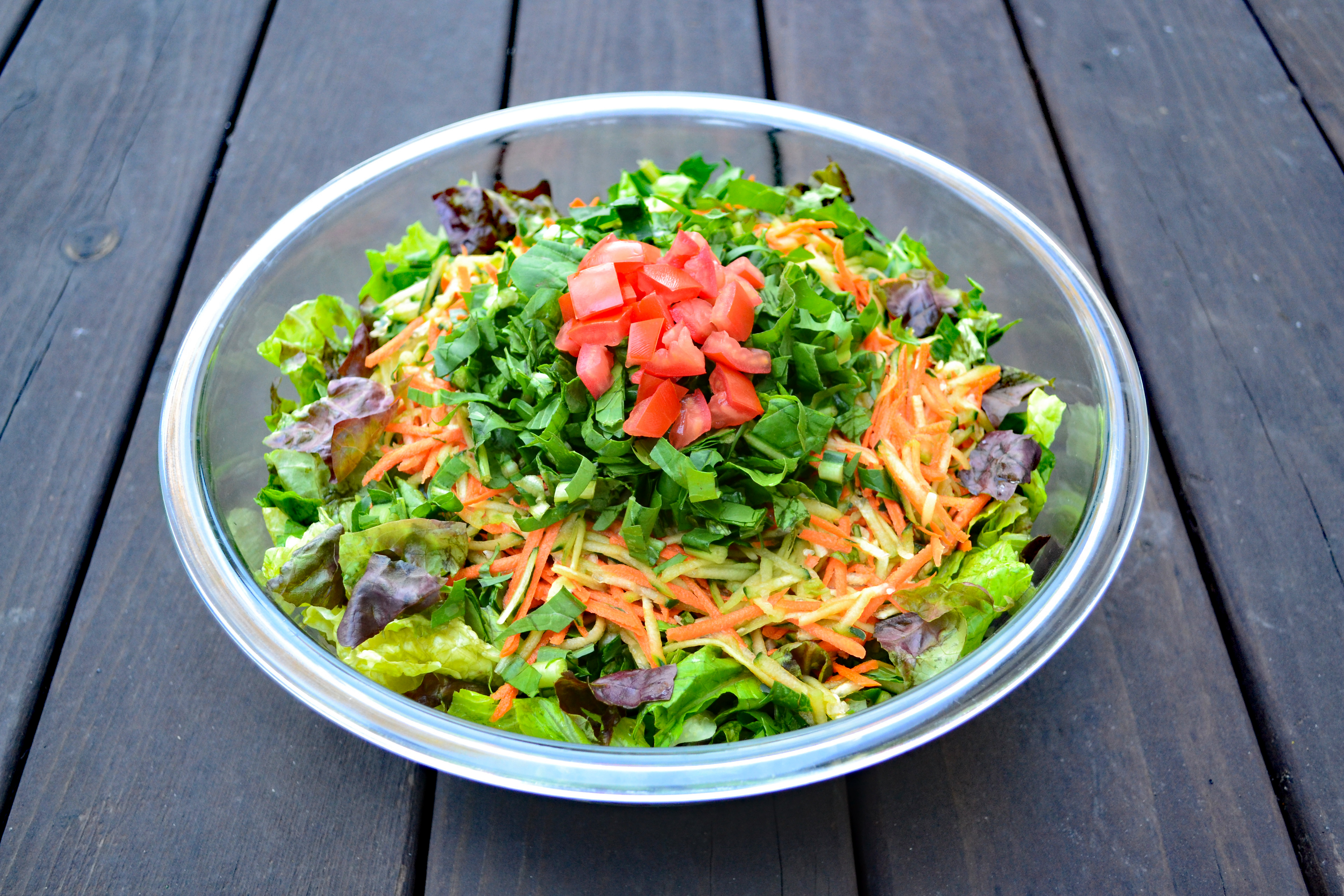
In the meantime, here is one of my personal favorite garden vegetable salads:
10 cups torn romaine lettuce (470 g) 3 cups chopped dandelion greens (165 g) 1.5 cups grated cucumber (170 g) 1 cup grated carrots (110 g) 1 cup grated zucchini (149 g) 0.5 cup chopped tomato (90 g)
Yes, I love dandelion greens and spring is when they taste less bitter, but I love the bitterness any time of year 😊
Enjoy!
Additionally, would you like to receive our eBook "Our Top 12 Strategies for Long Term Success on A Raw Plant-Based Diet"? Just fill out the email form in the right column of this website and you’ll receive it for free!
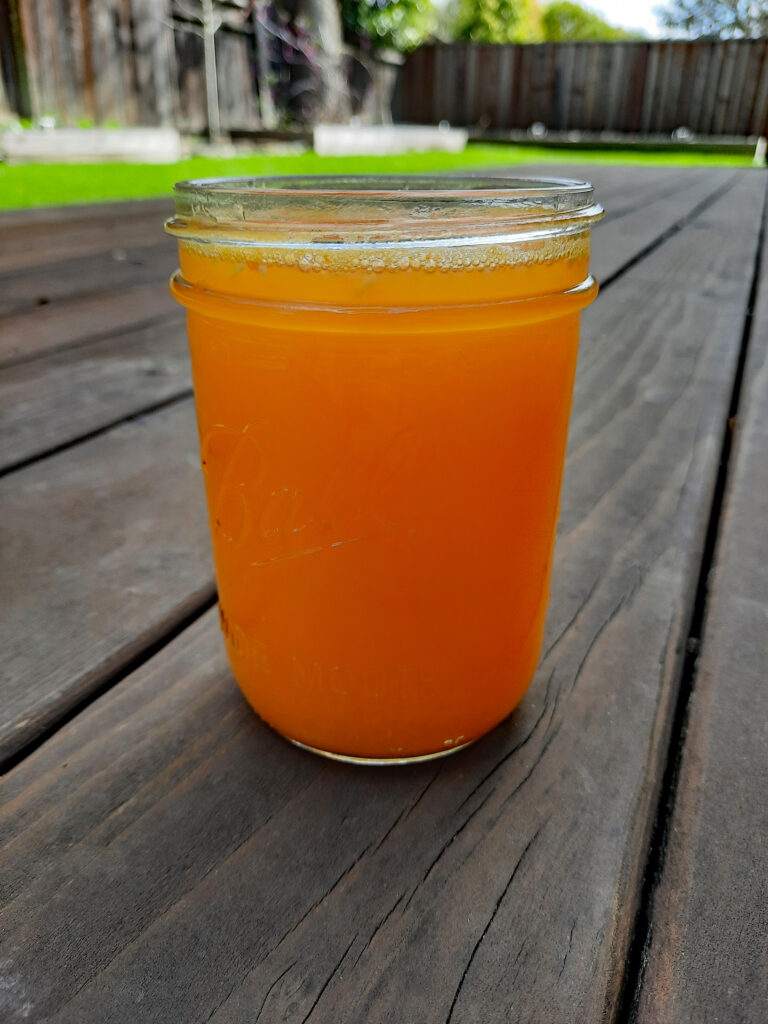
It’s actually juice made from Cara Cara navel oranges, which make the juice darker orange than juice made from regular navels or Valencias, since Cara Caras have pink/darker orange to red flesh in comparison to the lighter orange flesh seen in those more common varieties.
Last week at wholesale produce we purchased a case of Cara Caras and they are amazing! For the most part, I like to peel and eat them, but I couldn’t resist making some juice just to showcase the beautiful deep orange color.
Why are Cara Cara oranges pink/dark orange/red? They contain more carotenoids, including lycopene, than regular navels and Valencias. The average Cara Cara orange doesn’t contain as much lycopene as a tomato, but it’s fun to know that Cara Caras can contribute to one’s dietary economy of lycopene.
The navel and Cara Cara orange samples I saw in Cronometer were not tested for lycopene, but Cronometer did have this interesting information:
Cara Cara orange – one medium Vitamin C 41 mg Calcium 57 mg Alpha-Carotene 155.5 mcg Beta-Carotene 238.7 mcg Beta-Cryptoxanthin 626.8 mcg Lutein and Zeaxanthin 212.5 mcg
Navel orange – one medium Vitamin C 83 mg Calcium 60 mg Alpha-Carotene 9.8 mcg Beta-Carotene 121.8 mcg Beta-Cryptoxanthin 162.4 mcg Lutein and Zeaxanthin 180.6 mcg
Another Cara Cara sample had 90 mg of vitamin C, which shows us that nutrient content can differ between samples. When looking at Cronometer or any other nutrient database, I always check out multiple samples and look for trends in nutrient content of the foods I’m examining. As we can see, Cara Cara oranges are higher across the board in the carotenoids listed in comparison to regular navel oranges, while both are similar in calcium content, which is an impressive yet expected amount for a single orange.
Cara Cara oranges are only around for a short period of time, so enjoy them while you can 😊.
Additionally, would you like to receive our eBook "Our Top 12 Strategies for Long Term Success on A Raw Plant-Based Diet"? Just fill out the email form in the right column of this website and you’ll receive it for free!
Two of the many things I love about zucchini (courgette) is that it has a creamy consistency when blended and a relatively neutral flavor, which makes it a wonderful ingredient in savory salad dressings. It also helps to stretch out the fat in nut- or seed-containing salad dressings. When I first got started on my raw food journey, I used water for this purpose until I discovered how zucchini or summer squash can accomplish a similar end, while adding a creamy texture. Sometimes I peel the skin before using it in dressing for a lighter less-green looking dressing.
In addition to zucchini, this dressing contains lemon juice and cashews. Other nuts or seeds that work well with this dressing are walnuts and hemp seeds. I’ve also added a little green onion every now and then for the nice flavor it brings. Of course this is always optional.
Here is the recipe:
3 cups chopped peeled zucchini
1/2 cup cashews or nut/seed of your choice
1 tablespoon fresh squeezed lemon juice
1 tablespoon onion (optional)
1 teaspoon chickpea miso (optional)
Blend all ingredients until smooth. Serves 1 to 2 people.
Enjoy!
Additionally, would you like to receive our eBook "Our Top 12 Strategies for Long Term Success on A Raw Plant-Based Diet"? Just fill out the email form in the right column of this website and you’ll receive it for free!
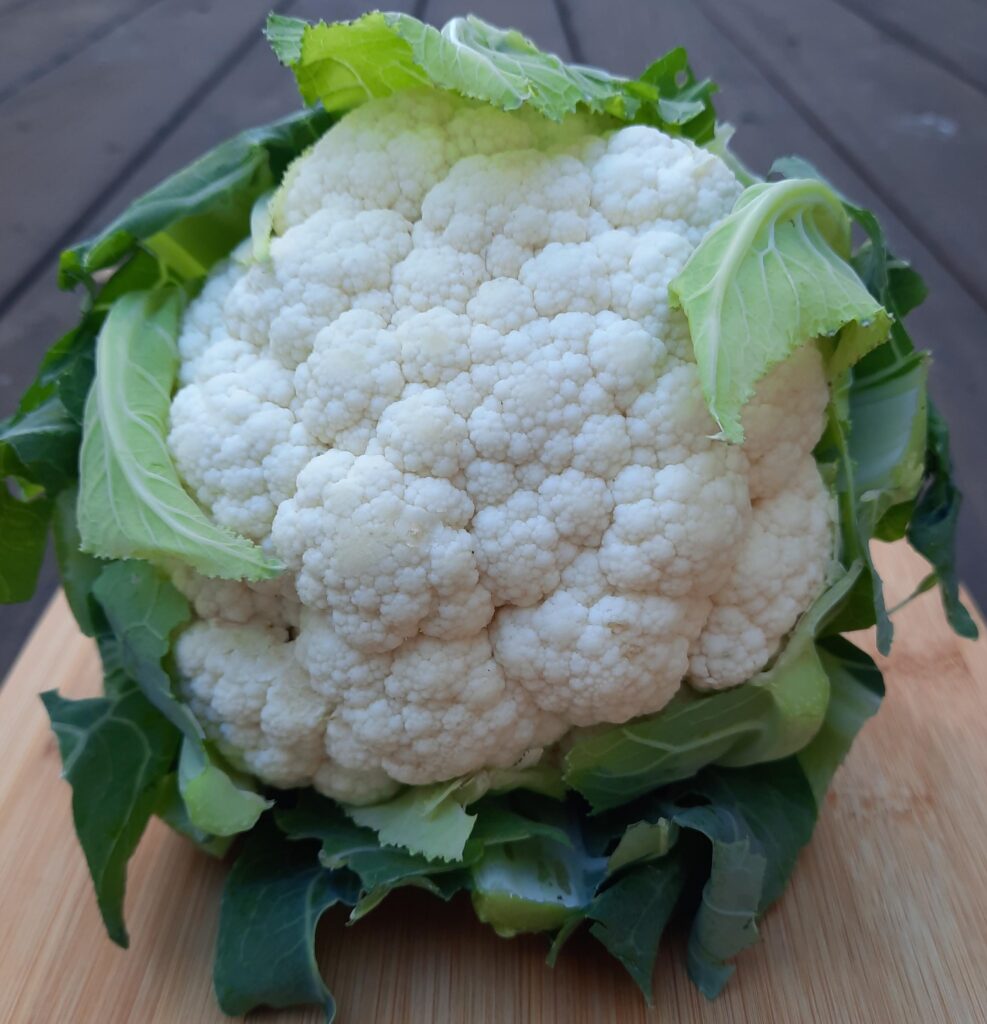
This is a great question, given that many of you know Dr. Rick is a huge fan even though it is seen by many people as being not as flavorful as other fruits and vegetables. The reality is that cauliflower has a good complement of important nutrients, but one nutrient in particular is often overlooked in cauliflower’s nutrition profile.
This nutrient is choline. Why is choline so important? It’s a precursor to phosphatidylcholine, a key component of cell membranes, helping to maintain their structure and integrity. Choline is also used to produce acetylcholine, a neurotransmitter that is vital for brain functions such as memory, mood regulation, muscle control, and overall cognitive function. Choline supports fat metabolism by helping transport fats out of the liver. This prevents the accumulation of fat in the liver and supports overall liver function. It’s also involved in the synthesis of compounds that are essential for the creation of DNA, making it important for cell division and growth. During pregnancy, choline is particularly important for fetal brain development.
Our body can make some choline, but the rest of our body’s requirement for it must be obtained from our diet.
Cauliflower eaten in quantity can be a notable source of choline: 1 cup chopped cauliflower: 47 mg 2 cups chopped cauliflower: 95 mg
One average head has about 5.5 cups chopped cauliflower: 261 mg
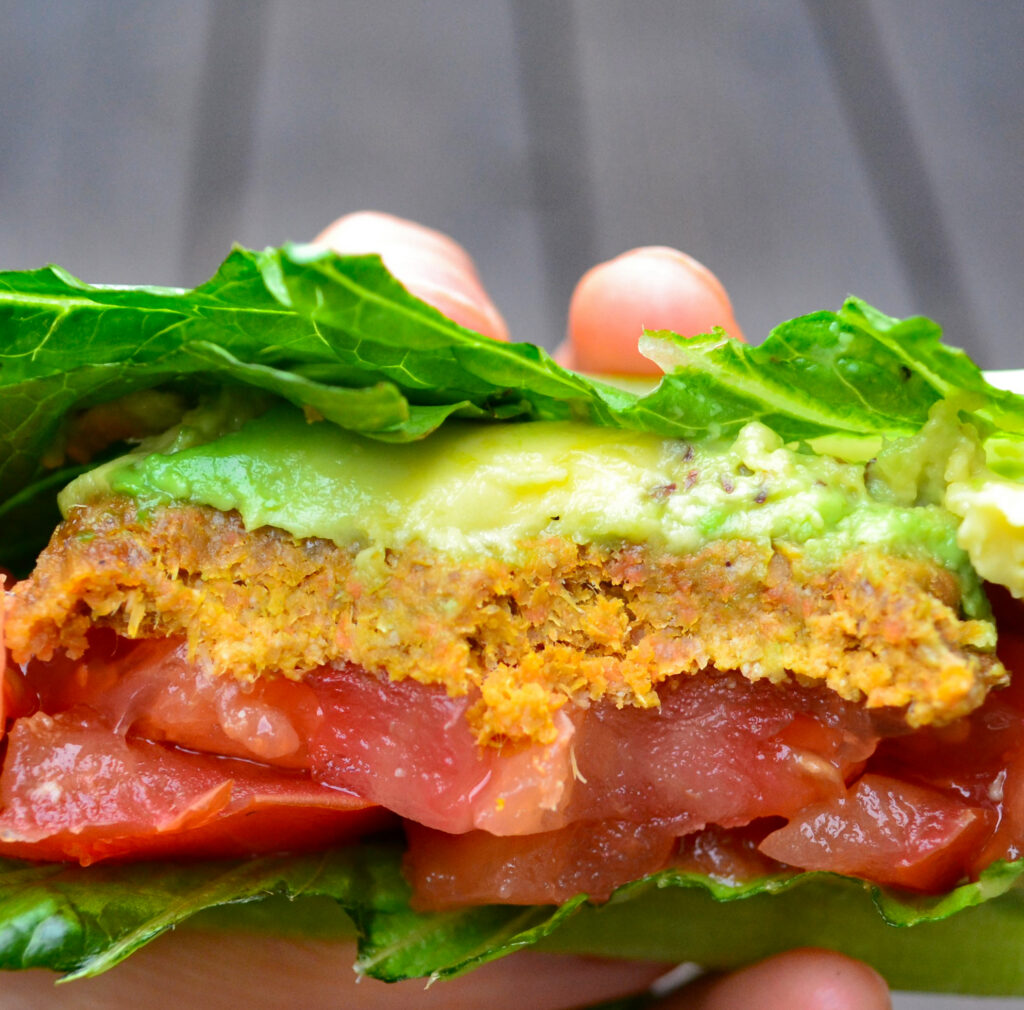
There are so many different ways to enjoy cauliflower. Our recipe for stuffing burgers detailed in a recent post is a delicious way to enjoy cauliflower.
Here is the recipe: 3 cups chopped celery 1 ½ cups chopped carrots 2 cups chopped cauliflower 3 tbsp fresh squeezed lemon juice 1 cup walnuts (substitute 2 cups chopped zucchini for lower fat version) 1 cup chopped yellow onion (optional) 1 tbsp rosemary (optional)
This recipe makes 10 to 12 veggie patties depending on how large you make them. After cleaning the veggies, we blended all the ingredients together in our food processor. We then transferred the mixture to a mixing bowl and to make the patties, we scooped the blended mixture out of the bowl with a ⅓ cup measuring cup and placed the contents of the measuring cup on a dehydrator tray with a dehydrator sheet to keep liquid from the patties from leaking through the dehydrator tray holes.
We dehydrated the patties at 100°F degrees (38°C) for about 7 hours – this time may vary depending on ambient humidity and temperature. We then flipped the patties, removing the dehydrator sheet in the process, and dehydrated the patties for another 3 hours until the patties were ready.
To make a “burger”, we placed one of the patties on a couple of lettuce leaves, then added tomato with a few slices of avocado and a sprinkle of dulse flakes.
This recipe can also be made into raw dehydrated “stuffing” too. Instead of forming individual patties, we spread the mixture onto a dehydrator tray (with a dehydrator sheet) and follow the rest of the dehydrating directions above.
Enjoy!
Additionally, would you like to receive our eBook "Our Top 12 Strategies for Long Term Success on A Raw Plant-Based Diet"? Just fill out the email form in the right column of this website and you’ll receive it for free!
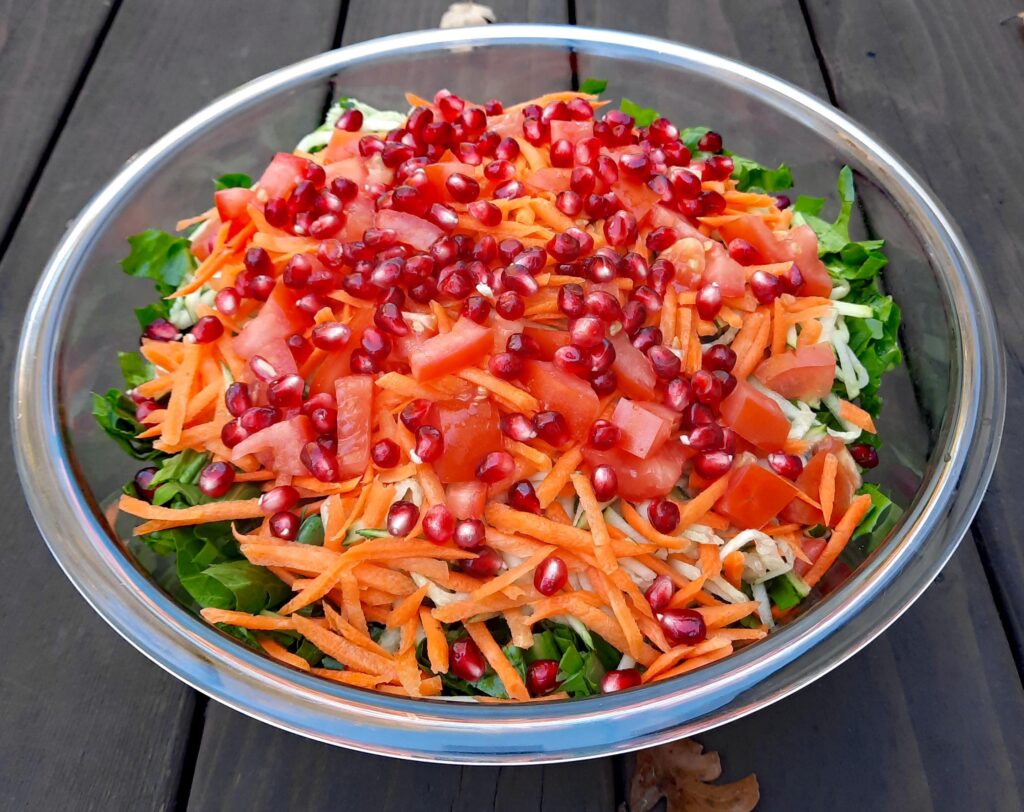
One of our favorite ways to enjoy pomegranates is in the form of juice, but another way we enjoy them is in salad.
Pictured here is one of our standard salads with pomegranate arils: 10 cups torn romaine lettuce (470 g) 3 cups chopped dandelion greens (165 g) 1.5 cups grated cucumber (170 g) 1 cup grated carrots (110 g) 1 cup grated zucchini (149 g) 0.5 cup chopped tomato (90 g) 0.5 cup pomegranate arils (61 g)
Nutrient analysis: Vitamin B1 0.9 mg Vitamin B2 1.1 mg Vitamin B3 5.4 mg Vitamin B5 2.2 mg Vitamin B6 1.3 mg Choline 149 mg Folate 789 mcg Vitamin A (RAE) 3864 mcg Vitamin C 133 mg Vitamin E 8.1 mg Calcium 566 mg Iron 11.5 mg Magnesium 204 mg Potassium 3162 mg Zinc 3.2 mg
The nutrient content of this salad is impressive especially considering that it is 317 calories (kcal)! Nutrient content is one of the many reasons why vegetables and leafy greens are such an important addition to one’s daily diet. Enjoying this salad with the dressing of your choice can increase the nutrient content even more.
I love dandelion greens! I know that may come as a surprise given their often bitter flavor. In the spring, when dandelion greens are young, they tend to be less bitter and as the season progresses, so does their bitterness. But I love the bitterness, along with their crunchy texture. What I love likely the most about them is their nutritional value.
Dandelion greens are in the sunflower plant family (Asteraceae), along with lettuce, endive, escarole, frisée greens, sunflower seeds, and Jerusalem artichokes. The name for this plant has an interesting origin. I remember from a college botany class that the name “dandelion” was derived from the French “dent de lion” meaning “tooth of the lion” or “lion’s tooth”, due to the somewhat jagged tooth-like appearance of dandelion greens. The mineral content of dandelion greens is especially notable:
As one can see, the leaves of this plant that is often regarded as a garden weed has significant nutritional value!
In addition, dandelion greens are known for their prebiotic fiber content specifically inulin. Three cups of dandelion greens contain almost 20 g of inulin!
Even though we do not have a daily value for prebiotic fiber, we do have established DRIs (specifically Adequate Intakes – AIs) for total fiber:
• 25 g for women (21 g over 50 years of age) • 38 g for men (30 g over 50 years of age)
To put these numbers in perspective, most Americans get around 15 g of total fiber per day. Standard western diets tend to be lower in fruits, vegetables, and whole plant foods in general so this number is not surprising.
Given what we see here, I love dandelion greens even more!
Additionally, would you like to receive our eBook "Our Top 12 Strategies for Long Term Success on A Raw Plant-Based Diet"? Just fill out the form in the right column of this website and you’ll receive it for free!
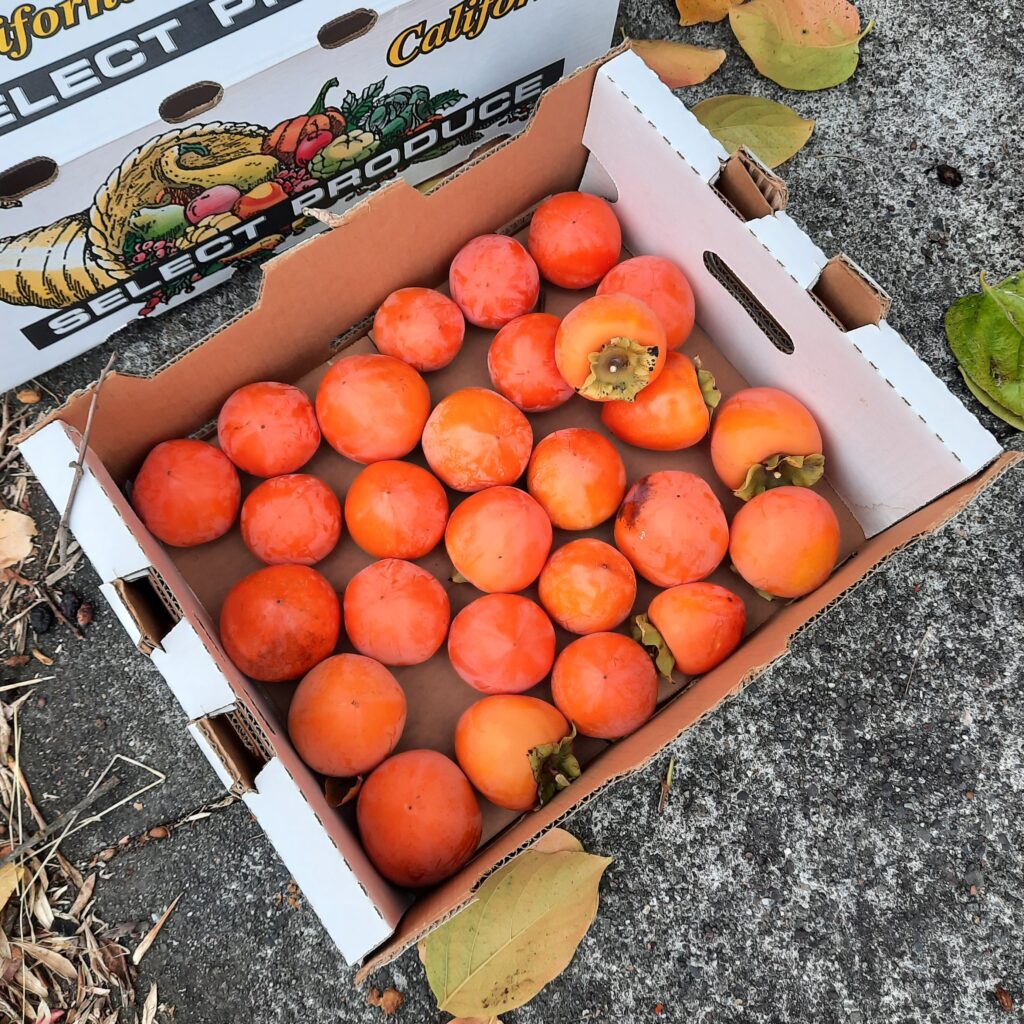
One of my favorite things about the month of November is a beautiful, sweet, orange-colored fruit called the persimmon. Truth be told, I was not aware of the existence of the persimmon until I moved to the west coast in the late 90s. I quickly learned that there are several different types of persimmons, one of which needs to be soft and almost to the point of liquefying to be consumed without having a mouth-puckering astringent taste, which I learned this the hard way, namely the Hachiya persimmon. For me, patience is definitely crucial for successful consumption of this type of persimmon, which involves patiently waiting for full ripeness.
Two other types of persimmons that I have enjoyed are Fuyu and Amagaki, both of which I eat while they are still hard, with very little to no astringency, depending on the degree of ripeness. These three types of persimmons grow here in northern California and are relatively easy to find in local stores and farmers markets during the months of November and December.
Of course, since I love to know the nutrient content of foods, I did a nutrient analysis of persimmons. The type of persimmon used to determine this information was not specified:
Persimmon, 3 fruits (75 g) Calories 95 Calcium 20.3 mg Iron 1.87 mg Potassium 232.5 mg Vitamin C 49.5 mg Protein 0.6 g
I was surprised to see the notable iron, vitamin C, and potassium content of persimmons. For a fruit, I find this to be worthy of consideration.
Additionally, would you like to receive our eBook "Our Top 12 Strategies for Long Term Success on A Raw Plant-Based Diet"? Just fill out the email form in the right column of this website and you’ll receive it for free!
Oxalate/Oxalic Acid is a currently popular topic of conversation, but a lot of what is being shared is from one perspective. We like to look at topics from as many perspectives as possible so we can make decisions based on as much information is currently available. This video discusses an important consideration about oxalate/oxalic acid that is not well-known but could potentially be game-changing for some:
And here is a webinar recording that expounds on this topic:
If you would like to see more information like this, please feel free to join our email list in the column on the right and subscribe to our YouTube, Instagram, and FB accounts.
This video discusses newer information about lycopene absorption from different types of tomatoes, that may completely change the conversation on whether or not one needs to cook all tomatoes to absorb lycopene:
If you would like to see more information like this, please feel free to join our email list in the column on the right and subscribe to our YouTube, Instagram, and FB accounts.
In our previous post, we looked at the ingredients of a large salad and the some of the nutrients found in them. In this post, we’re going to add some dressing. When I was growing up, my idea of salad dressing was a relatively thin liquid, but when I started on my health journey, I found that increasing the thickness and amount of dressing used would simultaneously increase my satiety and the nutrient content of the salad, often significantly. This was one of the many game-changer realizations that made a difference for me early on. Over the years, we have developed a number of thicker dressings, including the hummus-style dressing listed below. We particularly love this red pepper hummus for the flavor and the nutrients that it adds to the salad.
Here are the ingredients of the salad from the previous post and the red pepper hummus in this photo:
Salad:
7 cups chopped or torn Romaine lettuce (329 g, 11.6 oz.)
6 cups chopped or torn red leaf lettuce (170 g, 6 oz.)
3 cups chopped or torn dandelion greens (165 g, 5.8 oz.)
1.5 cups shredded cucumber (227 g, 8 oz.)
1 cup shredded carrots (113 g, 4 oz.)
¼ cup chopped tomato (45 g, 1.6 oz.)
Red Pepper Hummus:
3 cups chopped zucchini (445 g, 15.7 oz.)
½ cup walnuts (50 g, 1.8 oz.)
1 tsp. chia seeds (10 g, 0.35 oz.)
Juice of one large lemon (48 ml, 1.57 fluid oz.)
½ cup dehydrated red pepper (30 g, 1.1 oz.)
1 small clove garlic (totally optional) (2 g, 0.07 oz.) not included in nutrient analysis
1 tsp. chickpea miso (totally optional) (7 g, 0.25 oz.) not included in nutrient analysis
AND here are some of the nutrients in this salad and hummus:
Salad
Adult DRIs
Calories (kcal)
780
B1
1.4
1.1 – 1.2 mg
B2
1.7
1.1 – 1.3 mg
B3
10.7
14 – 16 mg
B5
4.0
5 mg
B6
3.1
1.3 – 1.7 mg
Folate
905
400 mcg
B12
0
2.4 mcg
C
576
75 – 90 mg
D
0
5 – 15 mcg
E
13.1
15 mg
K1
2021
90 – 120 mcg
Beta-carotene (mcg)
49,578
Calcium
759
1,000 – 1,200 mg
Iron
17.5
8 – 18 mg
Magnesium
410.7
310 – 420 mg
Potassium
4691
4,700 mg
Zinc
6.8
8 – 11 mg
The salad and red pepper hummus together have exceeded the adult daily values for vitamins B1, B2, B6, C, folate, and K1, all for 780 kcals (calories)! Vitamins B3, B5, and E are close to the adult daily values as are the minerals calcium, iron, magnesium, potassium, and zinc. I encourage you to compare these numbers to the salad without dressing in the previous post and you’ll see how much of a difference dressing can make in the nutrient content of a salad. Additionally, if you desire a lower fat dressing, please feel free to substitute more zucchini or cauliflower for the nuts.
Enjoy!
PS: If this seems like a lot of food, you can always cut the ingredients in half or to your liking and adjust the nutrient content accordingly.
There are so many ways to enjoy vegetables and leafy greens – really the sky is the limit as to the creative dishes you can create from them. One of my tried-and-true favorites of all time is not surprisingly salad. I love salad, but it wasn’t always this way.
While growing up, before I started my health journey, I would begrudgingly eat a small bowl of iceberg lettuce with a slice of tomato or two and maybe some onion all drenched in either bleu cheese, thousand island, or Italian dressing along with my standard western dinner. This was my idea of a salad back then, so when I discovered fruit and vegetable-based eating, I had to significantly alter my point of view on salad, especially the size and contents.
I started with the small-size salads that I was used to, but quickly found that to experience satiety with a salad-based meal that I had to increase my portion size. Nowadays my salads tend to be quite large by most accounts, as you can see in this photo and the quantities of ingredients noted below. Sure, this is a large amount of veggies and leafy greens – If this quantity is too much, one can always half or quarter the ingredients. Here is an experiment one can try – make a salad of this size while cutting the ingredients into smaller pieces than one normally does. Notice how much smaller the salad appears when much of the air space of the salad is removed by condensing the ingredients in this way. Adding a delicious dressing can also condense the salad further. Another option is to blend the salad ingredients and dressing into a delicious soup! These suggestions have historically worked for people getting started with salads or raw veggies.
Here are the ingredients of the salad in this photo:
7 cups chopped or torn Romaine lettuce (329 g, 11.6 oz.)
6 cups chopped or torn red leaf lettuce (170 g, 6 oz.)
3 cups chopped or torn dandelion greens (165 g, 5.8 oz.)
1.5 cups shredded cucumber (227 g, 8 oz.)
1 cup shredded carrots (113 g, 4 oz.)
¼ cup chopped tomato (45 g, 1.6 oz.)
AND here are some of the nutrients in this salad:
Salad
Adult DRIs
Calories (kcal)
241
B1
0.8
1.1 – 1.2 mg
B2
0.9
1.1 – 1.3 mg
B3
4.5
14 – 16 mg
B5
1.8
5 mg
B6
1.6
1.3 – 1.7 mg
Folate
597
400 mcg
B12
0
2.4 mcg
C
96.4
75 – 90 mg
D
0
5 – 15 mcg
E
7.4
15 mg
K1
1916
90 – 120 mcg
Beta-carotene (mcg)
44,196
Calcium
551
1,000 – 1,200 mg
Iron
11.4
8 – 18 mg
Magnesium
174
310 – 420 mg
Potassium
2589
4,700 mg
Zinc
2.6
8 – 11 mg
The nutrient content of this salad is pretty impressive considering that it only contains 241 kcals! When dressing is added these numbers increase even more, which I’ll show in my next post!
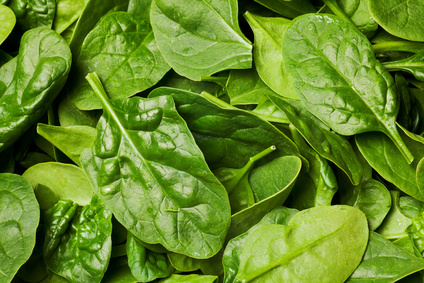
When I started my raw food journey over 30 years ago, spinach was one of my favorite leafy greens. I'd loved spinach since childhood, so raw spinach quickly became my staple salad green next to lettuce. I'd heard that spinach contained notable amounts of important minerals like calcium and iron, so I thought I was getting a decent amount of these minerals.
I love to learn as much as I can, so I started researching the nutrient content of my diet. It was then that I came across up-to-date scientific studies regarding oxalate.
For those of you not familiar with this term, oxalate (also known as oxalic acid) is a substance found in certain foods that binds to minerals like calcium, iron, and zinc, making them less bioavailable. I learned that spinach is rich in oxalate. What this means is that much of the iron, zinc, and calcium found in raw spinach is bound to oxalate making these minerals less nutritionally usable by the human body.
Because of this, the conversation around oxalate in the raw food and plant-based community has generally centered around avoidance of oxalate-containing greens for the reasons mentioned earlier. However, recent research has indicated that some oxalate in one’s diet may actually be beneficial for microbiome diversity. This research centers around Oxalobacter Formigenes, a type of bacteria that inhabits our digestive tract and uses oxalate as its major energy source.
O. Formigenes is considered to be a probiotic, and has been found to survive well in the microbiome of people who consume foods containing some oxalate. Research has found that the prevalence of O. Formigenes in the microbiomes of people eating standard western diets is about half of populations that consume more plant foods. Additionally, there are other types of probiotics that consume oxalate, so as it turns out, having some oxalate in the diet may help increase microbiome diversity and the benefits associated with it.
Often, we hear about concern regarding kidney stone formation and the consumption of oxalate-containing foods. Results from a case-controlled study suggested that lack of O. formigenes colonization is a risk factor for recurrent oxalate stone formation (Kaufman et al., Ellis et al.). What this means is that recurrent oxalate stone formation is associated with lower amounts or the absence of O. formigenes in one's microbiome. Given that oxalate is a food source of O. formigenes , it looks like some oxalate in one's diet can actually be protective against recurrent oxalate stone formation. Of course, it is important to note that it's important to consult with one's healthcare provider who is well-researched on this topic when making dietary and healthcare decisions. This information is both fascinating and encouraging and we look forward to future research shedding light on this important topic!
The bottom line is that our stance on oxalate has not changed. We still think that it is preferable to focus on lower oxalate greens in our diet to help with mineral use in the body, but we do not think that eliminating these foods completely is essential (unless otherwise instructed by a healthcare provider) since oxalate can serve as a food source for O. Formigenes and other probiotics to assist in creating greater microbiome diversity and other potential benefits.
References and Research:
Ellis ML, Dowell AE, Li X, Knight J. Probiotic properties of Oxalobacter formigenes: an in vitro examination. Arch Microbiol. 2016;198(10):1019-1026.
Kaufman DW, Kelly JP, Curhan GC, et al. Oxalobacter formigenes may reduce the risk of calcium oxalate kidney stones. J Am Soc Nephrol. 2008;19(6):1197-1203.
Liebman M, Al-Wahsh IA. Probiotics and other key determinants of dietary oxalate absorption. Adv Nutr. 2011;2(3):254-260.
PeBenito A, Nazzal L, Wang C, Li H, Jay M, Noya-Alarcon O, Contreras M, Lander O, Leach J, Dominguez-Bello MG, Blaser MJ. Comparative prevalence of Oxalobacter formigenes in three human populations. Sci Rep. 2019 Jan 24;9(1):574.
Turroni S, Bendazzoli C, Dipalo SC, et al. Oxalate-degrading activity in Bifidobacterium animalis subsp. lactis: impact of acidic conditions on the transcriptional levels of the oxalyl coenzyme A (CoA) decarboxylase and formyl-CoA transferase genes. Appl Environ Microbiol. 2010;76(16):5609-5620.
After our recent Energy Reset Summit which we co-produced with Better Life Summits, we received a number of questions from people interested in knowing the difference between a starch-focused whole food plant-based diet and one that emphasizes fruits and vegetables. We did a dietary comparison and were quite amazed to see some of the notable differences. We are so happy to share the outcome with you in this email article!
To get started, we have a starched-based “original” diet as a reference point, and then we change things up with our fruit and vegetable-based “makeover” diet to see what happens when we de-emphasize some of the starches and add more fruits and vegetables in their place.
Both diets are free from sugar, oil, and salt, with the exception of a small amount of salt in the tortillas of the original diet. The overall sodium intake of the original diet is still less than 400 mg for the entire day.
As shown in the table below, the original diet breakfast consists of 2 servings of rolled oats, with diced apple, raisins, cinnamon, and flax meal. The original lunch consists of two vegan burritos made from sprouted grain (flourless) tortillas, filled with tomato, avocado, zucchini, brown rice, and black beans. The original dinner is made from two cups of cooked broccoli, and one cup each of quinoa and chickpeas.
What changed?
For breakfast, we chose a totally different meal. We made a fruit and green smoothie instead of oatmeal.
For lunch, we kept the same quantities of avocado, zucchini, brown rice, and black beans from the original diet. We doubled the tomato, and used additional raw and cooked vegetables in place of the wraps. Mashed avocado and diced tomato make a simple salsa that can be poured over the lettuce and zucchini as a creamy salad dressing. The avocado tomato dressing could also be a great topping for the rice and beans and / or the cooked veggies.
For dinner, we reduced our quantity of quinoa and chickpeas by 50%, added a large salad made from lettuce, tomato, carrot, zucchini, and cucumber, topped that with a delicious dressing made from celery, onion, lemon juice, chia seeds, and walnuts, and kept the 2 cups of cooked broccoli.
Instead of 1 TBSP of ground flax seeds added to the breakfast oatmeal of the original diet, we used 1 TBSP of chia seeds and 1.5 TBSP of walnuts in the salad dressing of fruit and vegetable-based diet dinner for omega 3 sources. Both the total fat content and % of calories from fat of each diet were virtually identical.
Original Diet
Makeover Diet
Original Breakfast:Oatmeal w apple, raisins, cinnamon, flax Whole Oats, rolled, 2 Servings Apple, fresh, with skin, 1 medium Raisins, 2 TBSP Cinnamon, ground, 1 tsp Flax Seed Meal, 1 TBSP
Makeover Breakfast:Fruit and Green Smoothie Banana, fresh, 2 medium Oranges, fresh, 2 medium Mango, frozen, 1 cup Kale, raw, 2 leaves
Original Lunch:Vegan Burritos Sprouted grain tortillas x 2 Tomato, red, raw, 2 small Roma Zucchini, raw, 1 large Avocado, raw, California, ½ Brown rice, steamed, ½ cup Black beans, cooked, ½ cup
Makeover Lunch:Salad, dressing, steamed veggies, rice + beans Lettuce, romaine, ½ head Tomato, red, raw, 4 small Roma Zucchini, raw, 1 large Avocado, raw, California, ½ Brown rice, steamed, ½ cup Black beans, cooked, ½ cup Kale, cooked from fresh, 1 cup Cauliflower, cooked from fresh, 1.5 cups Carrots, cooked from fresh, 1 cup
Original Dinner:Steamed broccoli, quinoa, chickpeas Broccoli, cooked from fresh, 2 cups, chopped Quinoa, cooked, 1 cup Chickpeas, boiled without salt, 1 cup
Makeover Dinner:Large salad, dressing, steamed veggies,quinoa, chickpeas Lettuce, romaine, ½ head Tomato, red, raw, 2 small Roma Carrots, raw, ½ cup Zucchini, raw, ½ cup Cucumber, raw, ½ cup Celery, raw, 3 medium Onion, white, etc. ¼ medium Lemons, raw, ½ Chia seeds, 1 TBSP Walnuts, 1.5 TBSP Broccoli, cooked from fresh, 2 cups, chopped Quinoa, cooked, ½ cup Chickpeas, boiled without salt, ½ cup
What was the Nutritional Outcome?
Drumroll please! In changing from the original diet to the makeover diet, we saw some dramatic nutritional changes. To start with, we decreased calories by 103, and increased dietary fiber by 23%.
Regarding vitamins, the beta carotene content increased by an incredible 1,870%, vitamin C increased by 283%, vitamin E increased by 80%, Vitamin K increased by 460%, and folate more than doubled.
Omega 3 fats tripled, while improving the omega 6 to omega 3 ratio from 3.0 to 1.66 and keeping the overall fat intake the same for both diets. Omega 3 recommendations are 1.1 grams for women, and 1.6 grams for men. The original diet provided 1.7 grams of omega 3 in total, but that would have been only 0.8 grams without the flax meal. In the makeover diet, even without the addition of chia seeds and walnuts in the dinner salad dressing, the omega 3 content was 2.5 grams, which increased to 5.7 grams with the addition of the chia seeds and walnuts. Leafy green vegetables, both raw and cooked, are excellent sources of omega 3 fats when eaten in substantial quantities, such as the amounts shown in the makeover diet.
For minerals, the calcium content increased by 230% and magnesium increased by 37%. Sodium went up by 89 mg due to increased vegetable intake. These vegetables and the fruit from the smoothie also more than doubled the potassium intake, which dramatically improved the sodium to potassium ratio. Iron increased by 21%, while zinc remained consistently solid in both diets.
Plant Based Diet Comparison
Original
Makeover
Calories
1805
1702
Fiber
73 grams
90 grams
Beta Carotene
5,523 IU
103,296 IU
Vitamin C
237 mg
671 mg
Vitamin E
10 mg
18 mg
Vitamin K
376 ug
1,731 ug
Folate
912 ug
2,081 ug
Omega 3
1.7 grams
5.3 grams
Omega 6
5.1 grams
8.8 grams
6 / 3 Ratio (Lower is preferable)
3
1.66
Calcium
469 mg
1,081 mg
Magnesium
531 mg
725 mg
Sodium
396 mg
485 mg
Potassium
3792 mg
8376 mg
Sodium / Potassium Ratio (Higher 2nd number is preferable)
1 to 9.6
1 to 17.3
Iron
19 mg
23 mg
Zinc
11.5 mg
11.6 mg
The original starch-centered diet is a fantastic diet! It’s high in nutrient density, low in calorie density, high in fiber, and low in fat with a healthy fatty acid profile. It is the type of diet that has been scientifically proven to reduce excess body fat, and reverse health challenges like cardiovascular disease, hypertension, type II diabetes, autoimmune issues, etc. That’s incredibly powerful stuff! But does that mean there is no room for further improvement?
As you can see in this example, including an abundance of fruits and vegetables in a whole food plant-based diet can offer us additional nutritional benefits. Implementing these types of dietary improvements usually translates into having the most energy, the clearest, sharpest mind, having a more radiant glow to our skin, and thriving to the fullest extent of our health potential for a lifetime.
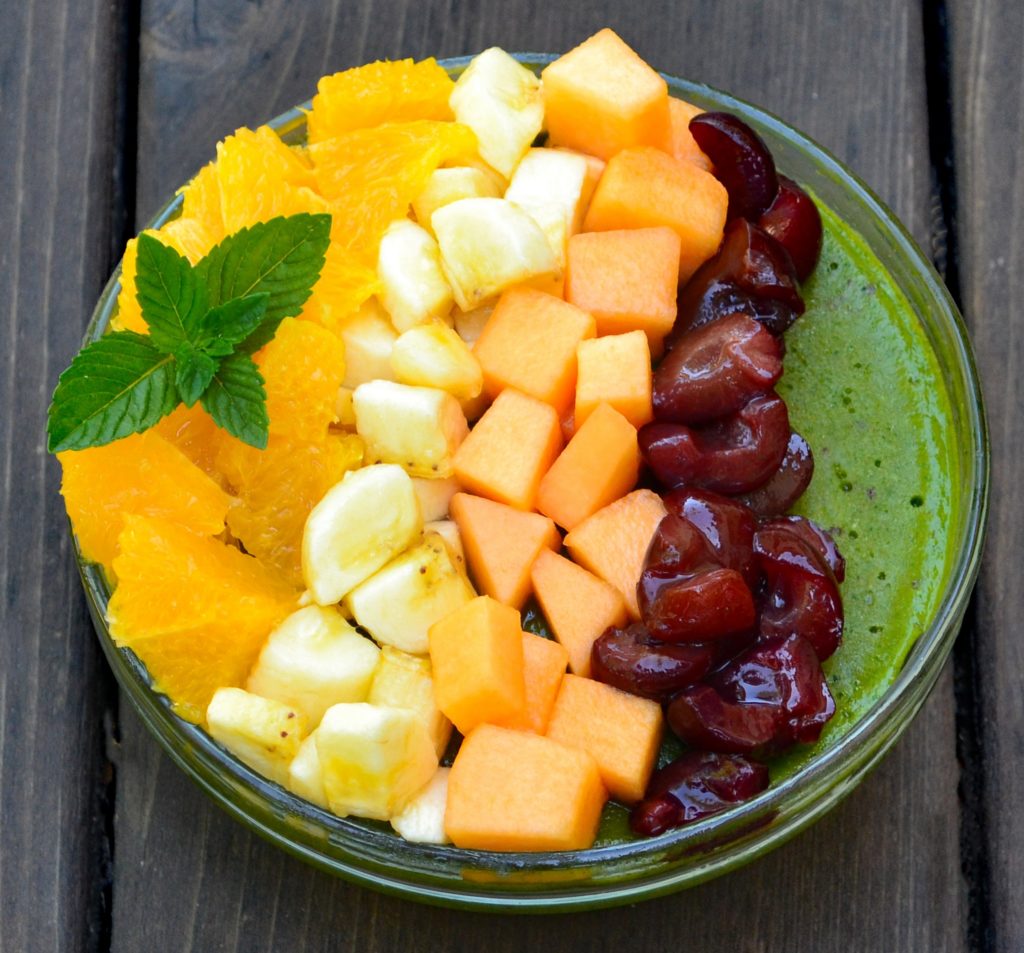
We wanted to share this green smoothie recipe with you because we really enjoyed it and thought you might too:
Two oranges
Half of a cantaloupe
Three frozen or fresh bananas
Handful of washed arugula
One half cup mango chunks (frozen or fresh)
One half cup dark sweet cherries (frozen or fresh)
All ingredients have peels and seeds removed, if they have peels or seeds. Blend fresh ingredients first, then add frozen ingredients and blend until smooth. If you love blueberries, then one half cup of blueberries can replace the cherries. Both alternatives are delicious and have become of two of our favorite smoothie recipes!
This dressing is one of our favorites, in addition to the others that we have recently shared.
Large Dinner Salad:
10 cups chopped or torn Romaine lettuce (470 g, 16.6 oz.)
3 cups chopped or torn dandelion greens (165 g, 5.8 oz.)
1 cup chopped tomatoes (180 g, 6.3 oz.)
1 cup shredded carrots (110 g, 3.9 oz.)
1 cup shredded cucumber (104 g, 3.7 oz.)
½ cup chopped red bell pepper (74.5 g, 2.6 oz.)
Here are some of the nutrient highlights of this salad:
Salad
Adult DRIs
Calories
270
Vitamin B1 (Thiamine)
0.86 mg
1.1 mg for women 1.2 mg for men
Vitamin B2 (Riboflavin)
0.94 mg
1.1 mg for women 1.3 mg for men
Vitamin B3 (Niacin)
5.78 mg
14 mg for women 16 mg for men
Vitamin B5 (Pantothenic Acid)
1.77 mg
5 mg for both
Vitamin B6 (Pyridoxine)
1.32 mg
1.3 mg for both Over 50: 1.5 mg for women 1.7 mg for men
Vitamin B7 (Biotin)
23.23 mcg
30 mcg for both
Folate
773 mcg
400 mcg for both
Ranch Dressing
1 ½ cups of chopped cucumber (178 g, 6.3 oz.)
¼ cup walnuts (29 g, 1.0 oz.)
½ tbsp. chia seeds (5 g, 0.17 oz.)
½ tbsp. fresh squeezed lemon juice (optional) (6 ml, 0.2 fluid oz.)
½ tbsp. chopped fresh chives (1.5 g, 0.05 oz.)
½ tbsp. chopped fresh dill (0.28 g, 0.01 oz.)
½ tbsp. chopped fresh parsley (1.9 g. 0.07 oz.)
½ small clove of garlic (optional) (1.5 g, 0.05 oz.)
½ tbsp. chickpea miso (9 g, 0.31 oz.) (optional)
Blend cucumber, walnuts, garlic, chia seeds, lemon juice, and optional miso until smooth. Crush in the parsley, chives, and dill. Place in refrigerator for 3 hours to allow for the flavor of the culinary herbs to mix with the rest of the ingredients. Makes 1 serving. We’ve found that this dressing tastes even better the next day. You can decrease the fat content in it by substituting zucchini for some proportion of your choosing of the walnuts and/or chia seeds. You can also decrease the size of the salad if you find that it is a lot to eat - after over 3 decades on our respective raw food and plant-based paths, we eat a salad of this size just about every day.
Nutrient analysis of Ranch Dressing:
Salad
Adult DRIs
Calories
243 mg
Vitamin B1 (Thiamine)
0.16 mg
1.1 mg for women 1.2 mg for men
Vitamin B2 (Riboflavin)
0.10 mg
1.1 mg for women 1.3 mg for men
Vitamin B3 (Niacin)
0.45 mg
14 mg for women 16 mg for men
Vitamin B5 (Pantothenic Acid)
0.63 mg
5 mg for both
Vitamin B6 (Pyridoxine)
0.27 mg
1.3 mg for both Over 50: 1.5 mg for women 1.7 mg for men
Vitamin B7 (Biotin)
5.58 mcg
30 mcg for both
Folate
59.6 mcg
400 mcg for both
Nutrient analysis of Large Dinner Salad and Ranch Dressing:
Salad
Adult DRIs
Calories
513 mg
Vitamin B1 (Thiamine)
1.02 mg
1.1 mg for women 1.2 mg for men
Vitamin B2 (Riboflavin)
1.04 mg
1.1 mg for women 1.3 mg for men
Vitamin B3 (Niacin)
6.23 mg
14 mg for women 16 mg for men
Vitamin B5 (Pantothenic Acid)
0.63 mg
5 mg for both
Vitamin B6 (Pyridoxine)
1.59 mg
1.3 mg for both Over 50: 1.5 mg for women 1.7 mg for men